Escalating Unrest in Albania: Anti-Government Demonstrations Turn Violent Across Major Cities
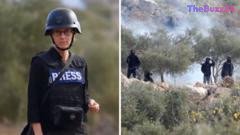
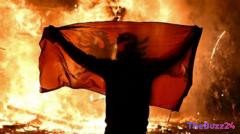
Anti-government demonstrations across Albania have taken a sharp and violent turn, expanding beyond the capital city of Tirana to major urban centers including Durrës, Shkodër, Lezhë, Vlora, Gjirokastër, and Korçë. What initially began as peaceful civic rallies against government policies has evolved into widespread civil unrest, characterized by intense clashes between demonstrators and security personnel. Law enforcement authorities deployed water cannons, tear gas, and batons in response to stone-throwing crowds, while several state facilities—including a floor of the Education Ministry—were set ablaze.
The current wave of unrest stems from months of mounting civic dissatisfaction, originally ignited by the “Flamingo” movement. That initial wave focused on opposing a high-profile luxury tourism development on the Adriatic coast involving Jared Kushner, which critics argued threatened local wetland ecosystems. Over time, public indignation shifted toward broader socio-economic grievances, including soaring living costs, high education fees, and persistent allegations of high-level corruption within Prime Minister Edi Rama’s administration. Recent student-led initiatives designed to highlight economic pressures have drawn secondary school students into the streets, rapidly swelling the size of the demonstrations.
In response to the growing crisis, Prime Minister Edi Rama has firmly rejected demands for his resignation, placing blame for the disorder on opposition leader Sali Berisha and the Democratic Party. Rama accused political rivals of fueling hostility to derail the nation’s political progress and European integration goals. Furthermore, official statements hinted at suspected foreign interference aimed at destabilizing Albania as it advances toward European Union membership. Opposition figures, however, maintain that public anger is a direct consequence of systemic government corruption and unaddressed popular demands.
Despite the intense violent localized incidents in urban centers, travel advisories indicate that overall national infrastructure remains operational. Foreign government guidance advises visitors to avoid political rallies and public gatherings while staying informed through local updates. Nevertheless, the ongoing volatility presents a major challenge to the government’s reform agenda and international reputation, with European observers closely monitoring the situation.
Key Takeaways
- Anti-government protests in Albania have escalated violently across multiple major cities, resulting in clashes with police and damage to state buildings.
- The demonstrations originated from opposition to a luxury tourism development involving Jared Kushner before broadening to address high education costs, inflation, and government corruption.
- Prime Minister Edi Rama has refused to step down, attributing the unrest to opposition leaders and potential foreign interference targeting Albania's EU accession efforts.
Editor’s Analysis & Impact
The rapid escalation of civil unrest in Albania underscores a precarious moment for the country’s domestic stability and geopolitical ambitions. While the protests initially focused on environmental concerns regarding foreign real estate development, their expansion into a broader socio-economic movement highlights deep-seated frustration with political corruption and economic hardship. For a nation positioning itself as a top candidate for European Union integration, extended public disorder and heavy-handed police responses could severely undermine credibility in Brussels. Furthermore, prolonged instability threatens key economic sectors, particularly tourism and foreign direct investment, which rely heavily on national stability. The outcome of this political crisis will largely depend on the government’s ability to balance security measures with meaningful policy reforms aimed at addressing systemic public grievances.
Frequently Asked Questions
Q: What originally sparked the protest movement in Albania?
A: The initial demonstrations were triggered by concerns over a luxury resort project on the Adriatic coast backed by Jared Kushner, which environmentalists argued threatened local ecosystems, before expanding into broader anti-corruption and economic protests.
Q: How has the Albanian government responded to the demonstrations?
A: Prime Minister Edi Rama has refused to resign, attributing the unrest to political opposition leaders and alleged external interference, while law enforcement has used tear gas and water cannons to control violent crowds.
Q: Is travel to Albania affected by the ongoing unrest?
A: While violent protests have affected city centers in major towns, general travel remains open. International authorities advise tourists to avoid political rallies, large crowds, and protest hotspots.
AI Disclosure: This article is based on verified data and official reports. Our Team and AI have cross-referenced every financial detail with primary sources to ensure total accuracy.
More from this Category