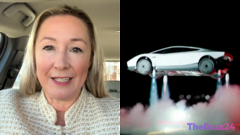
Tesla’s Roadster Takes Flight: Thrusters Hint at Future of Hovering Vehicles
Tesla has showcased a radical new iteration of its Roadster electric sports car, featuring experimental thruster technology that enables it to hover and maneuver in mid-air. The dramatic unveiling occurred in Texas, at a facility operated by SpaceX, the aerospace company co-founded by Tesla CEO Elon Musk.
During the presentation, Musk emphasized the need for a live audience to witness the vehicle’s capabilities, stating, “You’re going to see some crazy stuff tonight.” He aimed to demonstrate that the car’s astonishing aerial performance was not a product of artificial intelligence, but rather a result of advanced engineering. A demonstration saw the Roadster ascend a steep ramp, execute an airborne spin, and then land smoothly, seemingly propelled by integrated air jets.
While the demonstration has ignited public imagination about the future of personal transportation, the widespread adoption of flying cars remains a distant prospect. The complex engineering challenges, regulatory hurdles, and safety considerations associated with such vehicles suggest that a practical, road-legal flying car is unlikely to be a common sight in the immediate future. Nevertheless, Tesla’s innovative approach with the Roadster pushes the boundaries of automotive technology and hints at potential future advancements.
Key Takeaways
- Tesla has unveiled a new version of its Roadster electric sports car equipped with thruster technology.
- The experimental Roadster demonstrated hovering and mid-air maneuvering capabilities using air jets.
- Despite the advanced demonstration, widespread adoption of flying cars faces significant future challenges.
Editor’s Analysis & Impact
This demonstration by Tesla, leveraging SpaceX’s aerospace expertise, represents a bold step in pushing the envelope of automotive innovation. While not a production-ready flying car, the Roadster’s thruster system showcases a potential pathway for integrating advanced propulsion into personal vehicles. The immediate impact is a significant boost to Tesla’s brand image as a forward-thinking innovator. However, the long-term implications depend heavily on overcoming substantial engineering, safety, and regulatory obstacles. This development could spur further research and investment in advanced vehicle technologies, potentially accelerating the timeline for more radical transportation solutions, even if practical flying cars are still years away.
Frequently Asked Questions
Q: What is the new feature demonstrated on the Tesla Roadster?
A: The new version of the Tesla Roadster has been equipped with thruster technology that allows it to hover and maneuver in mid-air, as demonstrated using air jets.
Q: Was the demonstration a real flying car?
A: While the demonstration showed the Roadster performing aerial maneuvers using thrusters, it is not yet a production-ready flying car. Significant engineering, safety, and regulatory challenges remain before such vehicles could be widely adopted.
Q: What was the role of SpaceX in this demonstration?
A: SpaceX, Elon Musk's aerospace company, assisted in the development of the Roadster's thruster system, contributing its expertise in advanced propulsion and aerospace engineering.
AI Disclosure: This article is based on verified data and official reports. Our Team and AI have cross-referenced every financial detail with primary sources to ensure total accuracy.
More from this Category