Escalating Violence Targets Palestinian Olive Harvest in West Bank
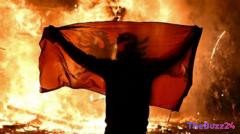
The annual olive harvest in the occupied West Bank has been marred by a surge in violent confrontations, as masked settlers have launched coordinated attacks against Palestinian farmers. Recent incidents near the village of Abu Falah saw dozens of settlers setting fire to vehicles and olive trees, resulting in at least 12 injuries, including four dual Palestinian-American citizens. The violence has reached a critical point, with local farmers reporting the use of nail-studded sticks, rocks, and firearms during these assaults.
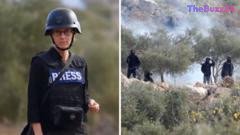
Among those caught in the chaos was a journalist, who reported being ambushed and physically assaulted while documenting the events. Witnesses described a harrowing scene where farmers, attempting to protect their livelihoods by working in large groups, were forced to flee as settlers descended from nearby illegal outposts. The situation often devolved into chaotic standoffs, with both sides exchanging projectiles before security forces arrived to deploy tear gas, further complicating the already volatile environment.
According to United Nations data, the frequency of settler attacks during this year’s harvest season has already surpassed the total number of incidents recorded throughout the entirety of last year. With one fatality and over 120 injuries reported so far, the harvest has transformed from a traditional agricultural event into a dangerous struggle for survival. Farmers remain determined to access their ancestral lands, despite the growing presence of illegal outposts and the persistent threat of physical harm.
As the conflict intensifies, the international community and local officials are calling for thorough investigations into the violence. The presence of illegal outposts, which continue to expand despite their status under both international and local law, remains a central point of contention. For many Palestinian families, the olive harvest is not merely an economic necessity but a profound assertion of their right to remain on their land, even as the security situation continues to deteriorate.
Key Takeaways
- Settler attacks during the West Bank olive harvest have significantly increased, with UN data showing more incidents in the last two weeks than in all of last year.
- At least 12 Palestinians, including four dual US citizens, and a journalist were injured in recent attacks involving fire, rocks, and physical assault.
- The proliferation of illegal outposts near Palestinian farmland has created a high-tension environment where farmers must organize in groups to attempt to protect their crops.
Editor’s Analysis & Impact
The surge in violence during the West Bank olive harvest highlights a deepening systemic crisis in the region. The expansion of illegal outposts, often operating with a degree of impunity, has fundamentally altered the security landscape for Palestinian agricultural communities. This trend suggests a strategic effort to exert control over contested land, effectively turning a seasonal economic activity into a flashpoint for broader geopolitical conflict. The involvement of foreign nationals and journalists in these attacks increases the diplomatic pressure on the Israeli government to address the conduct of extremist settlers. Moving forward, the inability to secure these harvest zones threatens to permanently disrupt the local economy and further erode the possibility of peaceful coexistence, as the cycle of retaliation between settlers and local residents continues to escalate without effective intervention.
Frequently Asked Questions
Q: Why is the olive harvest in the West Bank considered a high-risk activity?
A: The harvest has become a target for extremist settlers who use the season to intimidate Palestinian farmers, destroy property, and assert control over land, often leading to violent physical confrontations.
Q: What is the legal status of the outposts mentioned in the report?
A: All Israeli settlements in the West Bank are considered illegal under international law. Furthermore, 'outposts'—small, often unauthorized encampments—are also illegal under Israeli law, though many continue to receive state support.
AI Disclosure: This article is based on verified data and official reports. Our Team and AI have cross-referenced every financial detail with primary sources to ensure total accuracy.
More from this Category