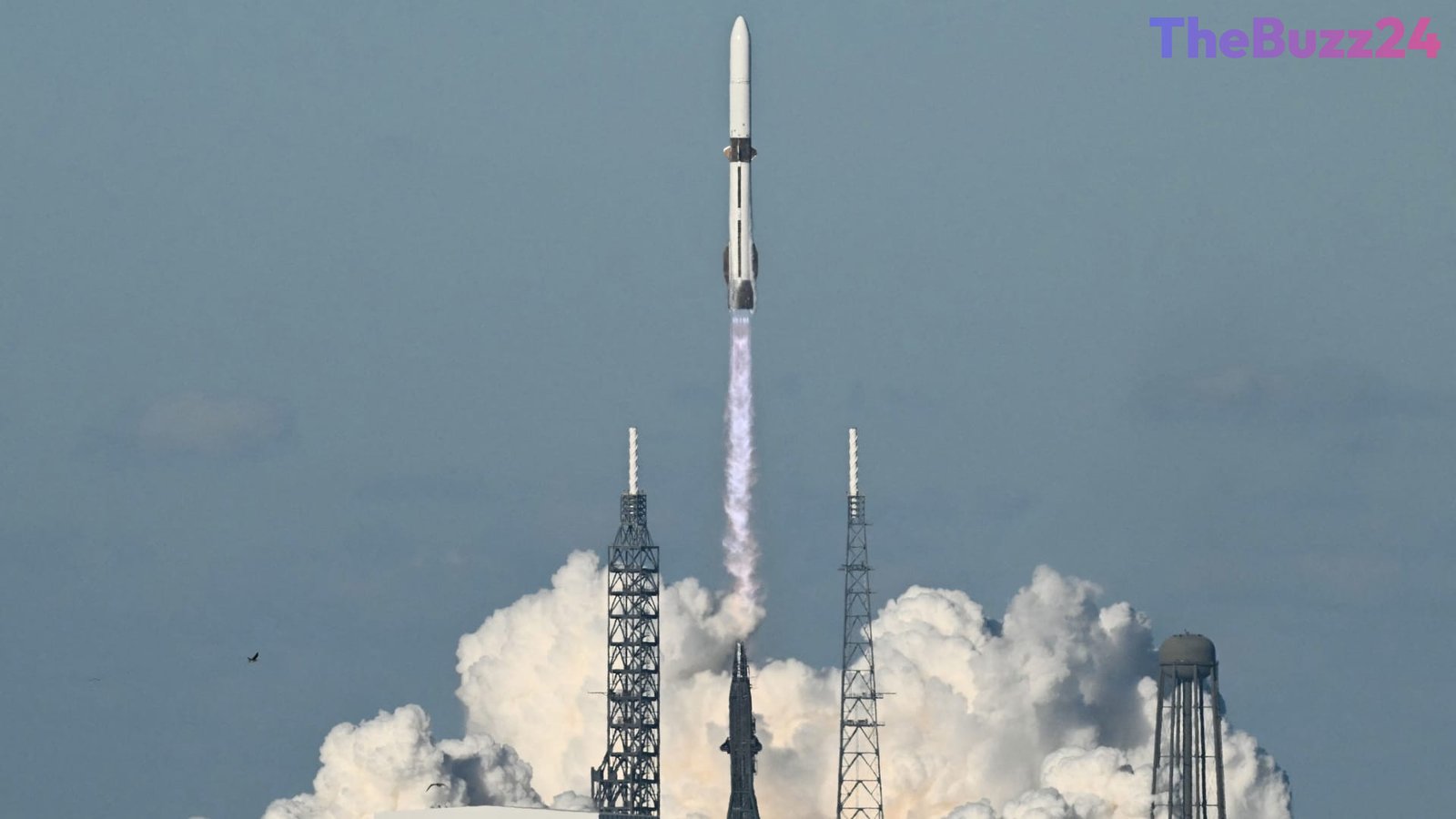
Blue Origin Unveils $330 Million Florida Expansion to Accelerate New Glenn Launch Cadence
Blue Origin is significantly scaling up its operational footprint in Florida, announcing a $330 million infrastructure expansion designed to dramatically increase the flight frequency of its heavy-lift New Glenn rocket. The extensive project at the Cape Canaveral Rocket Park campus will introduce two new launch and landing pads, equipping the aerospace company to achieve an ambitious target of conducting multiple orbital missions per week before the decade concludes.
Slated for completion in mid-2027, the expansion will allow Blue Origin to manufacture up to 150 New Glenn upper stages each year. As part of the upgrade, the company is also partnering with the U.S. Space Force to construct a dedicated customer integration facility at Cape Canaveral Space Force Station, enabling teams to process and prepare multiple payloads simultaneously. These developments build upon Blue Origin’s substantial regional footprint, which already exceeds $3 billion in infrastructure investments across more than 20 locations and sustains over 5,000 local jobs.
The aggressive infrastructure push comes at a critical time for the aerospace sector, which is grappling with an industry-wide shortage of commercial launch capacity. Surging demand from commercial satellite networks—including Amazon’s low Earth orbit internet constellation—alongside key government and defense contracts, has created intense competition for dependable orbital access.
Following a recent $10 billion funding round that elevated the company’s valuation to $140 billion, Blue Origin is channeling heavy resources into flight readiness. As repair work continues following a launchpad setback earlier this year, the company remains focused on returning New Glenn to the pad and establishing a high-frequency, partially reusable launch architecture to compete directly with leading industry rivals.
Key Takeaways
- Blue Origin is spending $330 million to expand its Cape Canaveral campus with two new launch and landing pads.
- The upgraded facilities will support the production of up to 150 New Glenn upper stages annually, targeting multiple launches per week by 2030.
- The investment aims to alleviate global commercial launch bottlenecks amid surging demand for satellite deployment.
Editor’s Analysis & Impact
Blue Origin’s massive capital injection underscores a pivotal transition from rocket development to high-rate industrial manufacturing. The global space economy is facing an acute launch bottleneck, driven largely by the race to deploy low Earth orbit megaconstellations and escalating defense payloads. SpaceX has held a virtual monopoly on dependable, high-cadence heavy-lift capabilities, leaving commercial satellite operators with few alternatives. By investing heavily in simultaneous multi-mission processing and aiming for up to 150 upper stages annually, Blue Origin is laying the groundwork to become a true high-volume freight carrier to orbit. If the company successfully meets its late-2020s cadence targets, it will fundamentally balance the commercial launch market, establishing a vital second pillar for global aerospace logistics.
Frequently Asked Questions
Q: What does Blue Origin's $330 million expansion include?
A: The project includes adding two new launch and landing pads at Cape Canaveral, expanding the Rocket Park campus to produce up to 150 New Glenn upper stages annually, and building a new customer integration facility with the U.S. Space Force.
Q: When will the new Florida facilities be completed?
A: The expansion at the Cape Canaveral Rocket Park campus is scheduled for completion in the summer of 2027.
Q: What is the long-term flight goal for the New Glenn rocket?
A: Blue Origin is designing its updated infrastructure to support an operational tempo of multiple New Glenn launches per week by the end of the decade.
AI Disclosure: This article is based on verified data and official reports. Our Team and AI have cross-referenced every financial detail with primary sources to ensure total accuracy.
More from this Category