Nationwide Unrest Grips France as Citizens Protest Soaring Living Costs and Economic Strain
A wave of demonstrations swept across France on Saturday, bringing together students, union members, and citizens in a coordinated pushback against surging prices and deteriorating public services. What began as localized student walkouts in the economically challenged northern suburbs of Paris has swiftly evolved into a broad national movement. Demonstrators are expressing deep frustration over weakening public expenditure, widening economic inequality, and falling standards within critical infrastructure like education.
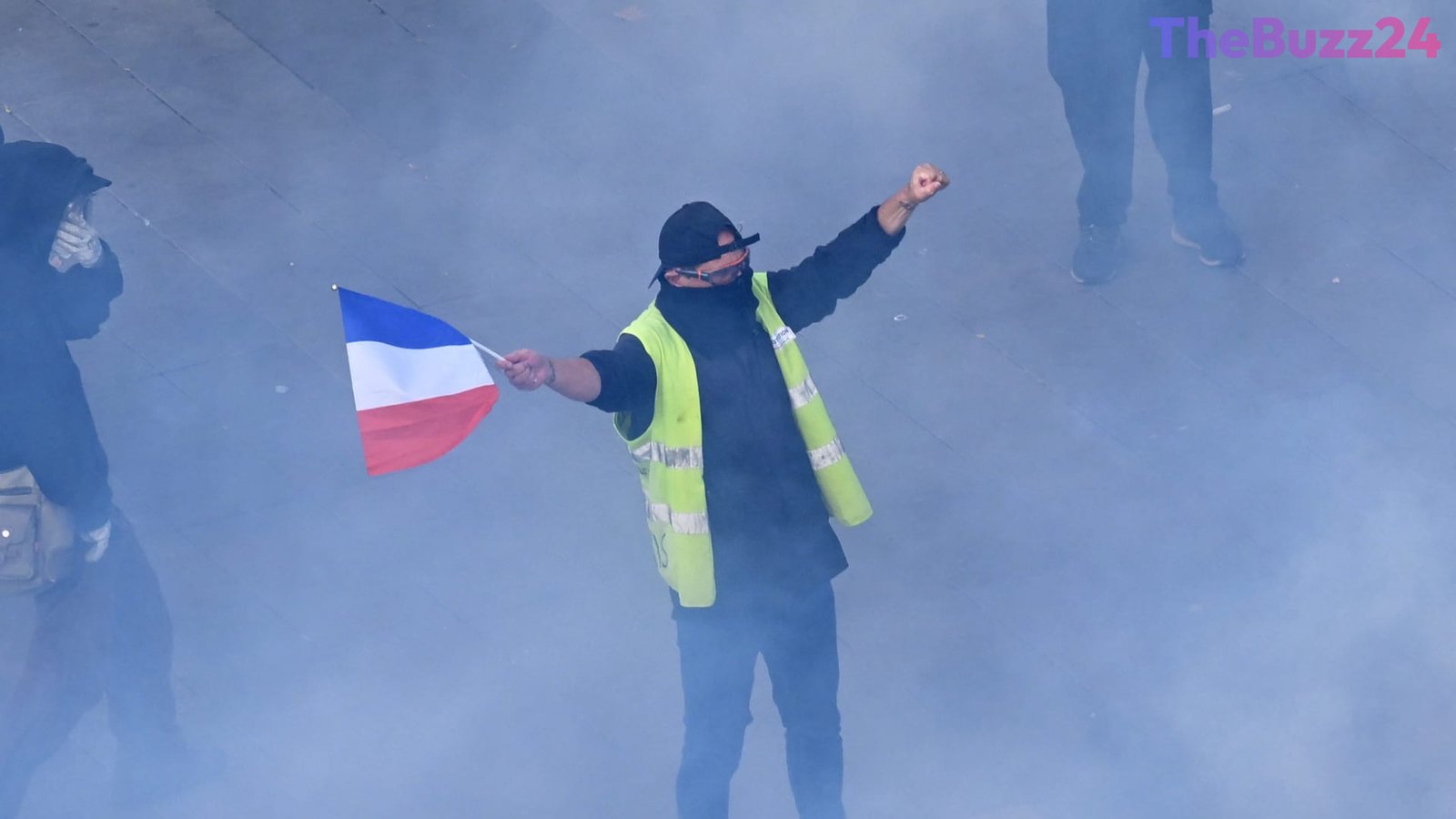
Security forces maintained a heavy presence in central Paris, specifically cordoning off high-profile locations such as the Arc de Triomphe and the Avenue des Champs-Elysees. Despite these precautions, hundreds of demonstrations materialized nationwide, drawing tens of thousands of participants. Echoing tactics from previous years, protesters donning high-visibility vests blockaded roadways in several cities, while localized clashes and property disruptions—such as burning trash cans in Marseille—highlighted the volatility of the situation.
The demonstrations unfold during a delicate political period for President Emmanuel Macron, who navigates the latter stage of his presidency against the backdrop of a deeply polarized electorate and a fragmented legislature. Compounding these domestic tensions, France faces severe financial pressure as investors retreat from French bonds, pushing government borrowing costs to multi-decade highs. While government officials have cautioned against escalating violence and accused political opposition groups of stoking the unrest, participants maintain that their grievances stem from genuine economic hardship and an unlivable cost of living.
Controversy has also surrounded the state’s policing tactics, following reports of severe injuries sustained by both protesters and law enforcement officers. Although authorities temporarily restricted the deployment of specific crowd-control munitions during student marches, the interior ministry affirmed that all necessary intermediate weapons remain authorized should widespread clashes persist. With legacy activist groups and labor organizations joining the mobilization, the movement threatens to pose a sustained challenge to the administration’s remaining term.
Key Takeaways
- Widespread demonstrations erupted across France over the escalating cost of living and declining public spending.
- The protests originated from high school walkouts in Paris before expanding into a nationwide movement involving unions and former activist groups.
- President Emmanuel Macron's administration faces heightened pressure amid rising borrowing costs and a polarized political landscape.
Editor’s Analysis & Impact
The resurgence of large-scale civil unrest in France poses significant macroeconomic and political risks. As borrowing costs hit multi-decade highs amid investor apprehension over public debt, ongoing disruptions threaten to paralyze key economic sectors and derail the government’s fiscal agenda. For international markets, the instability serves as a reminder of the fragility within Eurozone core economies when confronted with persistent inflation and social inequality. The ability of the administration to navigate these simultaneous fiscal and social crises will likely shape the trajectory of French politics well beyond the current presidential term, potentially influencing broader European Union policy responses to domestic populism and economic austerity.
Frequently Asked Questions
Q: What triggered the recent protests in France?
A: The protests were initially sparked by student grievances over teacher absences and poor school facilities, but quickly grew into a nationwide movement addressing the high cost of living, economic inequality, and falling public spending.
Q: Are previous protest groups involved in the current demonstrations?
A: Yes, calls on social media successfully brought members of past movements, such as the Yellow Vests, back into the streets alongside labor unions and students.
Q: How is the French government responding to the unrest?
A: The government has deployed a heavy police presence and authorized intermediate crowd-control weapons while attempting to manage both public safety and escalating political criticism regarding its economic policies.
AI Disclosure: This article is based on verified data and official reports. Our Team and AI have cross-referenced every financial detail with primary sources to ensure total accuracy.
More from this Category