Startup Pascal Secures $8.5 Million to Revolutionize Heating and Cooling with Solid-State Tech
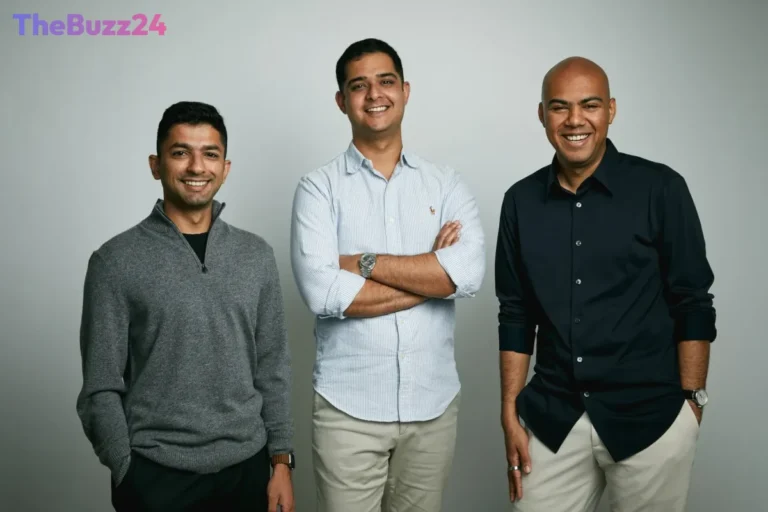
The cooling and heating appliance industry has long sought ways to improve efficiency and eliminate environmentally harmful chemicals. A major breakthrough may now be on the horizon thanks to Pascal, an innovative startup founded by CEO Adam Slavney and CTO Jinyoung Seo. The company recently secured $8.5 million in a follow-on seed funding round, co-led by Sazze Partners and LB Investment, alongside participation from KDB Silicon Valley.
Pascal’s foundational technology stems from unexpected experimental results while researchers were investigating new materials for cooling applications at Harvard University. Rather than relying on traditional chemical refrigerants—which have historically posed severe ozone and greenhouse gas threats—Pascal utilizes a novel solid-state refrigeration method. The system involves compressing carbon dioxide into a cartridge containing a proprietary, sponge-like porous material. As the gas molecules interact with the porous walls, energy transfer occurs, efficiently generating heating and cooling cycles without the environmental hazards of conventional gases.
Compared to existing models, appliances utilizing Pascal’s technology are projected to be roughly 20% more efficient. The startup has already signed a commercial contract with a multinational beverage manufacturer to pilot the system. Pascal plans to deliver its initial functional prototype early next year, with more refined commercial refrigerators slated for market release by 2028.
Industry experts note that traditional refrigerants have undergone decades of regulatory shifts, often substituting one environmental problem for another, such as moving from ozone-depleting Freon to potent greenhouse gases like R-134a. By utilizing solid-state alternatives and operating at lower pressures using conventional system components, Pascal aims to deliver a scalable, cost-effective, and climate-friendly solution that can be manufactured widely.
Key Takeaways
- Pascal raised $8.5 million in a funding round co-led by Sazze Partners and LB Investment.
- The startup's technology uses a unique gas-and-sponge solid-state mechanism that avoids harmful traditional refrigerants.
- Pascal's systems promise a 20% increase in efficiency and have already secured a pilot contract with a multinational beverage brand.
Editor’s Analysis & Impact
The pursuit of sustainable, high-efficiency thermal management represents one of the most critical frontiers in modern hardware engineering. Pascal’s approach addresses a multi-decade dilemma in the HVAC and refrigeration sectors: eliminating potent greenhouse gas refrigerants without sacrificing performance or driving up manufacturing costs. By leveraging a low-pressure, solid-state system utilizing carbon dioxide and proprietary porous materials, Pascal bridges the gap between laboratory science and commercial scalability. The early validation via a multinational beverage pilot signals strong enterprise demand for greener cooling solutions. If Pascal successfully hits its production milestones for 2028, the technology could reshape regulatory standards, supply chains, and consumer expectations across global commercial and residential cooling markets.
Frequently Asked Questions
Q: What makes Pascal's cooling technology different from traditional refrigerators?
A: Pascal uses a solid-state refrigeration approach that compresses carbon dioxide into a proprietary sponge-like porous material, eliminating the need for harmful atmospheric refrigerants like Freon or synthetic greenhouse gases.
Q: How much funding has Pascal raised so far?
A: Pascal recently secured $8.5 million in a follow-on seed funding round co-led by Sazze Partners and LB Investment, with backing from KDB Silicon Valley.
Q: When does Pascal expect to release its products?
A: The company aims to deliver its first functional prototype early next year, with refined commercial refrigerators expected to follow in 2028.
AI Disclosure: This article is based on verified data and official reports. Our Team and AI have cross-referenced every financial detail with primary sources to ensure total accuracy.
More from this Category