From Rocket Tests to Interstellar Frontiers: NASA’s Jet Propulsion Laboratory Marks 90 Years of Innovation
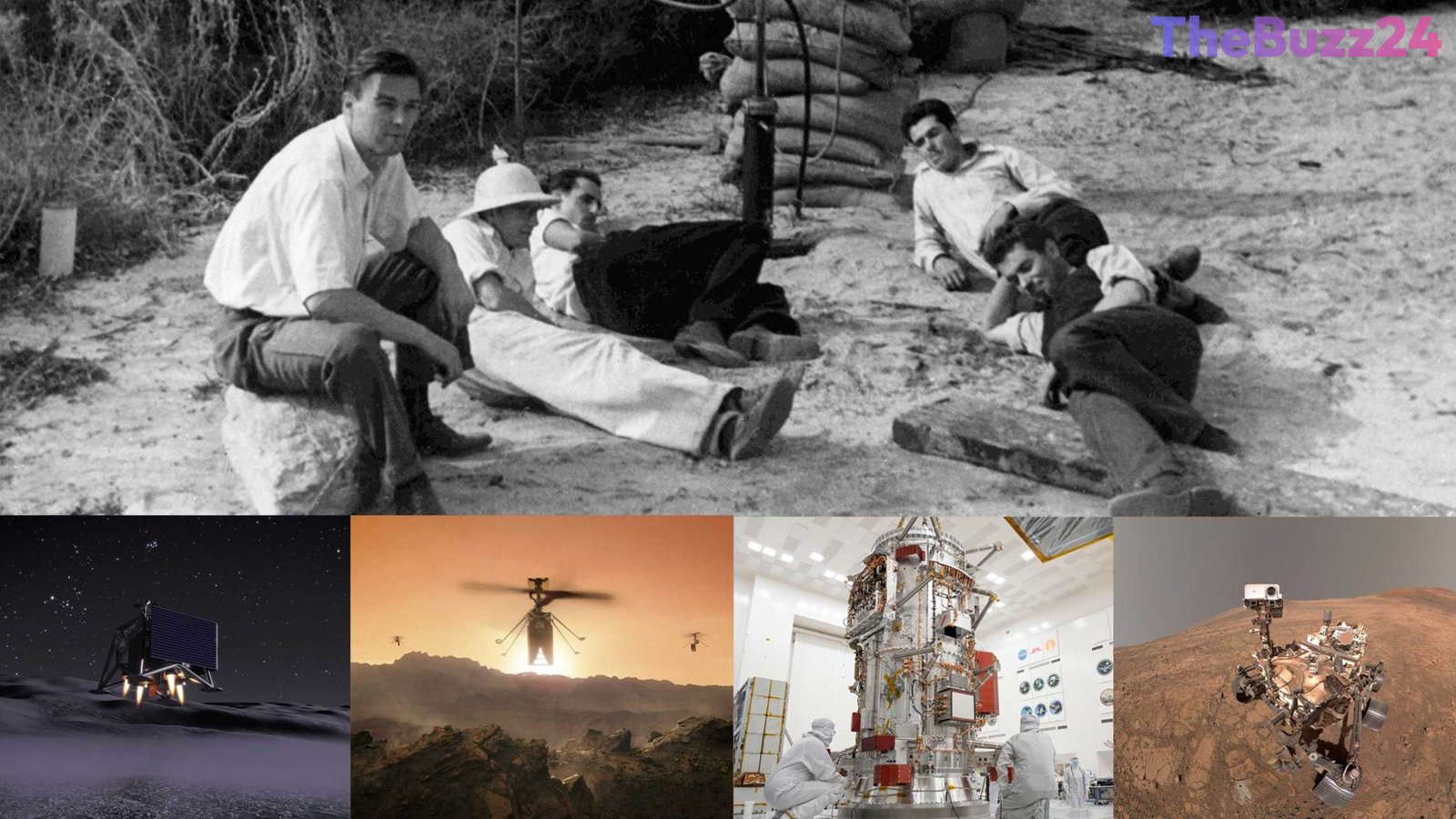
What began as a modest series of rocket-propulsion experiments in a dry Pasadena riverbed in 1936 has evolved into the cornerstone of American space exploration. As the Jet Propulsion Laboratory (JPL) celebrates its 90th anniversary, the institution reflects on a legacy defined by pioneering ‘firsts’—from launching the United States’ inaugural satellite, Explorer 1, to deploying the first rovers and rotorcraft on the surface of Mars. Managed by Caltech for NASA, the laboratory has consistently pushed the boundaries of what is technologically possible in the vacuum of space.
The laboratory’s historical impact is anchored in its ability to translate scientific curiosity into tangible engineering breakthroughs. Beyond its famous planetary missions, JPL has been instrumental in Earth science, developing satellite technology to monitor climate patterns, oceanography, and the environmental impact of human activity. The facility’s Microdevices Laboratory, which famously pioneered the ‘camera on a chip’ technology now ubiquitous in modern smartphones, continues to develop advanced sensors for upcoming astrophysical missions like PRIMA, which aims to study radiant energy in the far-infrared spectrum.
Looking toward the future, the laboratory is preparing for a new era of exploration. Upcoming initiatives include the SkyFall mission, which will deploy a trio of helicopters to map Martian ice deposits, and the MoonFall project, designed to land propulsive drones at the lunar South Pole. Simultaneously, the NEO Surveyor mission is being developed to identify potentially hazardous near-Earth objects, reinforcing the lab’s commitment to planetary defense. As the Voyager probes continue their historic journey into interstellar space, the institution remains focused on the next century of discovery, blending the same daring spirit of its founders with cutting-edge modern engineering.
Key Takeaways
- The Jet Propulsion Laboratory is celebrating 90 years of innovation, having evolved from a small student-led rocket project into a global leader in space exploration.
- JPL is currently developing several high-stakes missions for 2027 and 2028, including the SkyFall Mars mission, MoonFall lunar drones, and the SunRISE solar study.
- Beyond deep space, the lab continues to advance Earth-monitoring technology and planetary defense systems, such as the NEO Surveyor, to protect the planet from hazardous asteroids.
Editor’s Analysis & Impact
The 90-year trajectory of the Jet Propulsion Laboratory serves as a microcosm for the evolution of the aerospace industry. By maintaining a symbiotic relationship between academic research at Caltech and practical engineering for NASA, the lab has successfully bridged the gap between theoretical physics and operational space hardware. The shift toward smaller, swarm-based technologies—such as the SunRISE satellite formation and the SkyFall helicopter trio—indicates a broader industry trend: moving away from monolithic, high-cost spacecraft toward distributed, resilient systems. This approach not only lowers the risk of mission failure but also allows for more comprehensive data collection. As private sector competition in space grows, JPL’s focus on high-complexity, high-reward scientific missions remains a critical differentiator that ensures continued U.S. leadership in deep-space exploration and planetary science.
Frequently Asked Questions
Q: What was the first satellite launched by the Jet Propulsion Laboratory?
A: The Jet Propulsion Laboratory launched Explorer 1 in 1958, which was the first U.S. satellite and the first spacecraft to conduct scientific research in orbit by discovering Earth's radiation belts.
Q: What is the primary goal of the upcoming SkyFall mission?
A: The SkyFall mission, scheduled for a 2028 launch, aims to deploy three helicopters over Mars to map hidden ice deposits and analyze complex weather patterns on the planet.
AI Disclosure: This article is based on verified data and official reports. Our Team and AI have cross-referenced every financial detail with primary sources to ensure total accuracy.
More from this Category