NASA Successfully Tests RS-25 Engine for Upcoming Artemis Lunar Missions
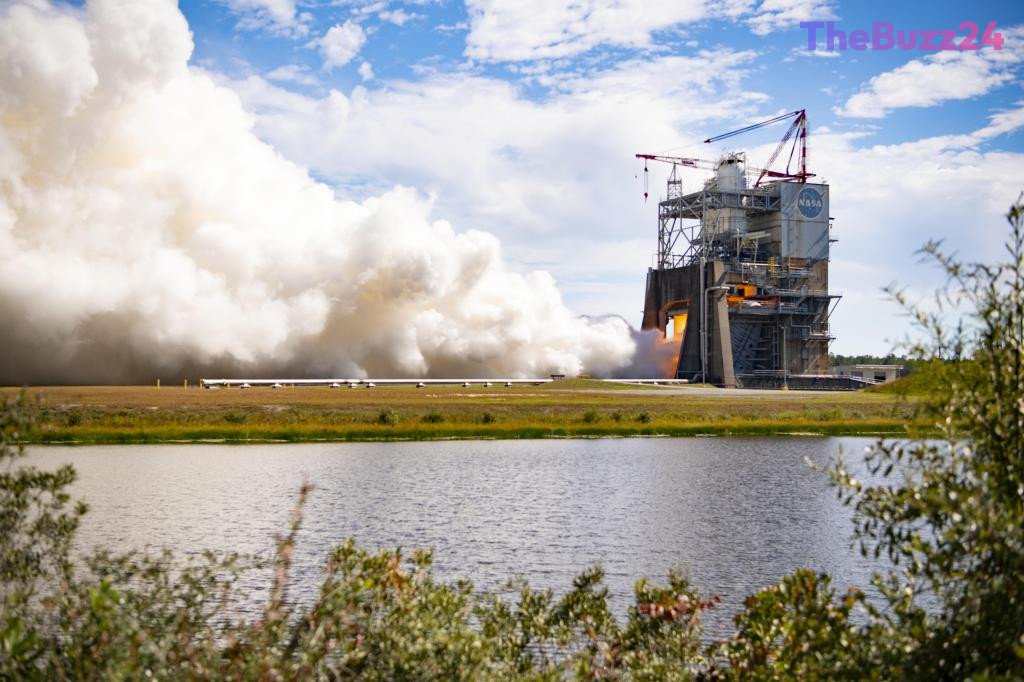
The space agency has successfully completed a crucial hot fire test of an RS-25 developmental engine at the Stennis Space Center located near Bay St. Louis, Mississippi. This latest milestone marks a significant step forward in preparations for upcoming crewed lunar explorations and deep space missions.
During the evaluation, test operators ignited the engine for approximately eight and a half minutes, perfectly replicating the duration required during an actual launch of the Space Launch System rocket. Furthermore, operators pushed the propulsion system to 111 percent of its rated power level, matching the rigorous thrust demands needed to propel future heavy-lift vehicles and spacecraft carrying astronauts into orbit.
The primary goals of this extensive assessment included verifying flight components for upcoming Artemis voyages and testing an innovative thermal protection system. This shielding is designed to protect the engine nozzle from the intense thermal environment experienced during liftoff.
Although the specific developmental engine tested will not fly in space, the generated telemetry provides engineers and aerospace partners with vital data to enhance overall engine reliability and performance. A quartet of RS-25 engines is utilized to generate up to 2 million pounds of combined thrust for every Artemis launch, underlining the critical nature of these ground tests.
Key Takeaways
- NASA successfully conducted a full-duration hot fire test of an RS-25 developmental engine at the Stennis Space Center.
- The engine was fired for 500 seconds and reached 111% power to simulate actual launch conditions for the Space Launch System.
- Data collected from the test will validate new thermal protection systems and flight components for upcoming Artemis missions.
Editor’s Analysis & Impact
The successful testing of the RS-25 engine underscores the continued momentum behind NASA’s Artemis program and the broader commercial aerospace supply chain. By rigorously evaluating propulsion components under simulated launch stresses, the agency significantly mitigates mission risks for future deep space exploration. The collaboration between government entities and prime contractors like L3Harris Technologies highlights a robust industrial framework dedicated to heavy-lift rocket technology. As the timeline for crewed lunar returns progresses, maintaining high reliability and performance standards for propulsion systems will remain paramount. This milestone not only keeps the Artemis schedule on track but also drives ongoing innovations in thermal protection and rocket engineering, benefiting the aerospace sector at large.
Frequently Asked Questions
Q: What was the main purpose of the RS-25 engine test?
A: The primary objectives were to acceptance test flight components for future Artemis missions and validate a new thermal protection system designed to protect the engine nozzle during launch.
Q: How long did the engine fire during the test?
A: The developmental engine was fired for almost eight-and-a-half minutes, which is 500 seconds—the exact duration required during an actual launch of the Space Launch System rocket.
Q: Where are the RS-25 engines tested before being cleared for flight?
A: All RS-25 engines are tested and proven flightworthy at NASA's Stennis Space Center in Mississippi prior to actual use in missions.
AI Disclosure: This article is based on verified data and official reports. Our Team and AI have cross-referenced every financial detail with primary sources to ensure total accuracy.
More from this Category