Deadly Attack Shakes Jordan: Seven Killed at Church Funeral in Karak
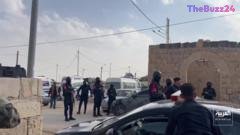
A solemn funeral gathering in Karak, Jordan, turned into a scene of horrific violence when unidentified gunmen opened fire inside a Greek Orthodox church, killing seven people. The assailants, described by authorities as a “group of extremists,” arrived in a vehicle, stormed the church, and unleashed a barrage of gunfire before fleeing the scene. The attack has sent shockwaves across the Hashemite Kingdom, a nation generally known for its stability in a volatile region.
Witnesses recounted a terrifying ordeal that lasted approximately 15 minutes. Inside the church, prayers quickly turned to screams as congregants desperately sought cover, throwing themselves under pews and attempting to flee. One witness described hearing sounds “as if a war had just started,” while another spoke of “people pushing and throwing themselves to the ground,” cradling loved ones amidst the chaos. Security camera recordings reportedly captured three armed individuals approaching the church before the deadly assault. The gunmen reportedly escaped in a pickup truck, continuing to fire as they departed.
Jordanian Interior Minister Mazen al-Faraya condemned the incident as “painful and horrific,” labeling it “unparalleled in the history of the Hashemite Kingdom of Jordan.” King Abdullah II swiftly vowed that authorities would “confront the terrorist act that targeted Karak with the harshest penalties.” The attack has sparked widespread anger and distress among residents, particularly in Karak, which is home to a significant Christian community. Security measures were immediately heightened, and a heavy security presence was observed around hospitals treating the injured, reflecting the community’s shock and frustration over what many perceive as a failure to adequately address extremist threats.
Key Takeaways
- Seven individuals were tragically killed in a shooting attack by unidentified gunmen at a church funeral in Karak, Jordan.
- Jordanian officials, including Interior Minister Mazen al-Faraya and King Abdullah II, have strongly condemned the incident as an unprecedented "terrorist act" and vowed to bring the "extremist" perpetrators to justice.
- The attack, which caused widespread panic and anger among the local community, highlights the rare but devastating impact of extremist violence in a country generally considered stable.
Editor’s Analysis & Impact
This unprecedented attack on a church funeral in Karak represents a significant challenge to Jordan’s long-standing reputation for stability and interfaith harmony. While extremist incidents are rare in the kingdom, this event could heighten concerns about internal security and the potential for radical elements to disrupt social cohesion. The swift and strong condemnation from King Abdullah II and the Interior Minister underscores the government’s commitment to counter-terrorism, but also signals the gravity of the threat. The incident may prompt a review of security protocols, particularly around places of worship and public gatherings. Economically, such events can deter tourism and foreign investment, though Jordan’s strategic importance and strong alliances might mitigate long-term impacts. The broader implications include a potential increase in regional scrutiny on Jordan’s counter-terrorism efforts and a renewed focus on protecting minority communities.
Frequently Asked Questions
Q: What happened in Karak, Jordan?
A: Unidentified gunmen attacked a Greek Orthodox church during a funeral service in Karak, Jordan, resulting in the deaths of seven people. The assailants opened fire on congregants before fleeing the scene.
Q: Who is responsible for the attack?
A: The perpetrators have been described by Jordanian Interior Minister Mazen al-Faraya as a "group of extremists." As of now, no specific group has claimed responsibility for the deadly assault, and authorities are actively working to apprehend those involved.
Q: How common are such attacks in Jordan?
A: Such violent attacks, particularly targeting places of worship, are rare in Jordan. The Interior Minister described this incident as "unparalleled in the history of the Hashemite Kingdom of Jordan," highlighting its unusual and shocking nature for the country.
AI Disclosure: This article is based on verified data and official reports. Our Team and AI have cross-referenced every financial detail with primary sources to ensure total accuracy.
More from this Category