Israeli Military Demolishes Hebron Neighborhood Following Deadly Checkpoint Shooting
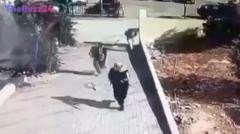
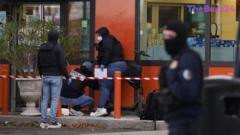
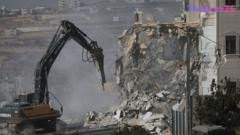
The Israeli military has initiated the demolition of residential buildings in a Hebron neighborhood following a deadly shooting attack that claimed the lives of two Israeli soldiers. The incident, which also left three additional service members wounded before security forces neutralized the two armed Palestinian assailants at a checkpoint, has immediately reverberated through the nation’s political landscape.
Prime Minister Benjamin Netanyahu visited the scene and announced plans to completely transform and demolish the area associated with the attackers. He further indicated that authorities have placed strict cordons around Hebron and the neighboring city of Halhul. This controversial policy of demolishing homes belonging to suspected attackers is frequently condemned by human rights organizations as a form of collective punishment, yet officials defend it as a necessary deterrent.
Beyond the immediate tactical response, the violent confrontation has heightened regional volatility during a sensitive period marked by the annual olive harvest and an impending general election. High-ranking government ministers have advocated for expansive military campaigns across the West Bank, drawing sharp divisions among political leaders. Meanwhile, security investigations revealed that the assailants possessed a substantial cache of ammunition, suggesting they may have originally planned a larger scale assault before encountering the checkpoint.
Key Takeaways
- Israeli forces began demolishing buildings in a Hebron neighborhood after two soldiers were killed in a checkpoint attack.
- Prime Minister Benjamin Netanyahu signaled readiness for extensive military actions and strict cordons around Hebron and Halhul.
- The violent escalation has significantly impacted national political tensions just days ahead of the general election.
Editor’s Analysis & Impact
The recent escalation in Hebron underscores the volatile intersection of security policy and domestic politics in the region. With elections approaching, high-profile security incidents invariably shift the political discourse toward defense and national security, bolstering hardline rhetoric. The threat of an expanded military campaign in the West Bank risks compounding humanitarian concerns and deepening regional instability. Economically and socially, prolonged lockdowns and infrastructural demolitions disrupt local commerce and exacerbate tensions between communities. Observers will closely monitor how political leadership navigates these security imperatives against international criticism regarding collective punishment and human rights.
Frequently Asked Questions
Q: Why did the Israeli military begin demolishing buildings in Hebron?
A: The demolitions were initiated following a deadly shooting attack at a checkpoint outside Hebron that resulted in the deaths of two Israeli soldiers.
Q: What measures have been implemented around Hebron following the attack?
A: Authorities have imposed strict cordons around the city of Hebron and the nearby city of Halhul, alongside plans to demolish the neighborhood connected to the attackers.
Q: How has the incident impacted local politics?
A: The attack has heavily influenced the ongoing election campaign, prompting politicians to debate national security strategies and potential large-scale military operations in the West Bank.
AI Disclosure: This article is based on verified data and official reports. Our Team and AI have cross-referenced every financial detail with primary sources to ensure total accuracy.
More from this Category