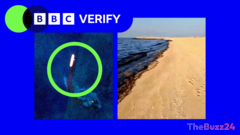
UAE Coastline Contaminated by Oil Spill Following Tanker Attack Near Hormuz
A significant oil spill, originating from a tanker strike near the critical Strait of Hormuz, is now affecting the coastlines of the United Arab Emirates. The slick has forced the closure of several beaches and coastal areas, raising environmental concerns.
Satellite imagery and verified video footage confirm the presence of the oil spill along the shores near Umm Al Quwain, a northern Emirati city. The affected waters have turned black, indicating the severity of the contamination. The UAE’s Ministry of Climate Change and Environment acknowledged the incident on Thursday, stating that immediate containment measures were initiated to mitigate environmental damage.
Experts are closely monitoring the situation, though a full assessment of the environmental impact will take time. While initial reports of a smaller leak emerged on October 19th, the slick appears to have expanded rapidly over the subsequent two days. The potential long-term consequences for marine life, including the risk of toxic compound exposure affecting reproduction, are a significant concern.
The spill’s proximity to the Siniyah and Khor Al Beidah islands is particularly worrying. These islands are recognized as a Key Biodiversity Area, home to vital habitats such as coral reefs, seagrasses, and saltmarshes, as well as endangered species like green turtles and the Halavi guitarfish. The potential damage to these sensitive ecosystems is a primary focus for environmental scientists.
Analysis of the incident suggests the damaged vessel matches the description and location of the crude oil tanker Gem No.2. The Panama-flagged tanker was reportedly struck by an unknown projectile on October 9th, resulting in a fire that was subsequently extinguished. The crew of 22 Indian sailors were safely rescued. This incident is part of a concerning trend of increased vessel attacks in and around the Strait of Hormuz, which security experts attribute to efforts to assert control over the vital shipping lane.
Key Takeaways
- An oil spill from an attacked tanker is impacting UAE coastlines, leading to beach closures.
- The spill is near ecologically sensitive islands, raising concerns for marine life and habitats.
- The incident is linked to a recent surge in vessel attacks in the Strait of Hormuz.
Editor’s Analysis & Impact
This oil spill incident underscores the volatile geopolitical situation in the Strait of Hormuz and its direct impact on regional environments and global trade. The contamination of UAE beaches highlights the vulnerability of coastal ecosystems to maritime conflict. The proximity to a Key Biodiversity Area is particularly alarming, potentially causing long-term damage to fragile marine life and habitats. As investigations into the tanker attack continue, the incident serves as a stark reminder of the environmental risks associated with escalating tensions in vital shipping lanes, potentially affecting energy supplies and necessitating robust international cooperation for both security and environmental protection.
Frequently Asked Questions
Q: What caused the oil spill?
A: The oil spill originated from the crude oil tanker Gem No.2, which was reportedly struck by an unknown projectile near the Strait of Hormuz, causing damage and a subsequent leak.
Q: What are the environmental concerns associated with this spill?
A: The spill threatens marine life and sensitive habitats, including coral reefs, seagrasses, and saltmarshes on nearby islands. There are also concerns about long-term damage from toxic compounds affecting marine species' ability to reproduce.
Q: Is this an isolated incident?
A: No, this incident is part of a record surge in reported vessel attacks in and around the Strait of Hormuz, which security experts believe is related to geopolitical assertiveness in the region.
AI Disclosure: This article is based on verified data and official reports. Our Team and AI have cross-referenced every financial detail with primary sources to ensure total accuracy.
More from this Category