AI Infrastructure Trade Under Pressure as Credit Risks Mount, Neoclouds Tumble, and Solidigm Cancels IPO
A wave of skepticism has swept across the artificial intelligence sector, sparking severe volatility among infrastructure providers and prompting debt markets to reprice risk. As tech heavyweights continue to funnel billions into data center build-outs, investors are questioning whether revenue from generative AI will arrive quickly enough to justify the unprecedented capital expenditures. The resulting anxiety dragged tech-heavy indices down, with specialized cloud computing providers—frequently referred to as neoclouds—absorbing the heaviest hits.
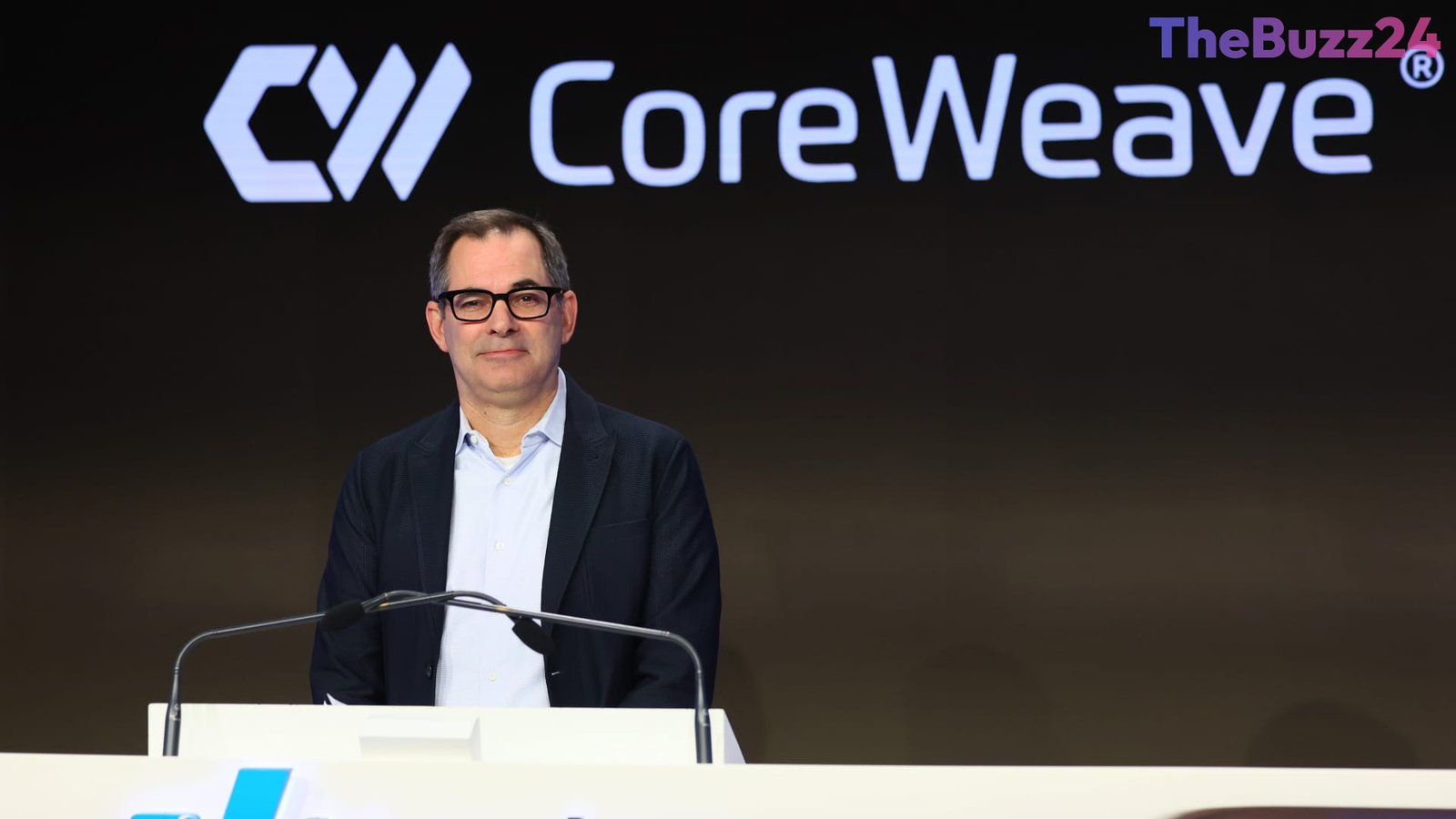
The strain is particularly evident in corporate credit markets, where credit default swaps (CDS) tied to bonds from tech giants like Meta, Oracle, and Nvidia have surged to unprecedented heights. Meta recently reported negative free cash flow exceeding $2 billion for the third quarter as it raised its full-year capital expenditure baseline to $135 billion, while also signaling over $450 billion in non-cancellable future commitments. The rising cost of default protection reflects deepening concerns over these massive cash outlays. Meanwhile, Oracle faces potential credit rating downgrades, and the yield on unsecured notes for specialized providers like CoreWeave has surged past 15%, with its CDS spreads topping 11%—a threshold commonly viewed as distressed.
Publicly traded neoclouds, including CoreWeave, Nebius, and IREN, have each plunged by over 30% through October as the market rapidly reprices pure-play compute vendors. The unease is reverberating across global markets: South Korea’s Elice Group tumbled 30% in its trading debut, while Australian data center operator NextDC dropped nearly 40% following a trimmed annual earnings outlook. Research firm Gartner has warned that up to 80% of neocloud firms could fail or be absorbed by larger entities by 2030, underscoring the precarious economics of debt-fueled infrastructure operations.
The broader market volatility has also halted major capital-raising efforts. South Korean memory giant SK Hynix announced the withdrawal of a planned U.S. initial public offering for its Solidigm subsidiary, an enterprise SSD and NAND storage specialist acquired from Intel in 2021. Despite the mounting headwinds, industry proponents, including Nvidia chief executive Jensen Huang, insist that appetite for computational power continues to outpace available capital, maintaining that infrastructure bottlenecks will ultimately be resolved as enterprise adoption deepens.
Key Takeaways
- Credit default swap spreads for Meta, Nvidia, and Oracle reached historic highs amid mounting debt and elevated capital expenditures.
- Specialized 'neocloud' providers, including CoreWeave and Nebius, lost over 30% of their market value in October as yields on debt topped 15%.
- Souring market sentiment and volatility forced memory giant SK Hynix to withdraw the planned U.S. public listing for its Solidigm unit.
Editor’s Analysis & Impact
The honeymoon phase of the AI build-out is officially transitioning into a period of acute financial scrutiny. For the past two years, equity markets rewarded any company deploying capital into GPUs and data centers. Today, debt markets are sounding an alarm. When investment-grade behemoths like Meta and Oracle see record-wide credit default swaps and negative free cash flow, the ripple effects on smaller, debt-reliant neoclouds are amplified exponentially. These boutique providers are heavily levered and face steep refinancing costs in an environment where major hyperscalers might eventually internalize more workloads or curb leasing. While the structural demand for compute remains strong, the current shakeout signals that balance-sheet resilience, rather than hardware acquisition speed, will determine who survives the next phase of the AI expansion.
Frequently Asked Questions
Q: What is a 'neocloud' and why are these companies struggling?
A: Neoclouds are specialized cloud service providers focused heavily on renting high-performance GPUs and compute infrastructure for artificial intelligence models. They are struggling because building these clusters requires massive debt, and investors are growing wary of whether long-term customer demand will generate enough cash flow to service those liabilities.
Q: Why did SK Hynix halt the IPO for Solidigm?
A: SK Hynix withdrew the initial public offering for its U.S. flash storage division Solidigm due to adverse market conditions and sharp share price volatility across the semiconductor and AI infrastructure landscape.
Q: What does a spike in credit default swap (CDS) spreads indicate?
A: A spike in CDS spreads means that the cost to insure against a corporate debt default has risen. For tech giants like Meta and Oracle, widening spreads indicate that bond investors perceive higher financial risk due to aggressive borrowing and surging capital expenditures.
AI Disclosure: This article is based on verified data and official reports. Our Team and AI have cross-referenced every financial detail with primary sources to ensure total accuracy.
More from this Category