Tensions Escalate in France as Nationwide Protests Turn Violent
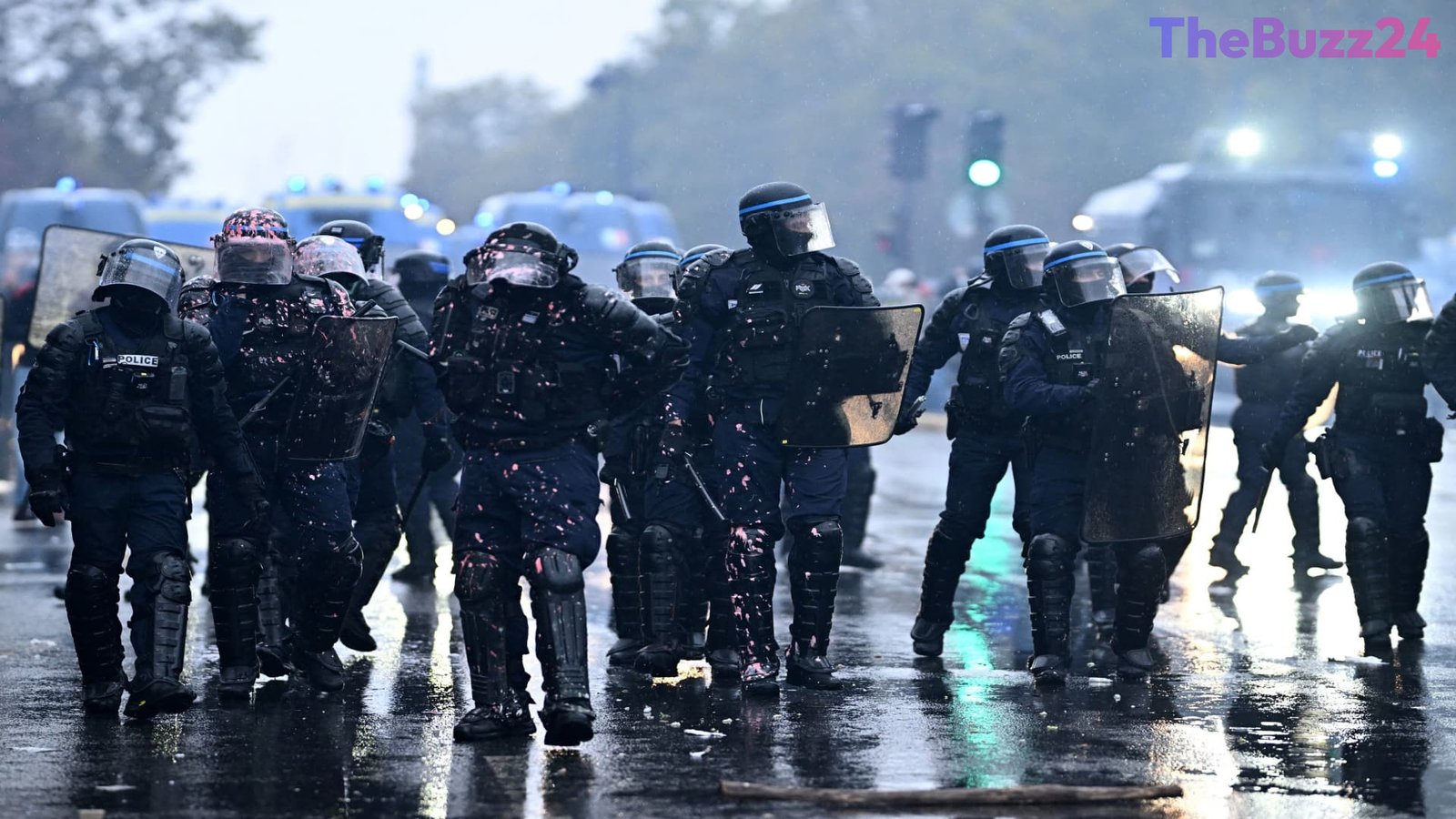
France faced another weekend of widespread civil unrest as hundreds of thousands of demonstrators took to the streets to voice their frustrations over rising living costs and economic inequality. While the majority of the marches remained peaceful, the atmosphere in major urban centers, including Paris, Marseille, and Lyon, deteriorated as night fell. Security forces were met with stone-throwing and vandalism, prompting the use of tear gas and water cannons to disperse crowds in several cities.
In preparation for the demonstrations, the government deployed a massive security force of 70,000 officers, an increase of 10,000 from the previous week. Despite these efforts, clashes persisted, with reports of looting at jewelry shops and the destruction of public property. The heightened security presence led to the closure of major cultural landmarks, including the Louvre and the Musée d’Orsay, while many retailers boarded up storefronts to prevent the damage seen during previous weekends of unrest.
Political leaders remain divided on the path forward. While some officials have blamed criminal elements and far-left activists for the escalation, opposition figures like Jean-Luc Mélenchon have characterized the protests as a necessary response to the government’s failure to address the nation’s social malaise. As the movement gains momentum, similar anti-government demonstrations have begun to ripple into neighboring countries, including Belgium and Italy, signaling a broader regional discontent.
The situation remains volatile, particularly following a separate violent incident west of Paris that has further strained public sentiment. With President Emmanuel Macron facing mounting pressure to address the economic grievances of the populace, the recurring nature of these protests suggests that the social divide in France will continue to challenge the administration in the coming weeks.
Key Takeaways
- Hundreds of thousands of protesters marched across France to demonstrate against rising living costs and economic inequality.
- Despite a massive security deployment of 70,000 officers, violent clashes and looting occurred in major cities including Paris and Marseille.
- The unrest has spread beyond French borders, with similar anti-government protests emerging in Belgium and Italy.
Editor’s Analysis & Impact
The ongoing civil unrest in France represents a significant challenge to the current administration’s stability and economic policy. The intersection of rising inflation, wealth inequality, and a perceived disconnect between the government and the working class has created a volatile environment that is increasingly difficult to manage through security measures alone. From a market perspective, the recurring nature of these protests creates uncertainty for investors and retailers, as the disruption to business operations and tourism threatens to dampen economic growth. The spillover of these protests into neighboring European nations suggests that the underlying grievances are not unique to France, potentially signaling a broader period of social and political instability across the continent. Future stability will likely depend on the government’s ability to implement meaningful economic reforms that address the cost-of-living crisis while maintaining public order.
Frequently Asked Questions
Q: What are the primary reasons for the protests in France?
A: The protests are primarily driven by public frustration over rising living costs, economic inequality, and general social malaise.
Q: Are the protests limited only to France?
A: No, the movement has expanded, with similar anti-government demonstrations and clashes reported in neighboring countries like Belgium and Italy.
AI Disclosure: This article is based on verified data and official reports. Our Team and AI have cross-referenced every financial detail with primary sources to ensure total accuracy.
More from this Category