Political Earthquake in Serbia as Longtime Leader Vučić Concedes Defeat to Student-Led Movement
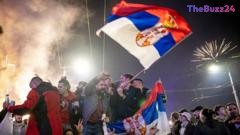
In a stunning political upset, Serbia’s long-standing leader Aleksandar Vučić has conceded defeat in snap parliamentary elections following a powerful surge by a student-led anti-corruption movement. Crowds poured into the streets of Belgrade, Novi Sad, and other cities late Sunday night, celebrating with fireworks, car horns, and joyous chants as preliminary projections indicated the upstart opposition coalition was on track to secure nearly 53% of the vote.
The extraordinary political shift comes less than two years after the student movement first mobilized in the wake of a tragic railway station canopy collapse in Novi Sad that claimed 16 lives. Widely blamed on systemic corruption and negligence, the disaster sparked widespread public outrage and prolonged street demonstrations. Rather than remaining purely an activist group, the movement organized politically, fielding a diverse slate of candidates for the 250-seat parliament that included doctors, academics, actors, and sports figures.
Conceding defeat at his party’s headquarters, Vučić acknowledged that preliminary figures favored the opposition, noting a historic voter turnout of nearly 70%. Independent pollsters projected the student coalition would capture a decisive majority, bringing an end to the Serbian Progressive Party’s dominance that began in 2012. Leaders of the winning movement emphasized that the historic ballot box victory represents a new era of freedom, transparency, and accountability for the Balkan nation.
International reactions have been swift, with European Union officials welcoming the outcome and noting that the path toward deeper European integration is now wide open. As celebrations continue across the country and among the Serbian diaspora globally, attention now shifts to the formation of a new government and the selection of a prime minister to guide the country through its newly promised democratic chapter.
Key Takeaways
- Serbia's long-serving leader Aleksandar Vučić conceded defeat in snap parliamentary elections to a student-led anti-corruption movement.
- The opposition coalition secured roughly 53% of the vote amid record-high voter turnout driven by widespread public frustration over systemic negligence and corruption.
- International leaders and European Union officials have signaled optimism, stating that the political shift opens a fresh chapter for the nation's democratic development.
Editor’s Analysis & Impact
The unexpected electoral defeat of Aleksandar Vučić marks a watershed moment for Serbian politics and the broader Balkan region. For over a decade, Vučić and the Serbian Progressive Party maintained a firm grip on power, balancing delicate diplomatic ties between the European Union and Russia while facing persistent domestic criticism regarding democratic backsliding and institutional corruption. The rise of a decentralized, grassroots student movement demonstrates the potent political force of youth-led mobilization in response to administrative negligence. Economically and diplomatically, this transition could accelerate Serbia’s integration into the European Union, potentially altering geopolitical alignments in Southeastern Europe. However, the incoming administration will face immediate challenges in dismantling entrenched bureaucratic networks, managing public expectations, and restoring full institutional trust without destabilizing the nation’s fragile economic framework.
Frequently Asked Questions
Q: What triggered the student-led political movement in Serbia?
A: The movement was sparked by a fatal railway station canopy collapse in Novi Sad that killed 16 people, which protesters blamed on widespread government corruption and negligence.
Q: How long had Aleksandar Vučić's party been in power?
A: Vučić's Serbian Progressive Party (SNS) and its political coalition had been in power in Serbia since 2012.
Q: What are the immediate political implications of the election results for Serbia's foreign relations?
A: European Union officials have welcomed the election outcome, signaling that the leadership change could accelerate Serbia's path toward EU membership and foster closer democratic alignment with Western partners.
AI Disclosure: This article is based on verified data and official reports. Our Team and AI have cross-referenced every financial detail with primary sources to ensure total accuracy.
More from this Category