Mars Rover Curiosity Gears Up for ‘Nazca’ Drill Campaign to Unravel Ancient Crystal Secrets
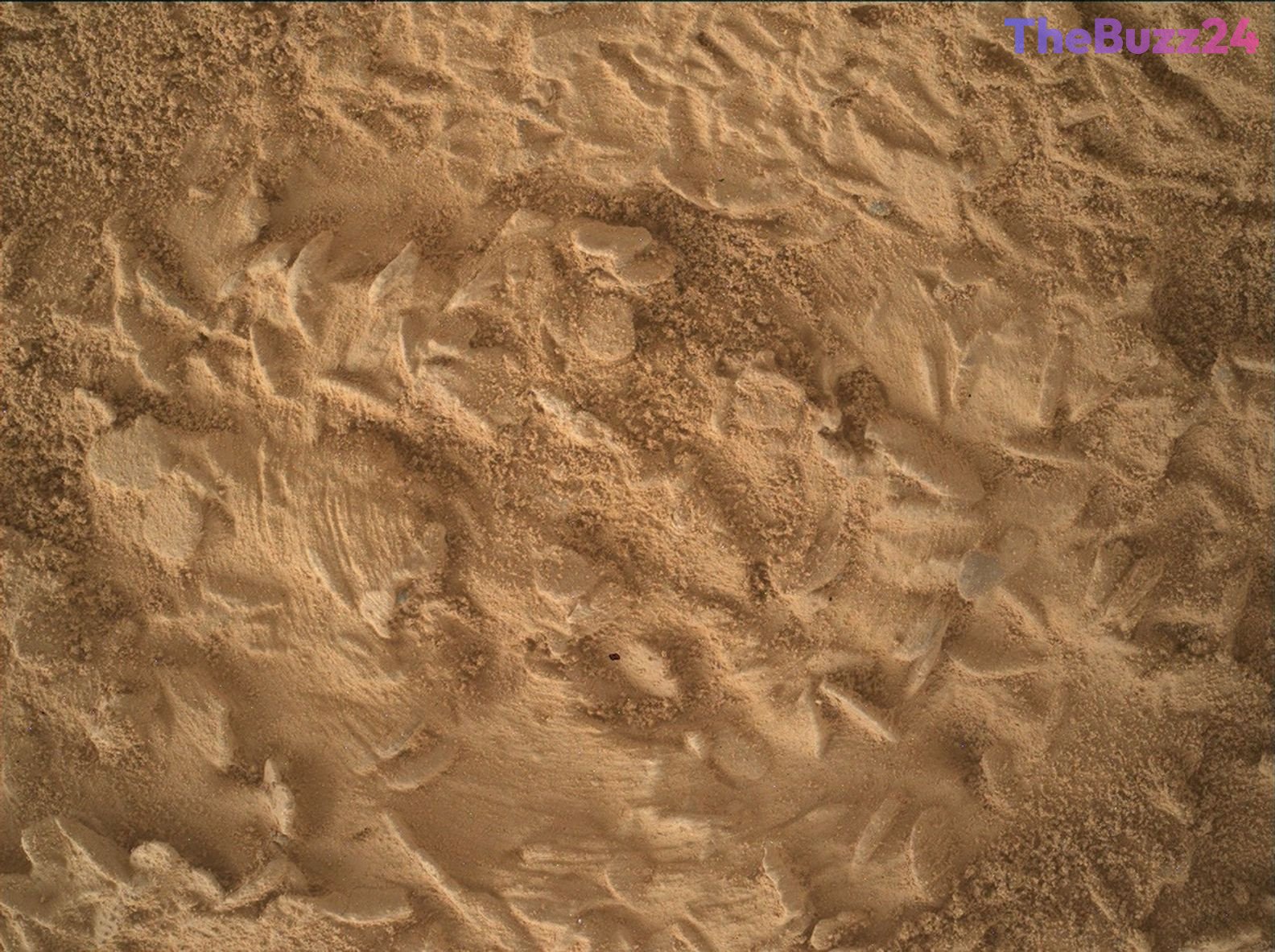
The Mars rover Curiosity is embarking on a new phase of its mission, preparing for an intensive drilling campaign at a site informally named “Nazca.” This location, situated just meters from the previously examined “Chiu Chiu” block, has captured scientists’ attention due to an abundance of distinctive disc-shaped crystal forms visible on its surface. The rover’s Mars Hand Lens Imager (MAHLI) has provided close-up views, revealing these intriguing geological features and the subtle scratches left by the Dust Removal Tool (DRT) brush. This upcoming drill operation marks a significant step in understanding the Red Planet’s geological history.
A primary hypothesis suggests that these characteristic disc and needle shapes are remnants of ancient crystal growth. Minerals typically form specific shapes based on their microscopic crystal structures, offering clues about the environmental conditions at the time of their formation. The relatively large size of these crystal forms at both “Nazca” and “Chiu Chiu” could indicate specific temperatures and the availability of salts and fluids in Mars’ past. However, researchers are also considering the possibility of “pseudomorphs,” where original crystals are replaced by different minerals over time, retaining the initial shape but altering the composition.
To thoroughly investigate these formations, Curiosity will employ a suite of advanced instruments. MAHLI is set to perform a Quantitative Relief Model (QRM) observation, capturing multiple overlapping images to construct a detailed three-dimensional relief model of the crystal forms. Additionally, MAHLI will enhance its highest-resolution imaging by doubling the number of focus mechanism steps, further improving the clarity of 3D models. The Chemistry and Camera (ChemCam) Laser-Induced Breakdown Spectroscopy (LIBS) instrument will conduct a “depth profile” experiment on a nearby crystal-rich target named “Toucan,” concentrating 150 laser shots on a single spot to penetrate deeper into the rock and analyze compositional changes beneath the surface. Before the main drill test, LIBS, DRT, and the Alpha Particle X-ray Spectrometer (APXS) will also characterize the surface composition of “Nazca.” Another LIBS observation will target “Condor,” a block exhibiting a finely layered texture.
Beyond geological analysis, Curiosity continues to monitor Mars’ dynamic environment, particularly as the twilight cloud season begins. The mission includes nighttime imaging of Phobos, Mars’ larger moon. By capturing images of Phobos and the surrounding sky when the moon is full, scientists can observe sunlight reflecting off Phobos and scattering in the Martian atmosphere. This data is crucial for estimating the particle sizes within Martian clouds, especially high-altitude carbon dioxide (CO2) clouds, providing insights into the planet’s atmospheric composition and climate patterns.
Key Takeaways
- Curiosity is preparing to drill at the "Nazca" site on Mars to study unique disc-shaped crystal forms, which may reveal ancient environmental conditions.
- Advanced instruments like MAHLI and ChemCam LIBS will conduct detailed analyses, including 3D modeling and deep compositional profiling of the Martian geology.
- The mission also includes observations of Mars' atmosphere and its moon Phobos to study cloud properties and understand Martian climate patterns.
Editor’s Analysis & Impact
This latest phase of the Curiosity mission underscores the enduring value of long-term robotic exploration on Mars. The detailed investigation of “Nazca’s” crystal forms could provide unprecedented insights into the planet’s aqueous history and potential for past habitability, directly impacting our understanding of planetary evolution. The advanced analytical techniques employed, such as 3D relief modeling and deep compositional profiling, represent significant technological achievements in remote geological study. Furthermore, the atmospheric observations contribute vital data to climate modeling, crucial for future human missions. This mission continues to push the boundaries of planetary science, offering a deeper comprehension of Mars’ complex past and present environment.
Frequently Asked Questions
Q: What is the significance of the "Nazca" drilling site?
A: The "Nazca" site is significant because it contains numerous disc-shaped crystal forms. Studying these formations can provide crucial clues about the ancient environmental conditions on Mars, including past temperatures and the presence of water and salts.
Q: How will Curiosity study the crystal forms at "Nazca"?
A: Curiosity will use several instruments. The Mars Hand Lens Imager (MAHLI) will create detailed 3D models of the crystal forms using a Quantitative Relief Model observation and high-resolution imaging. The Chemistry and Camera (ChemCam) LIBS will perform a "depth profile" experiment to analyze the composition of deeper layers within the rock, while the Dust Removal Tool (DRT) and Alpha Particle X-ray Spectrometer (APXS) will characterize the surface.
Q: Why is Curiosity observing Phobos and Martian clouds?
A: Curiosity is observing Phobos and Martian clouds to study the planet's atmosphere. By capturing images of sunlight reflecting off Phobos and scattering in the Martian atmosphere, scientists can estimate the particle sizes within high-altitude carbon dioxide (CO2) clouds, which helps in understanding Mars' current climate and atmospheric dynamics.
AI Disclosure: This article is based on verified data and official reports. Our Team and AI have cross-referenced every financial detail with primary sources to ensure total accuracy.
More from this Category