Israeli Markets Reel as Election Results Point to Political Stalemate
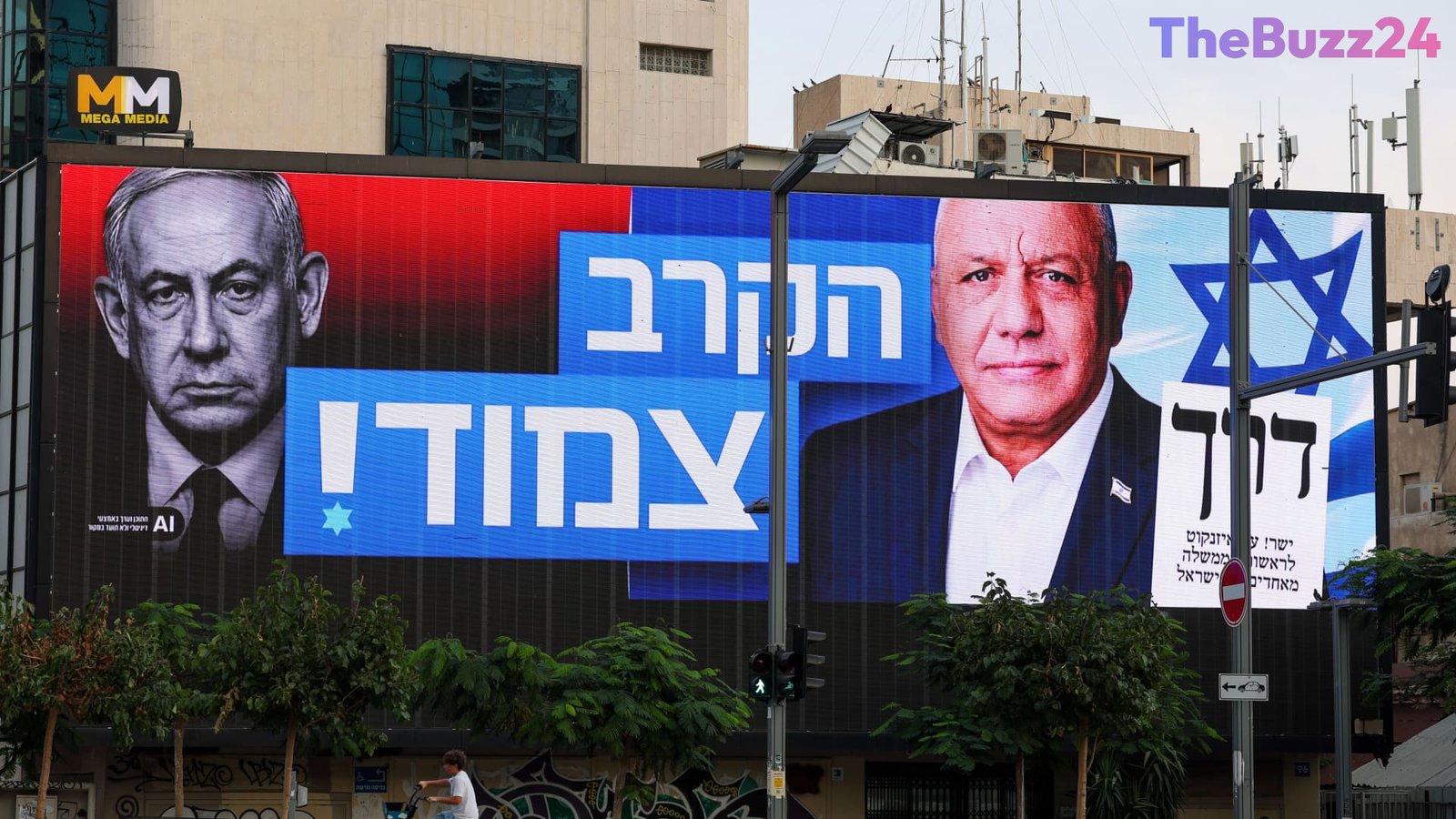
Israel’s financial markets experienced significant pressure on Wednesday following a national election that failed to produce a clear winner, plunging the nation into political uncertainty. Neither incumbent Prime Minister Benjamin Netanyahu nor his primary challenger, Gadi Eisenkot, secured a decisive path to forming a governing coalition, leaving the country’s political future in limbo.
Partial results indicated Netanyahu’s party garnered 20.8% of the votes, while Eisenkot’s bloc received 16.4%. These figures fall well short of the 61 seats required to form a majority in the 120-seat Knesset, Israel’s parliament. The election, the first since the October 7, 2023 Hamas attack, saw a robust 77.7% voter turnout, the highest in 27 years. Eisenkot, a former military chief of staff, had prematurely declared victory, citing preliminary results that showed his bloc slightly ahead and asserting his right to attempt government formation. However, official results are pending, and exit polls are not definitive.
The political deadlock immediately sent ripples through the economy. The Israeli shekel depreciated by 2% against the U.S. dollar, while the Tel Aviv 35 stock index closed 2.3% lower. Government bonds also came under pressure, with yields rising across the curve: the 2-year bond yield increased by 6 basis points, the benchmark 10-year yield by 8 basis points, and longer-maturity 30-year bonds by 6 basis points, reflecting investor apprehension.
Forming a government will require complex coalition negotiations, a common challenge in Israeli politics where outright majorities are rare. Arab-led parties, projected to secure around 18 seats, emerge as potential kingmakers, though their inclusion in a coalition remains a contentious issue for some factions. Experts anticipate a prolonged negotiation process, with Netanyahu, known for his political resilience, expected to fiercely contest any attempts to unseat him, potentially leading to another extended period of political stalemate, reminiscent of the five elections held between 2019 and 2022.
Key Takeaways
- Israel's recent election concluded without a clear winner, leading to significant political uncertainty as neither Benjamin Netanyahu nor Gadi Eisenkot secured a majority to form a government.
- The political deadlock immediately impacted Israeli financial markets, causing the shekel to fall, the Tel Aviv 35 stock index to drop, and government bond yields to rise.
- High voter turnout and the crucial role of Arab-led parties in potential coalition negotiations highlight the complex and potentially prolonged process of forming a stable government.
Editor’s Analysis & Impact
The inconclusive Israeli election results introduce a period of heightened political instability, which is likely to sustain volatility in the nation’s financial markets. Investor confidence will remain fragile until a stable governing coalition is formed, potentially impacting foreign investment and economic growth. A prolonged stalemate could lead to policy paralysis, delaying critical reforms and responses to ongoing regional challenges, including the aftermath of the October 7 attacks. The future outlook suggests a protracted negotiation phase, possibly culminating in another election if parties fail to bridge ideological divides. Internationally, a weakened or unstable Israeli government could complicate regional diplomacy and its stance on critical security issues, affecting alliances and ongoing conflicts. Netanyahu’s proven ability to navigate political crises will be severely tested, with the outcome having profound implications for both domestic policy and Israel’s global standing.
Frequently Asked Questions
Q: What was the immediate impact of the election results on Israel's economy?
A: The Israeli shekel depreciated by 2% against the U.S. dollar, the Tel Aviv 35 stock index fell by 2.3%, and government bond yields rose across the curve, indicating investor concern over political uncertainty.
Q: Why is it difficult to form a government in Israel after this election?
A: Neither Prime Minister Benjamin Netanyahu nor challenger Gadi Eisenkot secured enough seats to form a 61-seat majority in the 120-seat Knesset independently. This necessitates complex coalition negotiations, often involving multiple parties with diverse agendas, including significant Arab-led blocs.
Q: How does this election compare to previous Israeli elections?
A: This election saw the highest voter turnout in 27 years (77.7%) and is the first national election since the October 7, 2023 Hamas attack. It also continues a trend of political stalemates, with Israel having held five elections between 2019 and 2022 due to difficulties in forming stable governments.
AI Disclosure: This article is based on verified data and official reports. Our Team and AI have cross-referenced every financial detail with primary sources to ensure total accuracy.
More from this Category