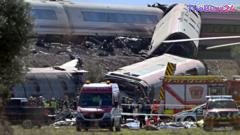
Tragedy in Spain: High-Speed Train Collision Claims 68 Lives
A catastrophic high-speed train collision in Spain has resulted in the deaths of at least 68 people, marking the nation’s deadliest rail disaster in over a decade. The incident occurred on Wednesday morning when a Renfe-operated train, carrying 397 passengers, collided with a stationary Iryo train that had 147 people on board. The impact was so severe that several carriages were forced off the tracks and down an embankment, with one carriage reportedly pierced by a section of the railway infrastructure.
The crash took place approximately 140 kilometers south of Madrid, between the municipalities of Mora and Orgaz. According to Transport Minister Óscar Puente, the stationary Iryo train had halted due to a computer malfunction. While standard protocol dictates that a 24-hour control center in Madrid should manage such system failures, an inexplicable decision was made to authorize the movement of trains without speed restrictions, leading to the fatal rear-end collision.
Survivors described harrowing scenes of chaos, with passengers being thrown from their seats, trapped under debris, and forced to break windows to escape the wreckage. Emergency responders, including dozens of ambulances and medical helicopters, were deployed to the site to treat the injured and transport them to nearby hospitals. Prime Minister Pedro Sánchez visited the scene, expressing deep condolences to the grieving families and promising a thorough investigation into the systemic failures that allowed such a disaster to occur.
The incident has sparked intense political debate regarding the safety and management of Spain’s rail infrastructure. With this being the second major rail accident in the country this year, opposition leaders and labor unions are demanding accountability, questioning whether negligence or inadequate safety protocols contributed to the tragedy. As authorities work to identify victims through DNA testing, the nation remains in a state of mourning, with many political organizations suspending campaign activities in respect for the lives lost.
Key Takeaways
- At least 68 people were killed in a high-speed train collision between Renfe and Iryo services south of Madrid.
- Preliminary reports indicate the crash was caused by a combination of a computer system failure and an error in judgment by the central control room.
- The disaster has triggered a national investigation and political scrutiny over the safety standards of Spain's rail network.
Editor’s Analysis & Impact
This tragedy represents a significant blow to public confidence in Spain’s high-speed rail network, which is often touted as a model of European infrastructure. The occurrence of two major rail disasters within a single year suggests potential systemic issues that go beyond isolated human error. From a market perspective, this will likely lead to a rigorous audit of Renfe and Iryo’s operational protocols, potentially resulting in increased regulatory oversight and significant capital expenditure requirements to upgrade signaling and automated safety systems. The political fallout is equally substantial; the government faces immense pressure to prove that the rail network is safe for public use. Future implications include a likely shift in transport policy, with a focus on redundant safety measures and a potential restructuring of the central control management to prevent similar ‘inexplicable’ decision-making failures.
Frequently Asked Questions
Q: What caused the train crash in Spain?
A: The crash was reportedly caused by a computer failure on a stationary train, followed by a critical error in the Madrid control center, which authorized other trains to move through the area without speed restrictions.
Q: How many people were involved in the accident?
A: The collision involved a Renfe train carrying 397 passengers and an Iryo train carrying 147 passengers, resulting in at least 68 confirmed fatalities.
AI Disclosure: This article is based on verified data and official reports. Our Team and AI have cross-referenced every financial detail with primary sources to ensure total accuracy.
More from this Category