The Additive Revolution: How Ford, Rivian, and GM Are Transforming Auto Manufacturing
Major automotive players, including Ford, Rivian, and General Motors, are fundamentally shifting their production strategies by integrating 3D printing—also known as additive manufacturing—directly into their factory floors. While the technology has long been a staple for prototyping, these companies are now leveraging it to produce essential factory tools, assembly aids, and even specific vehicle components. By moving beyond the lab and into the assembly line, automakers are successfully reducing costs, accelerating development cycles, and mitigating supply chain bottlenecks.
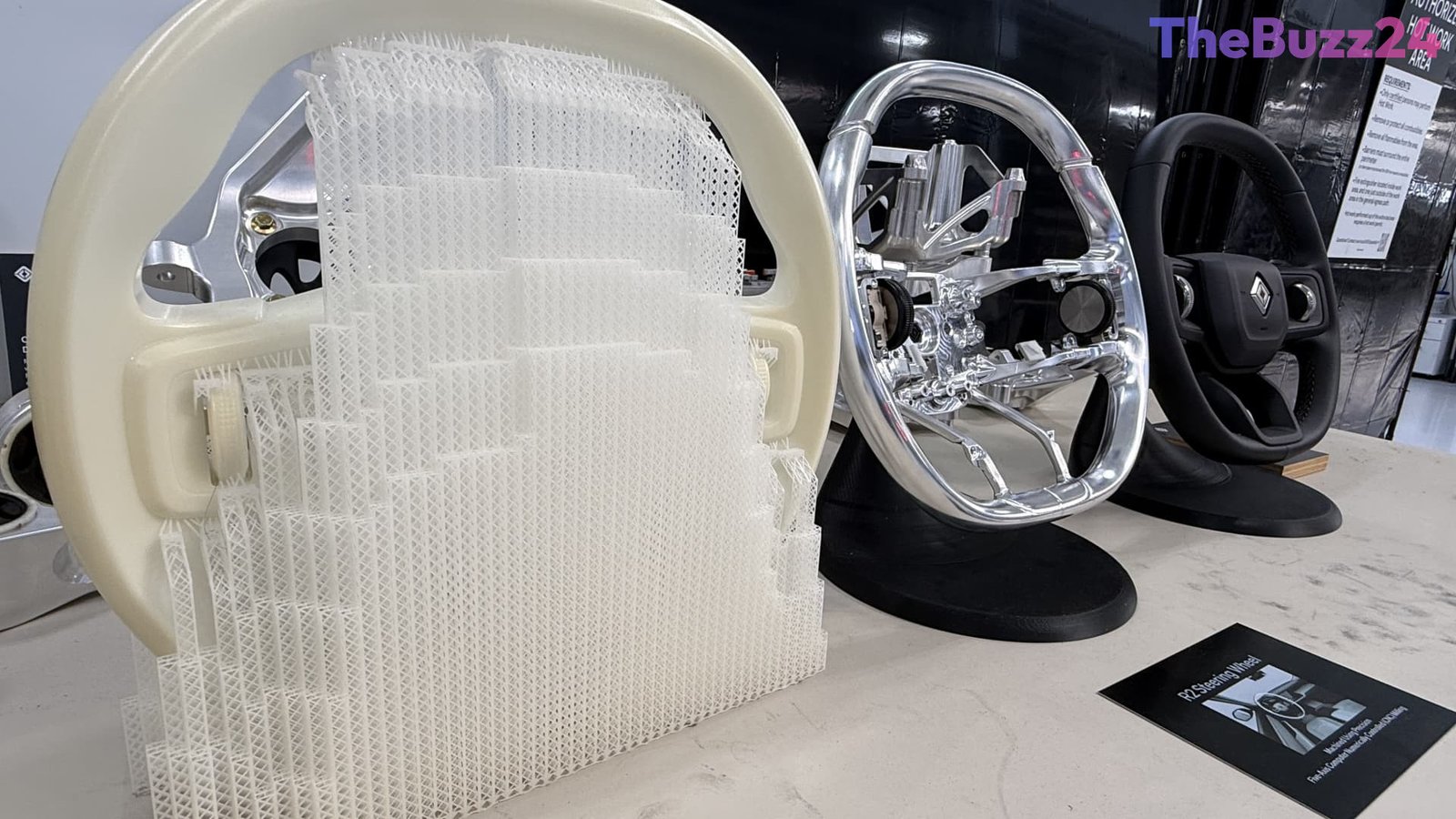
Rivian has taken a particularly aggressive approach, investing over $5 million in additive manufacturing infrastructure. The company is focused on ‘democratizing’ the technology, ensuring that engineers and plant employees have on-demand access to printers to create parts and tools as needed. This shift allows the company to bypass traditional, time-consuming procurement processes, turning weeks of waiting into hours of production. The investment is reportedly paying for itself within a year, proving that the speed and flexibility offered by 3D printing provide a significant competitive advantage.
Ford and General Motors are similarly scaling their operations to meet the demands of modern vehicle production. Ford has implemented a unique ‘vending machine’ system at its Dearborn facilities, allowing team leaders to request and receive 3D-printed tools instantly. Meanwhile, GM is utilizing high-end industrial printing for low-volume, bespoke components, such as those found in the Cadillac Celestiq. With Ford planning to have dedicated 3D-printing labs in over 23 plants by the end of the year, it is clear that additive manufacturing is no longer a niche experiment but a core pillar of the future automotive supply chain.
Key Takeaways
- Automakers are moving 3D printing from R&D labs directly onto factory floors to create tools and production parts.
- The technology significantly reduces lead times, allowing for the creation of custom tools in hours rather than weeks.
- Major companies like Ford and Rivian are scaling their investments, with plans to integrate additive manufacturing across dozens of global production facilities.
Editor’s Analysis & Impact
The integration of 3D printing into mass-market automotive manufacturing signals a maturation of additive technology. Historically limited by material strength and production speed, modern 3D printing now offers the durability and efficiency required for industrial applications. By decentralizing production—allowing plants to print tools on-site—automakers are effectively insulating themselves against supply chain disruptions and reducing the overhead associated with traditional tooling. This shift toward ‘on-demand’ manufacturing will likely force a change in how automotive suppliers operate, as the reliance on centralized, long-lead-time manufacturing for small-batch parts diminishes. In the long term, this could lead to more agile vehicle designs and faster iteration cycles, giving early adopters a distinct edge in the highly competitive electric vehicle market.
Frequently Asked Questions
Q: Why are automakers switching to 3D printing for factory tools?
A: It allows for faster production of custom tools, reduces the need for external suppliers, and helps keep assembly lines running by providing immediate replacements for broken or missing parts.
Q: Is 3D printing used for actual car parts or just tools?
A: It is used for both. While it is heavily utilized for assembly tools and jigs, it is also increasingly used for low-volume production parts, trim pieces, and specialized components in luxury or performance vehicles.
AI Disclosure: This article is based on verified data and official reports. Our Team and AI have cross-referenced every financial detail with primary sources to ensure total accuracy.
More from this Category