Ethiopian Prime Minister Sends Cabinet Ministers to Military Boot Camp to Fortify Leadership
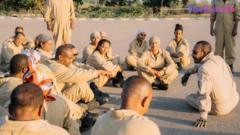
In an unprecedented move aimed at reshaping governance and executive cohesion, Ethiopian Prime Minister Abiy Ahmed has enrolled his cabinet ministers and high-ranking government officials in intensive military training. High-profile civilian leaders, including Speaker of the House of Federation Muferiat Kamil, Finance Minister Fitsum Assefa, and Health Minister Mekdes Daba, were seen participating in tactical drills alongside the prime minister at the Hurso military training centre. The initiative marks a rare convergence of civilian administration and armed forces instruction within the East African nation.
Addressing the rationale behind the initiative, Prime Minister Abiy stated that achieving national prosperity demands a leadership core that is physically robust, morally steadfast, and intellectually prepared. He highlighted that armed forces instill critical attributes such as strict discipline, strategic vision, seamless teamwork, and heightened accountability—qualities he views as essential for public administration. By synthesizing military discipline with civilian policy goals, the administration seeks to cultivate a leadership structure better equipped to execute strategic national objectives.
This unusual training program unfolds against a backdrop of complex domestic and regional security pressures. Ethiopia continues to navigate persistent internal security issues across multiple areas, including ongoing instability in parts of the northern Tigray region, civil unrest in Amhara, and localized conflicts in Oromia. Additionally, lingering diplomatic friction and rising tensions with neighboring Eritrea have elevated national security concerns, prompting the government to project administrative solidarity and readiness.
Prime Minister Abiy, a former military officer, has consistently emphasized defense preparedness and organizational discipline as central pillars of national development. While the complete timeline and duration of the boot camp remain undisclosed, the visible display of executive physical conditioning and tactical training underscores a broad effort to reinforce state stability, build institutional resilience, and streamline leadership command under challenging national circumstances.
Key Takeaways
- Prime Minister Abiy Ahmed has put senior Ethiopian cabinet members and government heads through intensive military training at the Hurso facility.
- The initiative is designed to build discipline, physical endurance, teamwork, and accountability across civilian leadership positions.
- The training coincides with significant internal security issues in Tigray, Amhara, and Oromia, alongside regional tensions involving neighboring Eritrea.
Editor’s Analysis & Impact
Prime Minister Abiy Ahmed’s decision to subject his civilian cabinet to military conditioning highlights a strategic effort to centralize authority and project executive toughness during a period of multi-front domestic and regional strain. By embedding military discipline into civilian governance, the administration aims to counter internal factionalism and streamline decision-making. However, blending military protocol with civil leadership may spark debate among international observers regarding the militarization of public institutions. Strategically, this public exercise serves as a signal of internal solidarity and national readiness amidst localized conflicts and diplomatic friction with Eritrea, demonstrating that the government’s top leadership is aligned under a unified command structure.
Frequently Asked Questions
Q: Which government officials are participating in the military training?
A: Senior Ethiopian figures undergoing the training include Prime Minister Abiy Ahmed, Speaker of the House of Federation Muferiat Kamil, Finance Minister Fitsum Assefa, and Health Minister Mekdes Daba, alongside various deputy ministers and agency heads.
Q: Where is the military boot camp located?
A: The training sessions are taking place at the Hurso military training centre in Ethiopia.
Q: What rationale was given for military training for civilian ministers?
A: The government stated that military discipline promotes physical readiness, moral strength, accountability, and teamwork, which are viewed as necessary qualities for effective leadership and national development.
AI Disclosure: This article is based on verified data and official reports. Our Team and AI have cross-referenced every financial detail with primary sources to ensure total accuracy.
More from this Category