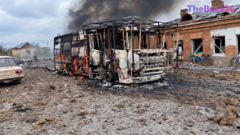
Deadly Strike on Humanitarian Aid Center in Zaporizhzhia Leaves Dozens Dead
A devastating aerial bombardment has struck a humanitarian aid distribution center in the village of Komyshuvakha, located in Ukraine’s southern Zaporizhzhia region. The attack, which involved the deployment of at least nine 3,000kg aerial bombs, has resulted in the confirmed deaths of 26 individuals. Among the casualties are two rescue workers and four police officers who were on-site providing assistance to local residents.
President Volodymyr Zelensky described the incident as a targeted assault on a facility known to be used for humanitarian purposes. According to local officials, the site was hit twice; the second strike occurred while civilians were sheltering in the aftermath of the initial blast. The scale of the destruction is significant, with rescue teams currently navigating a massive crater and unstable debris to locate those still reported missing. Efforts to recover survivors have been repeatedly hampered by ongoing drone activity in the area.
In response to the tragedy, regional authorities have declared a day of mourning across the Zaporizhzhia region. While international diplomatic efforts are reportedly scheduled to resume in the coming days in Abu Dhabi, the atmosphere remains tense. The strike has drawn sharp condemnation from Ukrainian leadership, who view the attack as a deliberate signal against de-escalation efforts, further complicating the already fragile landscape of the ongoing conflict.
Key Takeaways
- A Russian aerial strike on a humanitarian aid center in Komyshuvakha has resulted in 26 confirmed fatalities.
- The attack involved a double-tap strategy, where a second strike targeted the site while rescuers and civilians were present.
- Rescue operations have been significantly delayed and endangered by persistent drone attacks in the immediate vicinity.
Editor’s Analysis & Impact
The strike on the Komyshuvakha aid center represents a significant escalation in the tactical approach to the conflict, specifically targeting civilian infrastructure essential for survival. By utilizing heavy aerial munitions against a known humanitarian site, the operation signals a shift toward disrupting local support networks. From a geopolitical perspective, this incident severely undermines the credibility of upcoming peace negotiations in Abu Dhabi. The timing of the attack—occurring just as diplomatic channels were attempting to reopen—suggests a strategic intent to project strength and discourage de-escalation. Moving forward, the international community will likely view this as a major setback for humanitarian corridors, potentially leading to increased pressure for more robust air defense systems to protect civilian hubs, despite the current scarcity of interceptors.
Frequently Asked Questions
Q: What was the primary target of the attack in Komyshuvakha?
A: The target was a local school that was being utilized as a humanitarian aid distribution center for local residents.
Q: Why have rescue operations been difficult to conduct?
A: Rescue teams have been forced to pause their search for survivors multiple times due to the threat of ongoing Russian drone attacks in the area.
AI Disclosure: This article is based on verified data and official reports. Our Team and AI have cross-referenced every financial detail with primary sources to ensure total accuracy.
More from this Category