Rethinking Structural Modal Analysis: New Guidelines for Hammer-Tap Testing
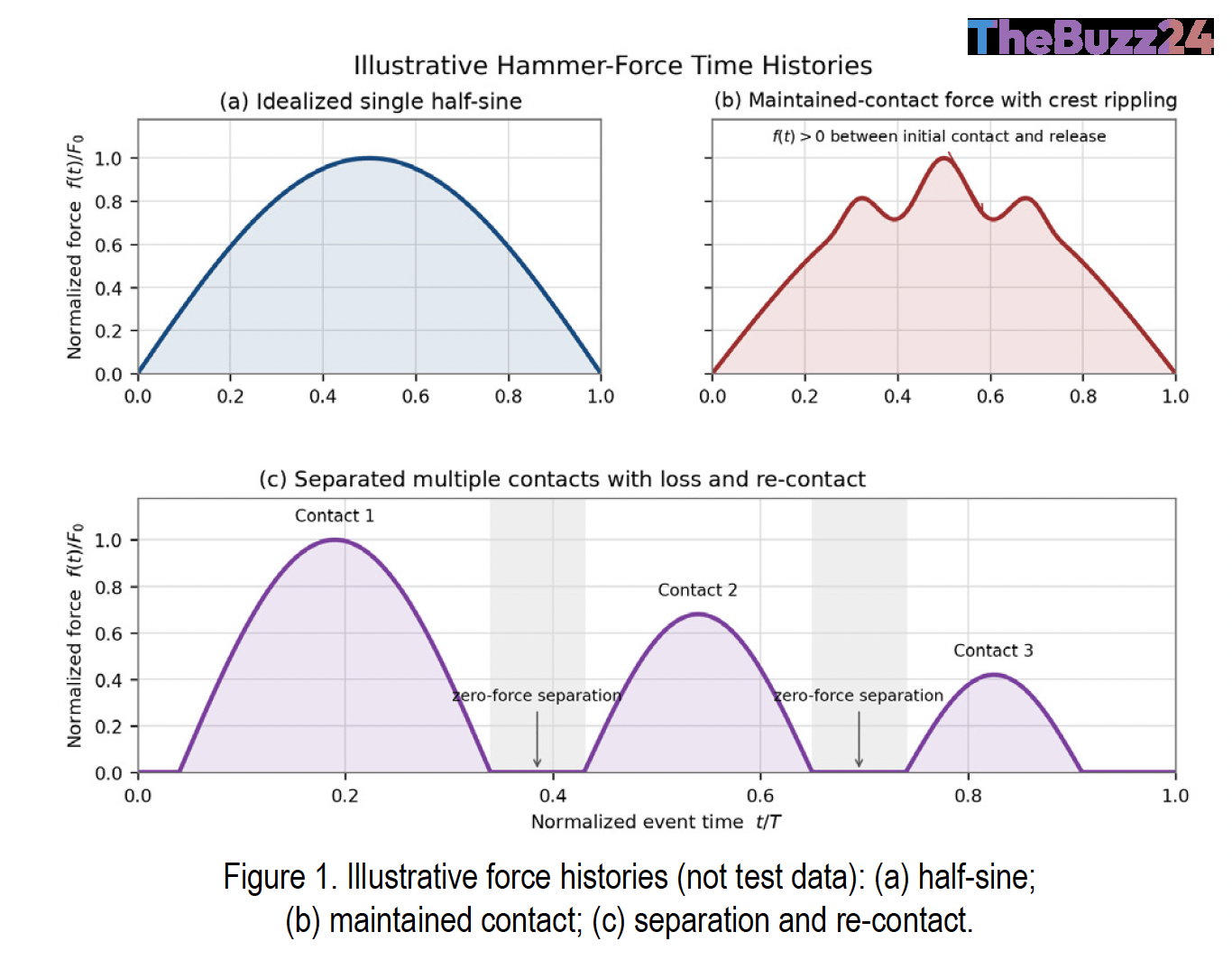
Engineers and dynamic analysis experts have reassessed traditional protocols surrounding structural modal analysis, specifically regarding instrumented hammer-tap testing techniques. Historically, structural testing standards often sought an idealized, single half-sine force pulse to validate structural responses. However, updated technical reviews indicate that strictly replicating a pure half-sine waveform is not required for reliable data, provided the comprehensive force input and structural response are accurately measured and synchronized.
During impulse testing—often conducted ahead of intense dynamic events like pyroshock testing—physical hammer strikes frequently introduce complex contact behavior, including crest rippling and brief contact separations. Rather than invalidating the trial, these contact variations simply alter how dynamic energy is distributed across frequencies. Standard single half-sine pulses inherently feature spectral zeros at specific harmonic ratios, which can leave certain modes unexcited. Conversely, crest ripples and repeated contact events add spectral content that can bridge these spectral gaps, offering a more complete excitation of the structure.
Consequently, updated technical guidance recommends evaluating test validity based on measurement quality rather than wave shape aesthetics. Test teams are advised to focus on high-fidelity dynamic range, calibrated sensor bandwidth, strong signal-to-noise ratios, and alignment with overall structural objectives. By prioritizing data accuracy over input waveform appearance, research facilities can minimize redundant re-testing while improving structural assessment integrity.
Key Takeaways
- Idealized half-sine waveforms are not mandatory for valid instrumented hammer-tap modal tests.
- Complex contact events like crest rippling can actually enhance test coverage by filling spectral zeros.
- Test validity should be judged by measurement precision, dynamic range, and signal fidelity rather than visual wave appearance.
Editor’s Analysis & Impact
This technical clarification in structural dynamics represents a practical evolution for aerospace and industrial engineering domains. By shifting the evaluation criteria from rigid waveform shapes to comprehensive signal fidelity, testing facilities can reduce operational delays caused by unnecessary re-runs. Recognizing that non-ideal hammer impacts do not inherently compromise test integrity allows engineers to capture broader frequency content, which is particularly beneficial when preparing for extreme dynamic environments like pyroshock events. Moving forward, adoption of these guidelines will help streamline structural qualification procedures while maintaining rigorous analytical standards across high-precision testing environments.
Frequently Asked Questions
Q: Why is a pure half-sine wave not necessary for hammer-tap modal tests?
A: As long as the complete applied force and structural response are accurately recorded, variations like crest ripples simply represent known inputs, allowing valid modal parameters to be extracted.
Q: What is the primary limitation of a standard half-sine pulse during testing?
A: A pure half-sine pulse contains distinct spectral zeros at regular frequency intervals, which can fail to excite certain natural frequencies within the test structure.
Q: How should test quality and validity be evaluated?
A: Validity should be determined by verifying high signal-to-noise ratios, sufficient dynamic measurement bandwidth, dynamic calibration, and alignment with the specific test goals.
AI Disclosure: This article is based on verified data and official reports. Our Team and AI have cross-referenced every financial detail with primary sources to ensure total accuracy.
More from this Category