Pioneering Mars Simulation Concludes, Offering Vital Insights for Future Space Exploration
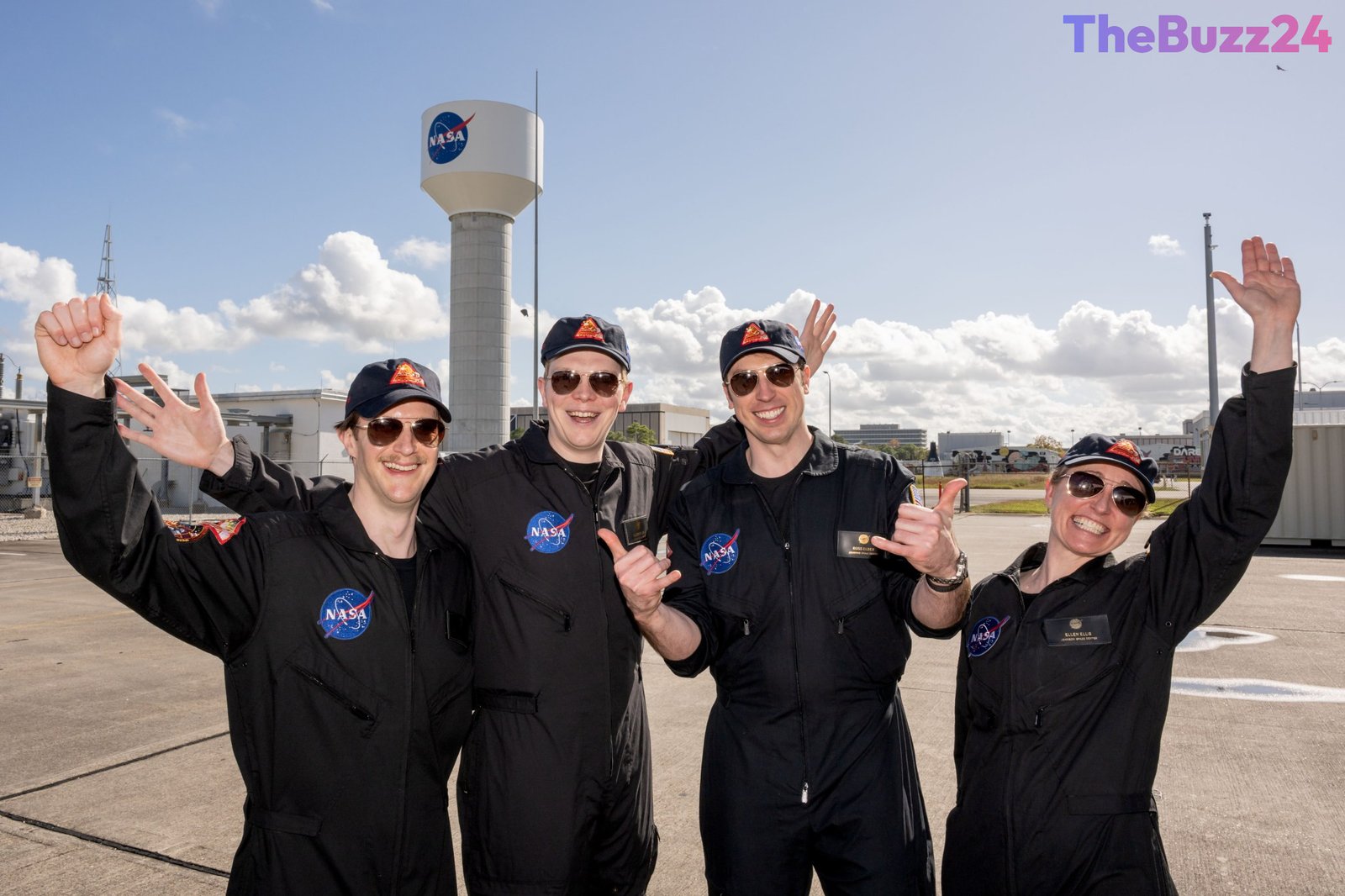
A four-person crew has successfully completed a groundbreaking year-long simulated mission to Mars, emerging from their isolated habitat on October 31, 2026. The Crew Health and Performance Exploration Analog (CHAPEA) team, comprising Matthew Montgomery, James Spicer, Ross Elder, and Ellen Ellis, stepped outside for the first time in over 365 days, marking the end of their extensive experiment designed to mimic the challenges of deep-space travel.
During their prolonged stay, the CHAPEA crew meticulously carried out a range of critical tasks aimed at gathering vital data for future space endeavors. Their responsibilities included rigorously testing various operational systems, cultivating crops in a controlled environment, and managing extremely limited resources. They also navigated communication delays inherent in Mars missions and conducted simulated extravehicular activities (EVAs), all while providing invaluable insights into how human crews adapt to the psychological and physiological demands of extended isolation and resource scarcity.
The comprehensive data and experiences collected from this ambitious analog mission are expected to significantly inform NASA’s strategic planning. These insights will be crucial in the design and development of future lunar outposts, such as a potential Moon Base, and will directly contribute to refining the protocols and technologies necessary for successful human expeditions to Mars. The CHAPEA mission underscores the agency’s commitment to understanding and mitigating the complexities of long-duration spaceflight, paving the way for humanity’s continued exploration of the solar system.
Key Takeaways
- A four-member CHAPEA crew completed a year-long simulated Mars mission on October 31, 2026.
- The mission involved testing systems, managing resources, growing crops, and conducting EVAs to understand long-duration space travel.
- Insights gained will be vital for NASA's future Moon Base designs and human missions to Mars.
Editor’s Analysis & Impact
The successful conclusion of the CHAPEA mission marks a significant milestone in human space exploration, underscoring the critical role of analog simulations in preparing for deep-space travel. This initiative directly impacts the aerospace industry by providing invaluable data for the development of advanced life support systems, habitat designs, and crew well-being protocols. The insights gained are poised to accelerate NASA’s plans for establishing a sustainable presence on the Moon and ultimately sending humans to Mars, significantly de-risking future missions. Beyond governmental agencies, these findings could influence private space companies and foster international collaboration in space research. The broader implications extend to understanding human resilience in extreme isolation, with potential applications for remote terrestrial environments and even psychological studies, highlighting the interdisciplinary nature of space exploration.
Frequently Asked Questions
Q: What is the CHAPEA mission?
A: CHAPEA (Crew Health and Performance Exploration Analog) is a NASA initiative that simulates a year-long Mars mission on Earth to study how a human crew adapts to the challenges of long-duration space travel.
Q: What were the main objectives of the CHAPEA crew during their simulation?
A: The crew's main objectives included testing operational systems, managing limited resources, cultivating crops, navigating communication delays, and conducting simulated extravehicular activities (EVAs) to gather data on human performance and health in isolation.
Q: How will the CHAPEA mission's findings be used?
A: The insights and data collected from the CHAPEA mission will be crucial for NASA in designing future Moon Bases and planning for upcoming human missions to Mars, helping to refine technologies and protocols for long-duration spaceflight.
AI Disclosure: This article is based on verified data and official reports. Our Team and AI have cross-referenced every financial detail with primary sources to ensure total accuracy.
More from this Category