Hubble Telescope Detects Mysterious Oxygen Depletion in Dwarf Galaxies
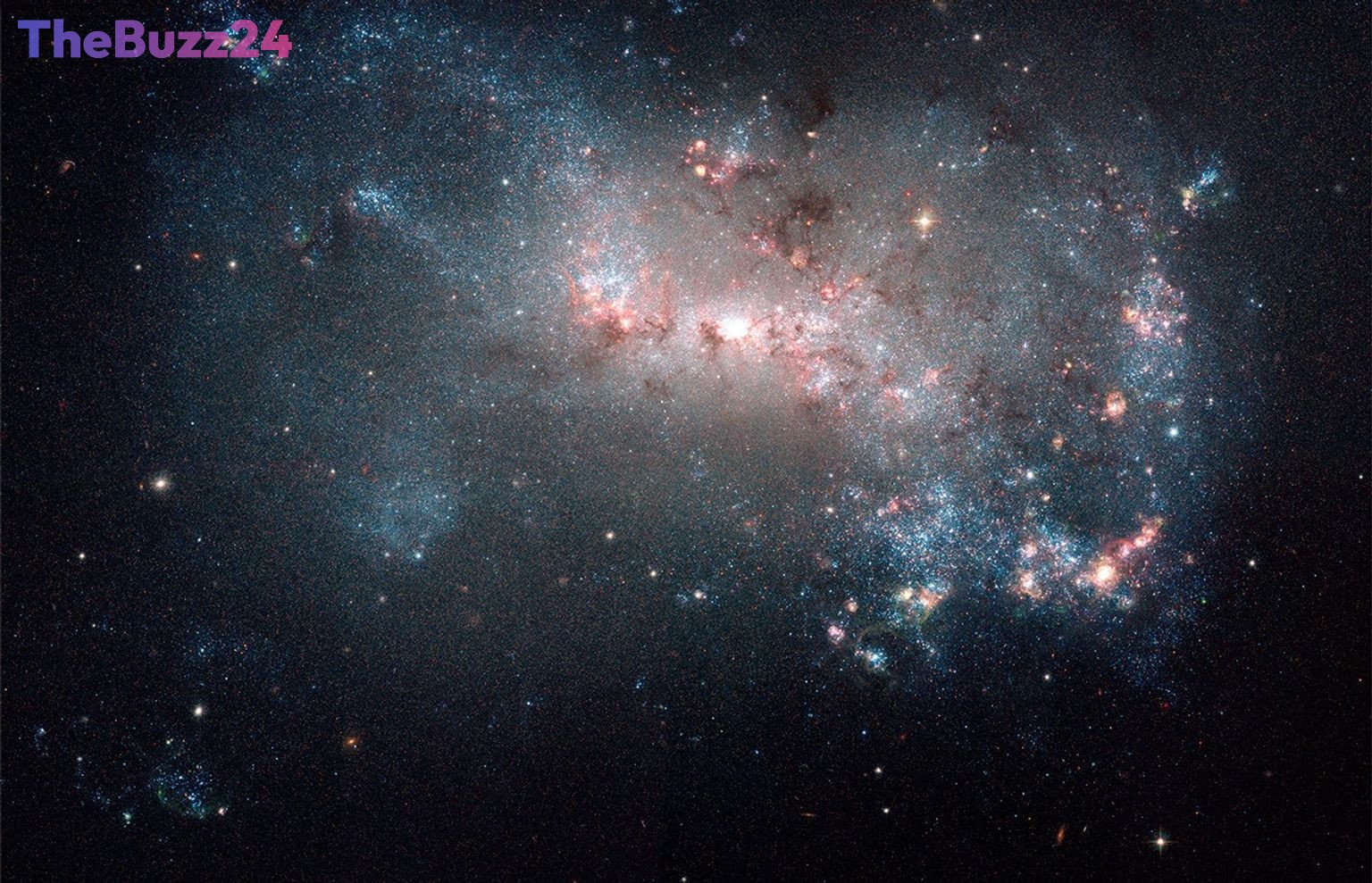
Astronomers utilizing NASA’s Hubble Space Telescope have uncovered a puzzling phenomenon in nearby dwarf galaxies: a significant deficit of oxygen. The findings, detailed in a recent publication in The Astrophysical Journal, stem from an extensive study of 37 dwarf galaxies, which are characterized by their relatively small size, containing anywhere from a few thousand to hundreds of millions of stars.
These observations challenge existing cosmological models, which predict a greater abundance of oxygen within these galaxies. Oxygen, a key element produced by stars and a reliable indicator of heavier elements, appears to have been expelled from these dwarf galaxies at a rate exceeding theoretical expectations. Researchers propose that powerful galactic winds, driven by massive stars and supernova explosions, are the primary mechanism responsible for ejecting this oxygen into the intergalactic space.
The Galaxies Losing Oxygen via Winds (GLOW) project, a collaborative effort funded by NASA and the National Science Foundation, aimed to precisely track the distribution of oxygen. This element was chosen for its ease of detection and measurement, as well as the well-understood processes of its stellar production. By analyzing oxygen’s presence within stars, interstellar gas, and the space between galaxies, scientists are gaining crucial insights into galactic evolution and the enrichment of the intergalactic medium.
The study leveraged archival data from the Hubble Space Telescope for detailed stellar population analysis and star-formation history reconstruction. This was complemented by data from the Spitzer Space Telescope and ground-based radio telescopes. The selected dwarf galaxies were specifically chosen for their mass range, where theoretical predictions suggest significant oxygen expulsion, and their proximity, allowing Hubble to resolve individual stars. Future research plans include utilizing the Nancy Grace Roman Space Telescope and the James Webb Space Telescope to investigate even smaller galaxies and gain a more comprehensive understanding of their star formation histories and chemical evolution.
Key Takeaways
- Hubble Space Telescope observations reveal a significant amount of expected oxygen is missing from nearby dwarf galaxies.
- Galactic winds, driven by supernovae, are believed to be expelling oxygen from these galaxies at a higher rate than predicted by current models.
- The study, part of the GLOW project, uses oxygen as a tracer to understand galactic evolution and the enrichment of the intergalactic medium.
Editor’s Analysis & Impact
This discovery by the Hubble Space Telescope highlights a critical gap in our understanding of galactic evolution, particularly concerning low-mass galaxies. The unexpected expulsion of oxygen suggests that the processes driving material out of these smaller systems are more potent than previously modeled. This has significant implications for our models of galaxy formation and chemical enrichment across the universe. Understanding where this ‘missing’ oxygen ultimately resides will be crucial for refining theories about the intergalactic medium and the overall cosmic chemical inventory. Future observations with next-generation telescopes like Roman and Webb will be vital in further unraveling this mystery and potentially revising our understanding of how galaxies evolve and interact with their surroundings.
Frequently Asked Questions
Q: Why is oxygen important in studying galaxies?
A: Oxygen is a key element produced by stars and is relatively easy to detect and measure. Its production process is well understood, making it a reliable indicator for tracing the distribution of heavier chemical elements within and outside of galaxies, which helps in understanding galactic evolution.
Q: What are dwarf galaxies?
A: Dwarf galaxies are small galaxies that contain a relatively small number of stars, ranging from a few thousand to hundreds of millions. They are common in the universe and are important for understanding galaxy formation and evolution.
Q: What are galactic winds?
A: Galactic winds are outflows of gas and particles from a galaxy, often driven by the energy released from massive stars and supernova explosions. These winds can expel gas and heavy elements, like oxygen, from the galaxy into the surrounding intergalactic space.
AI Disclosure: This article is based on verified data and official reports. Our Team and AI have cross-referenced every financial detail with primary sources to ensure total accuracy.
More from this Category