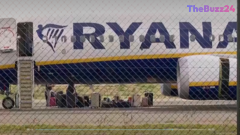
European Airspace Shaken as Multiple Flights and Cruise Ship Targeted in Suspected Bomb Hoaxes
A series of coordinated security alerts disrupted European travel as seven passenger aircraft and a cruise ship were subjected to intensive bomb threat inspections across multiple countries. The widespread security incidents involved flights operating in the UK, Ireland, Italy, Spain, Poland, and Bulgaria, triggering emergency protocols, military escorts, and temporary airport closures.
Among the affected journeys, two Ryanair flights—originating from Dublin and Lisbon—were thoroughly searched by police and bomb disposal teams after touching down in Rome. One of the flights required an aerial escort from the Italian Air Force prior to its landing. Similar security sweeps were executed in Spain, where a Manchester-to-Murcia flight was abruptly halted upon arrival, surrounded by emergency vehicles, and evacuated while passengers were forced to leave their belongings behind.
Flights heading toward Warsaw also faced severe disruptions. A London Heathrow service bound for the Polish capital was diverted to a smaller regional facility, forcing a temporary shutdown of the tarmac. Meanwhile, Bulgarian transport officials confirmed that aircraft arriving in Sofia from Italy and Ireland were targeted by threatening emails, prompting immediate mobilization of border security and specialized operational headquarters.
While preliminary investigations across all jurisdictions have yielded negative results with no explosives discovered, international authorities are actively collaborating to determine if the wave of alerts constitutes a deliberate, synchronized attempt to destabilize European airspace. Government officials have categorized the episode as a series of malicious hoax threats, underscoring the resilience and preparedness of regional aviation safety protocols.
Key Takeaways
- Seven passenger aircraft across Europe were targeted by anonymous bomb threats, prompting immediate security checks.
- No explosives were found on any of the inspected flights, and authorities are treating the incidents as malicious hoaxes.
- Flights involving the UK, Ireland, Italy, Spain, Poland, and Bulgaria experienced diversions, military escorts, and emergency evacuations.
Editor’s Analysis & Impact
The recent surge in coordinated bomb hoaxes targeting European aviation infrastructure highlights ongoing vulnerabilities in psychological and operational security within the global transit sector. While physical security measures successfully prevented catastrophic outcomes and managed the crisis efficiently, the economic and logistical fallout—including flight diversions, tarmac delays, and resource strain on local emergency services—presents a recurring challenge for airlines and airport operators. Moving forward, the incident is expected to accelerate international intelligence sharing and cybersecurity tracking to unmask perpetrators who exploit public communication channels to cause widespread disruption. Enhanced digital tracking of anonymous tip lines and email threats will likely become a primary focus for aviation security regulators globally.
Frequently Asked Questions
Q: Were any explosives found on the targeted flights?
A: No. Comprehensive searches conducted by bomb disposal squads and police units in Italy, Spain, Poland, and Bulgaria confirmed that all threats were false, and no explosives were located on any of the aircraft.
Q: Which countries were affected by the security alerts?
A: The alerts impacted flights operating across several European nations, including the United Kingdom, Ireland, Italy, Spain, Poland, and Bulgaria.
Q: How do flight crews handle bomb threats while in the air?
A: Aviation protocols dictate that flight crews treat any threat as genuine until proven otherwise. Crews conduct discreet searches of accessible areas like galleys and lavatories, while the captain assesses diversion options and coordinates closely with ground operations.
AI Disclosure: This article is based on verified data and official reports. Our Team and AI have cross-referenced every financial detail with primary sources to ensure total accuracy.
More from this Category