Israel’s Presidential Consultations Begin Amidst Political Deadlock and Election Tensions
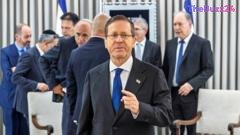
President Isaac Herzog has officially commenced consultations with political party leaders to determine who will be tasked with forming a new government. This move follows the certification of recent election results, which failed to produce a clear majority for any single bloc. Herzog emphasized the urgent need for compromise, warning that political factions must be willing to abandon some campaign promises to avoid the instability of yet another round of elections.
The current political landscape remains fractured, with neither Prime Minister Benjamin Netanyahu’s right-wing coalition nor the centrist bloc led by Gadi Eisenkot securing the 61 seats required for a parliamentary majority. The 120-seat Knesset is currently divided, leaving the 19 seats held by Arab-led alliances as a potential deciding factor. However, deep-seated political pledges made prior to the election have complicated the possibility of these parties joining a coalition, leaving the path to a stable government unclear.
Adding to the complexity, the election period has been marred by accusations of foreign interference and internal disputes regarding the legitimacy of the results. While the Central Elections Committee has confirmed the integrity of the vote, allegations regarding foreign funding have prompted an investigation by the Shin Bet security service. President Herzog has publicly condemned rhetoric aimed at delegitimizing the electoral process, specifically calling for an end to inflammatory language directed at Arab-Israeli citizens, while urging all parties to prioritize the formation of a functional government.
Key Takeaways
- President Isaac Herzog has begun formal consultations to break the current parliamentary deadlock following an inconclusive election.
- Neither Benjamin Netanyahu’s right-wing bloc nor Gadi Eisenkot’s centrist coalition secured a majority, making the formation of a stable government difficult.
- The Shin Bet is investigating claims of foreign election interference, though officials maintain these allegations will not alter the certified results.
Editor’s Analysis & Impact
The current political impasse in Israel reflects a deeply polarized electorate and a fragmented parliamentary system that struggles to produce stable governance. The reliance on smaller parties, particularly those representing Arab-Israeli interests, creates a volatile environment where traditional coalition-building is hindered by ideological rigidity. The accusations of foreign interference and the subsequent attempts to delegitimize the electoral process signal a concerning trend of eroding trust in democratic institutions. Moving forward, the pressure on President Herzog to facilitate a compromise is immense. If a coalition cannot be formed, the country faces the prospect of repeated elections, which would likely exacerbate economic uncertainty and social divisions. The long-term stability of the Israeli government will depend on whether political leaders can move past campaign rhetoric to form a pragmatic, albeit potentially fragile, governing alliance.
Frequently Asked Questions
Q: What is the role of the Israeli President in forming a government?
A: The president is responsible for consulting with party leaders and selecting a member of the Knesset who they believe has the best chance of forming a stable coalition government.
Q: How much time is given to a candidate to form a government?
A: Once selected by the president, the candidate is typically given 28 days to form a government, with the possibility of a 14-day extension.
AI Disclosure: This article is based on verified data and official reports. Our Team and AI have cross-referenced every financial detail with primary sources to ensure total accuracy.
More from this Category