Next-Gen Navigation: NASA’s SPLICE System Revolutionizes Spacecraft Landings
A groundbreaking technology designed to enable spacecraft to autonomously navigate to safe landing sites on the Moon and other planetary bodies has successfully completed a critical demonstration. The Safe and Precise Landing – Integrated Capabilities Evolution (SPLICE) system, developed by researchers, recently showcased its advanced capabilities during simulated lunar descent and landing maneuvers.
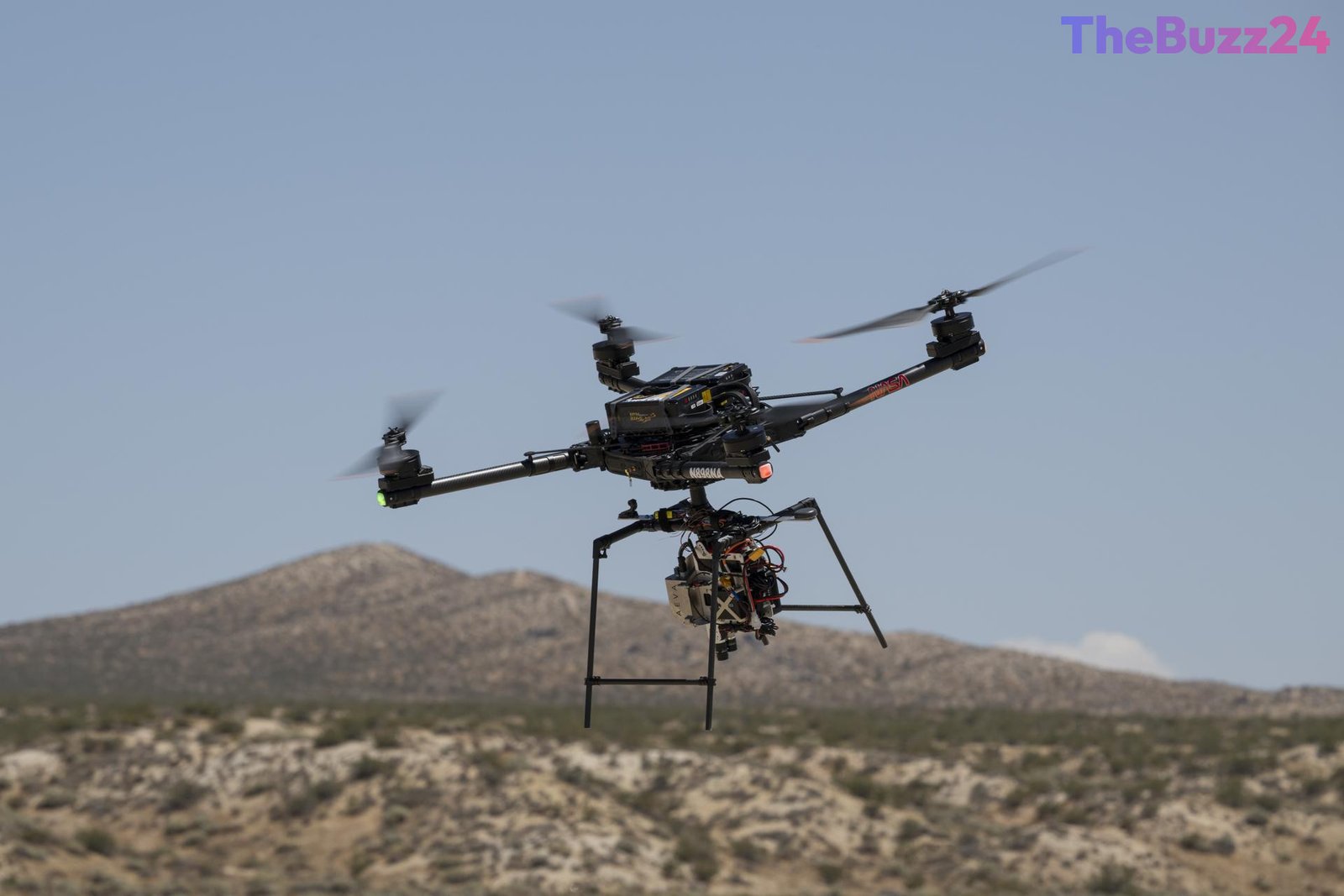
The demonstration involved an Alta-X drone equipped with the SPLICE guidance, navigation, and control payload. Conducted on August 27 at Rogers Dry Lake near the Armstrong Flight Research Center in Edwards, California, the tests validated the system’s ability to map terrain, assess potential landing areas, and autonomously divert to a safer location if hazards were detected. SPLICE achieves this by generating high-resolution digital elevation maps using light-detection and sensor data, ensuring precision and safety during critical landing phases.
The SPLICE payload was developed at the Johnson Space Center in Houston, with specialists at Armstrong assisting with its integration, testing, and flight aboard the Alta-X drone in June and July. These initial tests confirmed robust communications, data handling, telemetry, and command-control performance. According to Davis Adams, the project manager, this flight test represents the culmination of nearly a decade of dedicated work, significantly advancing the technology’s readiness level for future space missions.
This crucial validation primes SPLICE for integration into upcoming robotic and crewed lunar flights, with its guidance and navigation systems applicable to terrestrial, lunar, and Martian descent and landing missions. Collaboration with commercial lunar lander providers is already underway, with many leveraging data from SPLICE’s development for their own platforms. The system is expected to be available in a software catalog this fall, and industry partners are actively evaluating its navigation capabilities for precision landing and potential extensions for autonomous surface mobility, marking a pivotal step towards safer and more efficient space exploration.
Key Takeaways
- NASA successfully demonstrated its Safe and Precise Landing – Integrated Capabilities Evolution (SPLICE) system using an Alta-X drone for autonomous planetary landings.
- SPLICE enables spacecraft to autonomously map terrain, identify hazards, and divert to safer landing sites, crucial for future Moon and Mars missions.
- The technology has reached a readiness level suitable for integration into future robotic and crewed lunar flights, with active collaboration with commercial space partners.
Editor’s Analysis & Impact
This development marks a significant leap forward in autonomous space navigation, directly addressing one of the most critical challenges for planetary exploration: safe and precise landings. The SPLICE system’s ability to map terrain, identify hazards, and autonomously divert to safer sites will drastically reduce risks for future lunar and Martian missions, both robotic and crewed. From a market perspective, this technology will likely become a foundational component for commercial lunar landers and future space logistics, potentially accelerating the development of Moon bases and resource utilization. Its application extends beyond just landing, with potential for autonomous surface mobility. This advancement not only enhances mission safety and success rates but also opens new avenues for deeper, more complex exploration, solidifying humanity’s presence beyond Earth.
Frequently Asked Questions
Q: What is the primary purpose of the SPLICE system?
A: The SPLICE (Safe and Precise Landing – Integrated Capabilities Evolution) system is designed to enable spacecraft to autonomously navigate to safe landing sites on celestial bodies like the Moon and Mars, detecting and avoiding potential hazards in real-time.
Q: How was the SPLICE system recently tested?
A: The system was successfully demonstrated using an Alta-X drone, which performed simulated lunar descent and landing maneuvers at Rogers Dry Lake in California. During these tests, SPLICE mapped terrain, assessed landing areas, and autonomously diverted the drone when unsafe conditions were detected.
Q: What are the future implications of SPLICE technology?
A: SPLICE is poised for integration into upcoming robotic and crewed lunar missions, enhancing safety and precision. It is also being evaluated by commercial partners for precision landing applications and autonomous surface mobility, potentially accelerating lunar exploration and resource development.
AI Disclosure: This article is based on verified data and official reports. Our Team and AI have cross-referenced every financial detail with primary sources to ensure total accuracy.
More from this Category