Hubble Unveils Cosmic Mystery: Dwarf Galaxies’ Missing Oxygen
New observations from NASA’s Hubble Space Telescope have revealed a perplexing phenomenon in the cosmos: dwarf galaxies appear to retain only a small fraction of the oxygen generated by their stars. This discovery, part of the ongoing Galaxies Losing Oxygen via Winds (GLOW) study, challenges long-held assumptions about galactic evolution and the chemical enrichment of the universe.
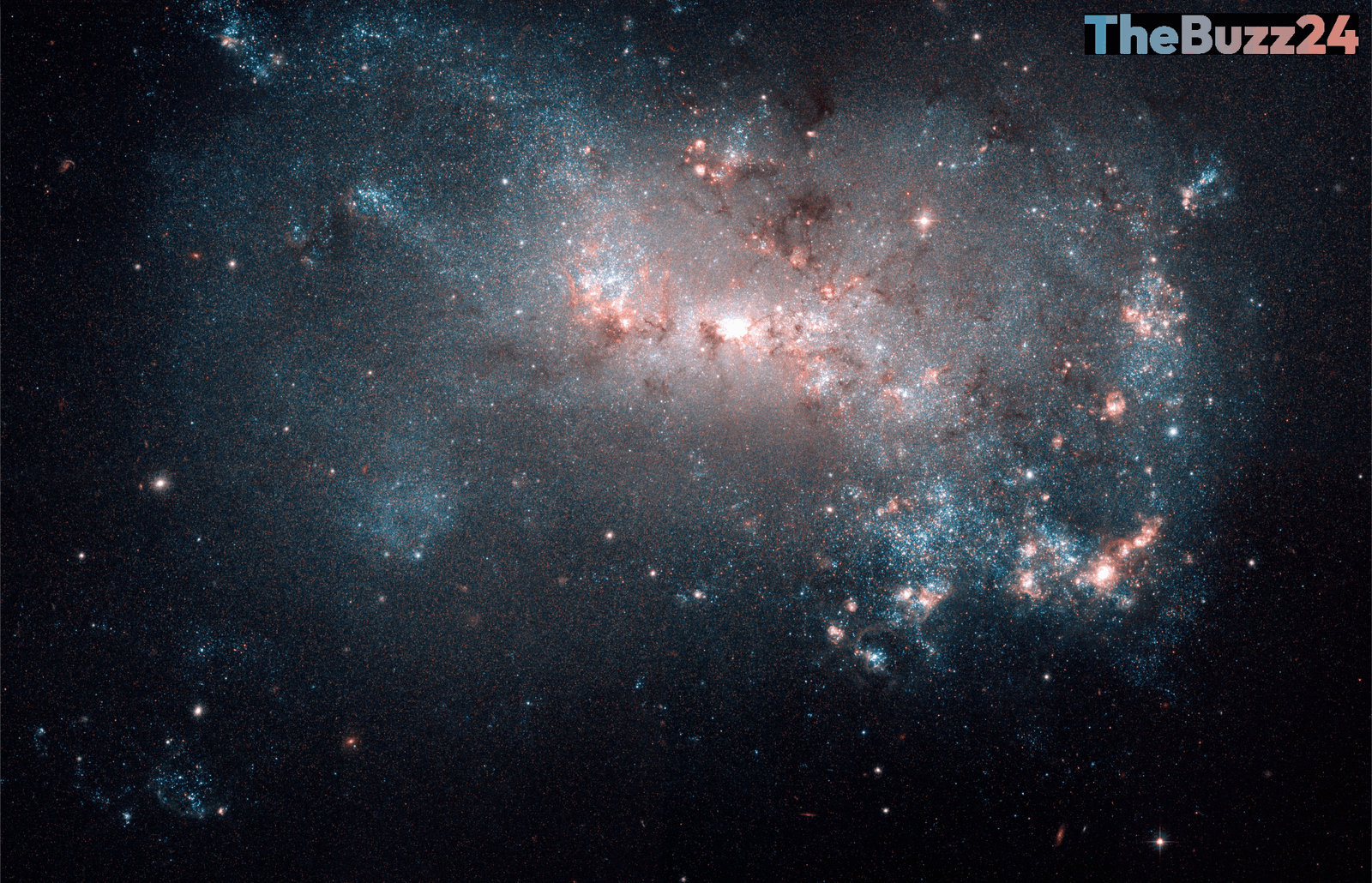
Among the celestial bodies examined was NGC 4449, a striking dwarf irregular galaxy. Researchers meticulously studied 37 nearby dwarf galaxies, which are relatively small stellar systems ranging from a few thousand to hundreds of millions of stars. The consistent finding across these diverse galaxies was a significant deficit of oxygen, far less than what theoretical models predicted should be present.
Oxygen, a crucial element for life as we know it, is forged within the fiery cores of stars through nuclear fusion. When these stars reach the end of their lives, they release these heavy elements, including oxygen, into the interstellar medium, enriching subsequent generations of stars and planets. The inability of dwarf galaxies to hold onto this vital element suggests powerful processes are at play, potentially expelling oxygen into intergalactic space through stellar winds or supernova explosions, preventing it from contributing to the galaxy’s overall chemical makeup.
This unexpected revelation from Hubble provides critical data for astrophysicists working to understand the intricate mechanisms governing galaxy formation and evolution. It highlights the dynamic and often violent nature of galactic environments, particularly in smaller systems, and opens new avenues for research into how elements are distributed across the universe.
Key Takeaways
- NASA's Hubble Space Telescope has discovered that dwarf galaxies retain only a small fraction of the oxygen produced by their stars.
- The 'Galaxies Losing Oxygen via Winds (GLOW)' study observed 37 nearby dwarf galaxies, including NGC 4449, revealing a significant deficit of expected oxygen.
- This finding challenges current models of galactic evolution and the distribution of heavy elements in the universe, suggesting powerful expulsion mechanisms.
Editor’s Analysis & Impact
This discovery from the Hubble Space Telescope represents a significant step forward in our understanding of galaxy evolution, particularly for dwarf galaxies. The revelation that these smaller systems struggle to retain oxygen, a fundamental element produced by stars, could necessitate a re-evaluation of current astrophysical models. It suggests that processes like stellar winds and supernovae might be more efficient at expelling heavy elements from dwarf galaxies than previously thought, impacting their chemical enrichment and star-forming capabilities over cosmic time. Future research will likely focus on identifying the precise mechanisms responsible for this oxygen loss and its broader implications for the cosmic web. This insight underscores the invaluable role of space telescopes like Hubble in uncovering the universe’s most profound mysteries.
Frequently Asked Questions
Q: What is a dwarf galaxy?
A: A dwarf galaxy is a small galaxy composed of anywhere from a few thousand to several hundred million stars, significantly smaller than larger galaxies like our Milky Way. They are the most common type of galaxy in the universe and are often found orbiting larger galaxies.
Q: Why is oxygen important in galaxies?
A: Oxygen is a 'heavy element' (or metal, in astronomical terms) that is forged inside stars through nuclear fusion. When stars die, they release these elements into space, enriching the interstellar medium. This enrichment is crucial for the formation of new stars, planets, and ultimately, the building blocks for life. The amount of oxygen in a galaxy is an indicator of its chemical evolution and star-forming history.
Q: What is the GLOW study?
A: GLOW stands for 'Galaxies Losing Oxygen via Winds.' It is a research study utilizing observations from the Hubble Space Telescope to investigate how dwarf galaxies lose oxygen, likely through powerful stellar winds or supernova explosions, which can expel gas and elements into intergalactic space.
AI Disclosure: This article is based on verified data and official reports. Our Team and AI have cross-referenced every financial detail with primary sources to ensure total accuracy.
More from this Category