Prediction Markets Prove Their Mettle in Election Forecasting
Prediction markets have solidified their role as a significant tool in election forecasting, demonstrating remarkable accuracy in predicting outcomes even before traditional media outlets or official vote counts. On Tuesday night, these platforms actively projected races, often providing insights hours before major news organizations. This performance marks a notable advancement in their ability to forecast political events.
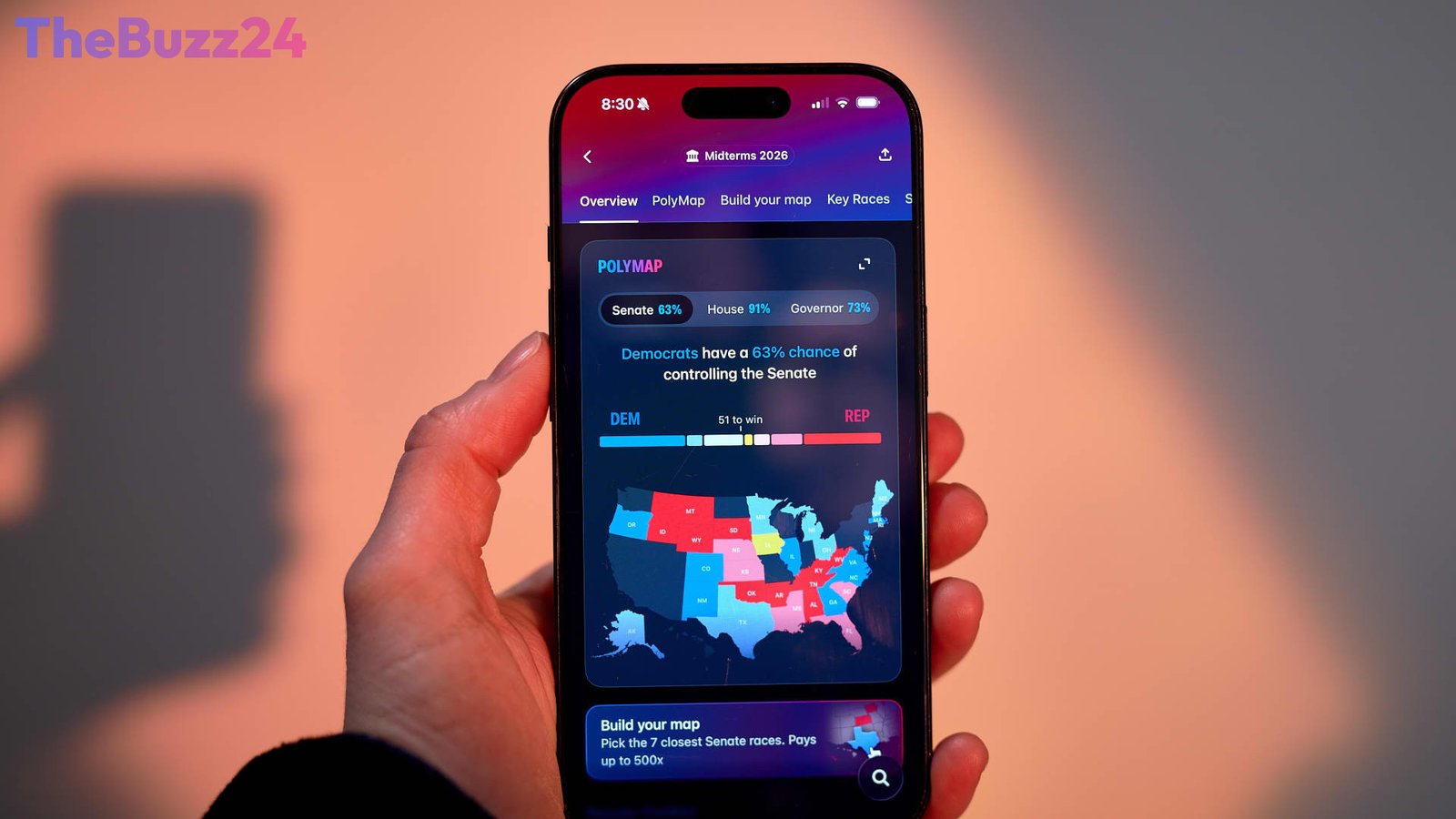
Leading platforms like Kalshi and Polymarket showcased their capabilities by projecting key U.S. House and Senate races. Democrats were consistently favored on these markets to gain control of both chambers, with projections often indicating specific seat counts. For instance, markets anticipated a strong Democratic performance in the Senate, with odds favoring at least 53 seats and classifying others as toss-ups. The actual results largely aligned with these predictions, with markets accurately calling races in states like Iowa and South Carolina, even adjusting rapidly in close contests as initial vote data emerged.
Polymarket CEO Shayne Coplan highlighted the speed advantage, noting that their platform often called races a median of 31 minutes ahead of major news networks. This real-time forecasting is attributed to the collective intelligence of financially motivated participants worldwide, who are constantly analyzing available data. While this election cycle saw prediction markets perform exceptionally well, some experts caution that the public’s understanding of how to interpret market probabilities is still developing. Despite past misses in other elections, such as Brazil’s presidential race and certain Democratic primaries, the accuracy demonstrated in this election cycle suggests prediction markets will continue to be a prominent feature in future political forecasting.
However, the increased prominence of prediction markets has also reignited discussions about their regulation. Critics argue that their success in this election does not negate potential risks and vulnerabilities. A recent survey indicated public skepticism towards using prediction markets for trading on elections, underscoring the ongoing debate about oversight and public perception.
Key Takeaways
- Prediction markets accurately forecasted key U.S. House and Senate election outcomes before traditional media outlets and official vote counts.
- Platforms like Kalshi and Polymarket demonstrated speed and accuracy, often calling races hours ahead of established news organizations.
- Despite their success, discussions around the regulation of prediction markets and public understanding of their probabilistic nature continue.
Editor’s Analysis & Impact
The recent election cycle has undeniably elevated the status of prediction markets as a powerful forecasting tool. Their ability to aggregate real-time, financially incentivized insights offers a compelling alternative to traditional polling and media projections. This success could lead to increased adoption and integration of prediction market data into political analysis. However, the inherent volatility and the potential for manipulation necessitate a robust regulatory framework. As these markets gain traction, bridging the gap between market probabilities and public comprehension will be crucial for their long-term legitimacy and widespread acceptance in political discourse.
Frequently Asked Questions
Q: What are prediction markets?
A: Prediction markets are exchanges where people can buy and sell contracts whose payoffs depend on the outcome of future events, such as elections. They function similarly to stock markets, with prices reflecting the collective belief of participants about the likelihood of a particular event occurring.
Q: How do prediction markets forecast elections?
A: Prediction markets forecast elections by aggregating the beliefs of a large number of participants who are trading contracts based on potential election outcomes. The price of a contract for a specific candidate or outcome is interpreted as the market's probability of that event happening.
Q: Are prediction markets always accurate?
A: No, prediction markets are not always accurate. While they demonstrated strong performance in recent elections, they have also missed forecasts in other instances. Their accuracy depends on various factors, including the liquidity of the market, the sophistication of participants, and the inherent unpredictability of real-world events.
AI Disclosure: This article is based on verified data and official reports. Our Team and AI have cross-referenced every financial detail with primary sources to ensure total accuracy.
More from this Category