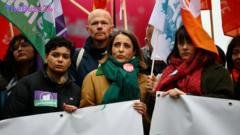
France Gripped by Mass Protests: Unions Demand Wage Hikes Amid Cost of Living Crisis
Mass demonstrations swept across France on Thursday, with hundreds of thousands taking to the streets in a nationwide show of discontent over the escalating cost of living and stagnant wages. Five major unions united in a day of action, calling for increased pay and greater investment in public services. The interior ministry reported over 600,000 participants, while the powerful CGT union claimed the figure soared to 1.57 million, marking a significant surge in mobilization.
Protests, which initially began in September focusing on conditions in high schools, have broadened to encompass universities, various work sectors, and a resurgence of the “yellow vest” movement. Unions have emphasized that their widespread participation will only cease if their demands are met. In response to the significant turnout and potential for unrest, Interior Minister Laurent Nuñez deployed 70,000 police officers, pledging a firm stance against any violence. While some incidents of unrest, including a car fire and clashes with police in Lyon, were reported, they did not reach the scale of previous demonstrations.
The day of action led to considerable disruption across the country. Schools, hospitals, and public transport experienced significant impacts, with the Eiffel Tower and parts of the Louvre museum temporarily closing. Production at oil refineries was halted, and France was expected to increase electricity imports due to disruptions at nuclear power plants. Unions are specifically pushing for a substantial increase in the minimum wage, currently at €12.31 per hour, with some unions advocating for a €100 monthly net increase for all workers.
In an effort to address public concerns, the government has implemented measures such as releasing strategic fuel reserves and has promised reforms to the university admissions system. Prime Minister Sébastien Lecornu announced plans to convene a “social conference” with unions and employers early next week to discuss purchasing power and wages. However, the government faces fiscal constraints, aiming to reduce the budget deficit significantly, which may limit its room for maneuver in meeting union demands.
Key Takeaways
- Over 600,000 people participated in nationwide protests across France demanding higher wages and better public services.
- The protests, fueled by the rising cost of living, have disrupted key sectors including education, transport, and energy.
- The French government plans to hold a 'social conference' with unions and employers to address concerns about purchasing power and wages.
Editor’s Analysis & Impact
The widespread protests in France underscore a growing global concern over inflation and the cost of living crisis impacting household budgets. The unified front presented by multiple unions signals a potent challenge to the government’s fiscal policies. While the administration is attempting to de-escalate tensions through dialogue and minor concessions, its ability to meet union demands is constrained by significant budget deficit reduction targets. This standoff could lead to prolonged industrial action, further impacting the French economy and potentially influencing similar movements in other European nations grappling with similar economic pressures.
Frequently Asked Questions
Q: What triggered the recent protests in France?
A: The protests were primarily triggered by the rising cost of living, stagnant wages, and concerns over public services. They initially focused on high school conditions but have since broadened to include various sectors and a revived 'yellow vest' movement.
Q: What are the main demands of the protesting unions?
A: The unions are demanding significant wage increases, particularly a rise in the minimum wage (Smic), and greater investment in public services. Some are calling for a net increase of €100 per month for workers.
Q: How has the French government responded to the protests?
A: The government has deployed a large police presence to manage the demonstrations and has announced plans to convene a 'social conference' with unions and employers to discuss purchasing power and wages. They have also implemented measures like releasing fuel reserves.
AI Disclosure: This article is based on verified data and official reports. Our Team and AI have cross-referenced every financial detail with primary sources to ensure total accuracy.
More from this Category