European Air Travel Grapples with Second Wave of Widespread Hoax Bomb Threats
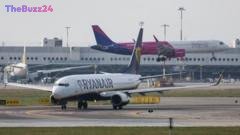
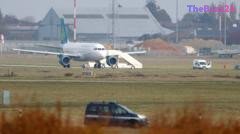
European aviation infrastructure has been significantly disrupted by a series of widespread hoax bomb threats targeting at least 21 aircraft and multiple airports across the continent. This marks the second such incident within a single week, prompting authorities, including the UK government, to label the events as “malicious hoaxes” while emphasizing the seriousness with which they are being addressed.
The threats impacted flights destined for or departing from Austria, Belgium, Bulgaria, the Czech Republic, France, Italy, Poland, and Romania. Notable incidents included an Aer Lingus flight from Dublin to Rome being diverted to an air base in France, while a Finnair flight from Helsinki to Rome was escorted by Italian fighter jets. EasyJet services from Newcastle and Glasgow were met by police upon arrival in Prague as a precautionary measure. London Heathrow and Birmingham airports also received threats, which were quickly assessed as not credible. Despite the extensive disruption and thorough security checks, no explosives or suspicious devices have been discovered on any of the affected planes or airport premises.
Some of the threats, received via email, were reportedly signed by a group identifying as “Fighters of the Male State,” claiming to target a “feminist regime” and threatening to “turn the skies red.” This group is speculated by some to be linked to the Russian ultra-right organization “Muzhskoi Legion,” which was banned in Moscow in 2021. UK Transport Secretary Heidi Alexander confirmed the government’s serious approach to these “malicious hoax threats,” highlighting established protocols for managing such incidents. Passengers, like Emily Noble aboard the diverted Aer Lingus flight, recounted unsettling experiences, hearing fighter jets during their unplanned landing and undergoing lengthy security screenings.
Aviation security experts acknowledge that the industry faces numerous bomb threats daily but expressed surprise at the scale and frequency of this week’s incidents. Philip Baum, a professor of aviation security, noted that diversions typically occur only when a threat is deemed credible. Marco Chan, an aviation expert, suggested these incidents are likely hoaxes but stressed the necessity for the system to treat them as real, potentially representing a form of “cheap, deniable disruption.” Concerns persist that a continuous stream of hoaxes could either lead to complacency or be used as a diversion for a genuine threat.
Key Takeaways
- Over 20 aircraft and multiple European airports were targeted by widespread hoax bomb threats, marking the second such incident in a week.
- Despite significant disruption, including diversions and fighter jet escorts, no explosives were found on any affected flights.
- The threats, some attributed to a group called "Fighters of the Male State," are being treated seriously by authorities as "malicious hoaxes" that pose a challenge to aviation security.
Editor’s Analysis & Impact
These widespread hoax bomb threats, occurring twice in a single week, impose significant operational and financial burdens on European airlines and airports. Diversions, security screenings, and delays lead to increased fuel costs, passenger compensation, and logistical nightmares. Beyond immediate expenses, such incidents can erode passenger confidence, potentially impacting future travel demand.
The repeated nature of these hoaxes suggests a persistent threat, possibly aimed at causing “cheap, deniable disruption.” Aviation security experts warn of the risk of complacency if hoaxes become too frequent, or conversely, the potential for a real threat to be masked by a wave of false alarms. Authorities face the challenge of maintaining vigilance without overreacting, while also investigating the origins of these sophisticated, coordinated attacks.
The claims by groups like “Fighters of the Male State” raise questions about potential ideological or geopolitical motivations behind such disruption. Whether domestic extremist groups or state-sponsored actors are involved, these incidents highlight the vulnerability of critical infrastructure to non-physical attacks and the evolving landscape of security threats in the digital age.
Frequently Asked Questions
Q: What happened with the recent bomb threats in Europe?
A: Over 20 aircraft and several airports across Europe were targeted by widespread hoax bomb threats, causing significant disruption, including flight diversions and security screenings. This was the second such incident within a week.
Q: Were any explosives found on the affected flights?
A: No, extensive searches by security personnel and sniffer dogs on all affected aircraft and airports found no explosives or suspicious items. Authorities have consistently described the threats as "malicious hoaxes."
Q: Who is believed to be behind these threats?
A: Some of the email threats were signed by a group calling themselves "Fighters of the Male State," which some experts link to the Russian ultra-right group "Muzhskoi Legion." However, the exact perpetrators and their motivations are still under investigation.
AI Disclosure: This article is based on verified data and official reports. Our Team and AI have cross-referenced every financial detail with primary sources to ensure total accuracy.
More from this Category