Unlocking Galactic Secrets: How Ancient Star Clusters Reveal the Milky Way’s Past
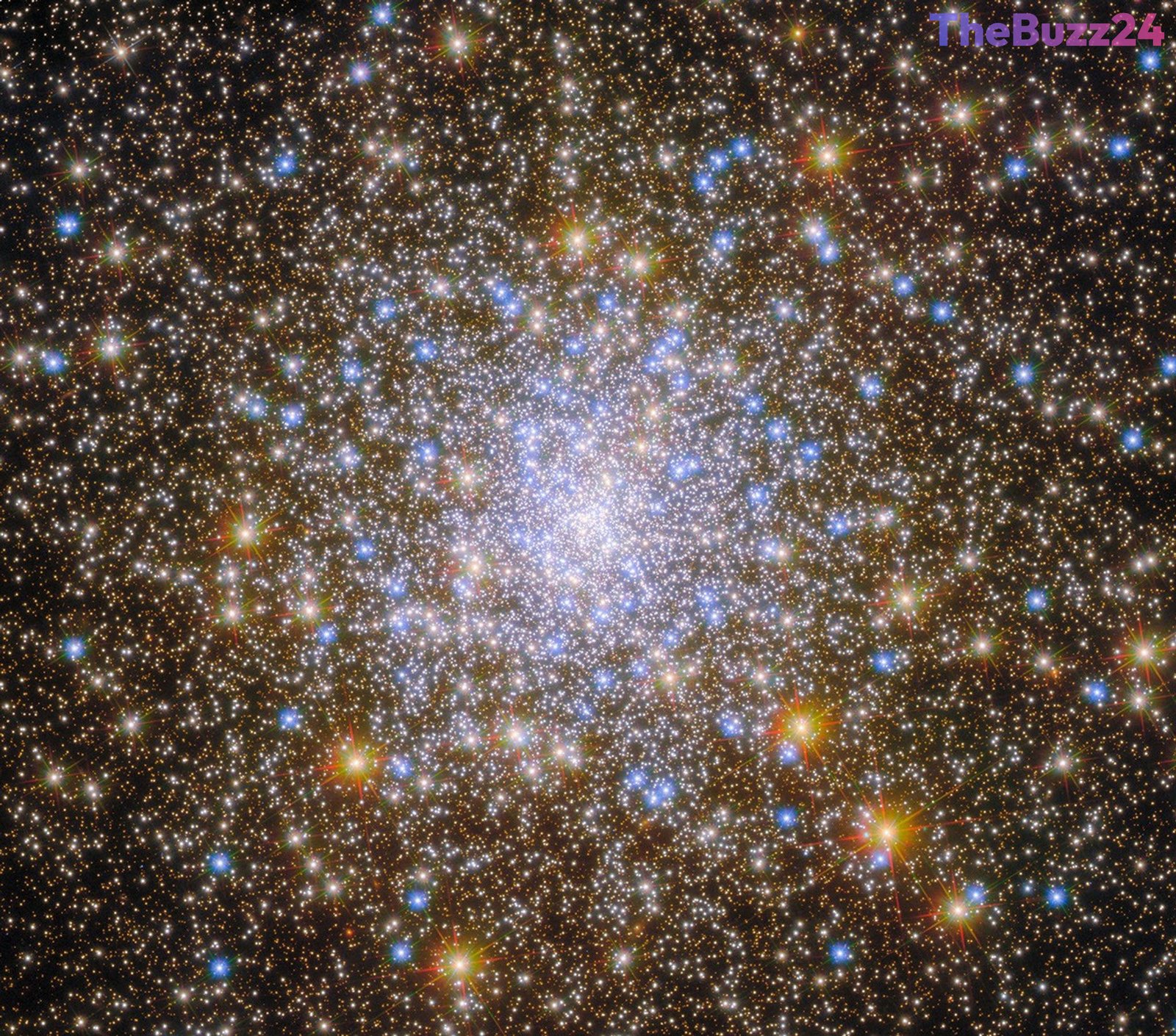
The Hubble Space Telescope has provided a profound look into the history of our galaxy through the detailed observation of Messier 30 (M30), a dense globular star cluster located approximately 27,500 light-years away in the constellation Capricornus. Globular clusters are spherical groupings containing tens of thousands to millions of stars, often orbiting the outskirts of galaxies like the Milky Way. These ancient structures, estimated to be between 11.5 and 13.5 billion years old, serve as cosmic time capsules that offer researchers a glimpse into the conditions of the early universe.
Historically, globular clusters have been instrumental in mapping the structure of our galaxy. Over a century ago, astronomers utilized these clusters to determine that the Sun does not occupy the center of the Milky Way, fundamentally shifting our understanding of our place in the cosmos. Today, modern technology allows scientists to analyze these clusters with unprecedented precision. By studying the movement and chemical composition of stars within M30, researchers are uncovering evidence that some clusters may not have originated within the Milky Way at all, but were instead captured by our galaxy during its long, complex evolution.
Recent observational programs have leveraged Hubble’s longevity to track the movement of stellar populations over a 15-year period. By combining data from ultraviolet, visible, and near-infrared light, astronomers are now able to investigate exotic phenomena such as ‘blue straggler’ stars and the diverse populations of stars that coexist within a single cluster. These ongoing efforts continue to refine our knowledge of how galaxies form, grow, and interact with their neighbors over billions of years.
Key Takeaways
- Messier 30 is an ancient globular cluster that acts as a time capsule, preserving data from the early stages of the universe.
- The orbital patterns of certain globular clusters suggest that the Milky Way may have captured them from outside its original structure.
- Hubble's long-term observational data allows scientists to track stellar movement over decades, providing insights into galactic evolution.
Editor’s Analysis & Impact
The continued study of globular clusters like M30 represents a critical intersection of historical astronomy and modern data science. By utilizing the long-term archival data provided by the Hubble Space Telescope, researchers are moving beyond static imagery to understand the dynamic, kinetic history of the Milky Way. This research has significant implications for our understanding of galactic cannibalism—the process by which larger galaxies absorb smaller stellar systems. As we look toward the future, the integration of this data with newer observatories will likely provide a more comprehensive map of the dark matter and gravitational forces that shaped our galaxy. This work not only clarifies our past but also establishes a baseline for identifying how other galaxies in the local group have evolved, reinforcing the importance of long-duration space missions in scientific discovery.
Frequently Asked Questions
Q: What is a globular cluster?
A: A globular cluster is a dense, roughly spherical group of tens of thousands to millions of stars that typically orbits a galaxy's center within its outer halo.
Q: Why are globular clusters important to astronomers?
A: Because they are among the oldest objects in the universe, they act as 'time capsules' that preserve the chemical and structural history of the early galaxy, helping scientists understand how galaxies formed and evolved.
AI Disclosure: This article is based on verified data and official reports. Our Team and AI have cross-referenced every financial detail with primary sources to ensure total accuracy.
More from this Category