Lunar South Pole’s De Gerlache-Kocher Massif Eyed for Future Moon Bases
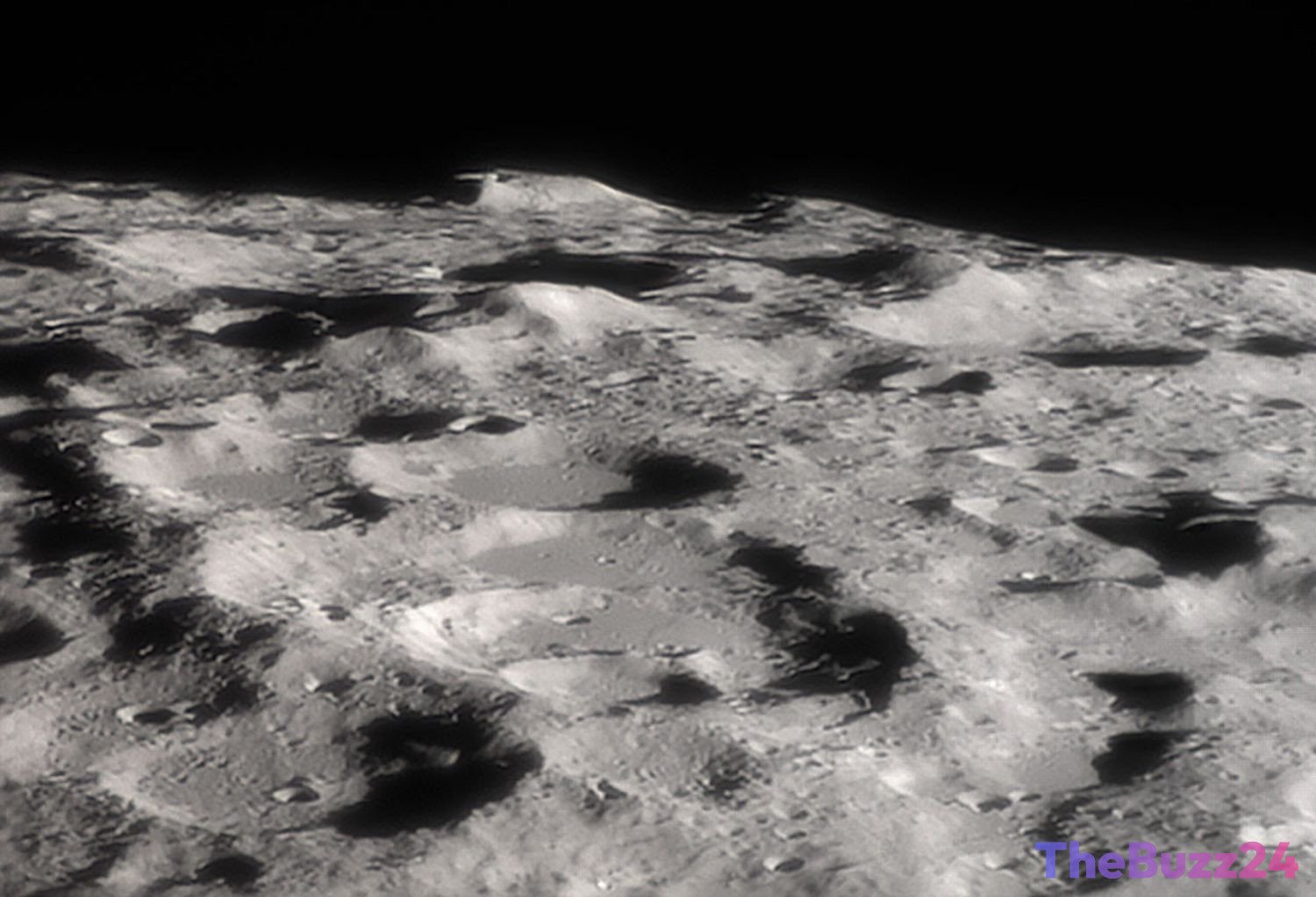
A striking telescopic image has brought the De Gerlache-Kocher massif into sharp focus, highlighting its prominence on the lunar horizon near the Moon’s south pole. This mountainous feature, soaring approximately 4 kilometers above the surrounding terrain, is situated in a region of intense scientific interest for future lunar exploration and settlement.
The area surrounding the De Gerlache-Kocher massif is particularly significant due to its unique geographical characteristics. It boasts crater floors that remain in perpetual shadow, offering ideal conditions for preserving water ice deposits – a critical resource for sustaining human life and operations. Conversely, the peaks in this region are bathed in near-constant sunlight, presenting an invaluable opportunity for solar power generation, essential for any long-term lunar presence.
These attributes have positioned the lunar south pole, and the De Gerlache-Kocher massif specifically, as a prime candidate for the initial human settlements on the Moon. The massif itself has been identified as a potential landing site for upcoming crewed missions under NASA’s Artemis program, underscoring its strategic importance in humanity’s return to the Moon. The captivating image was captured on October 31, benefiting from a libration angle that provided an enhanced, oblique perspective of the south polar region.
Key Takeaways
- The De Gerlache-Kocher massif near the Moon's south pole is a significant geological feature rising 4 km high.
- The lunar south pole's combination of permanently shadowed craters (potential water ice) and sunlit peaks (solar power) makes it ideal for human settlement.
- The De Gerlache-Kocher massif is being considered as a potential landing site for future Artemis missions.
Editor’s Analysis & Impact
The focus on the De Gerlache-Kocher massif and the lunar south pole underscores a pivotal shift in space exploration strategy, moving beyond short-term visits to establishing sustainable human presence. The identification of resources like water ice and the potential for reliable solar power are critical enablers for long-duration missions and potential off-world economies. This development is not just about scientific discovery but also about the practical engineering and logistical challenges of building infrastructure beyond Earth, paving the way for future interplanetary endeavors and potentially new geopolitical considerations in space.
Frequently Asked Questions
Q: What is the De Gerlache-Kocher massif?
A: The De Gerlache-Kocher massif is a mountainous formation located on the Moon, near its south pole, rising approximately 4 kilometers above its surroundings.
Q: Why is the lunar south pole important for future missions?
A: The lunar south pole is considered a prime location for human settlement due to the presence of permanently shadowed craters likely containing water ice and peaks that receive near-continuous sunlight for solar power generation.
Q: Is the De Gerlache-Kocher massif a planned landing site?
A: Yes, the De Gerlache-Kocher massif has been considered as a potential landing site for future crewed Artemis missions to the Moon.
AI Disclosure: This article is based on verified data and official reports. Our Team and AI have cross-referenced every financial detail with primary sources to ensure total accuracy.
More from this Category