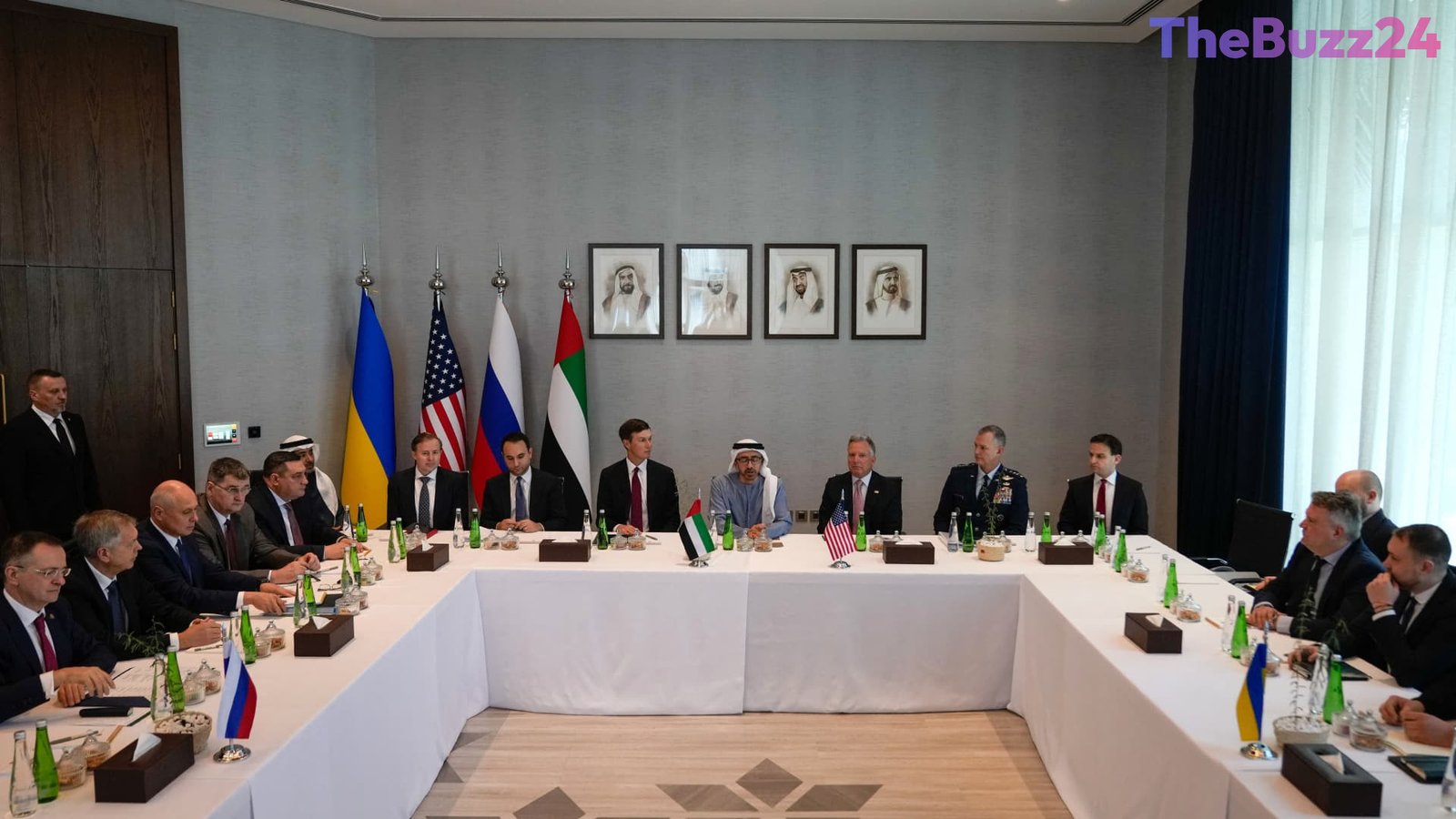
Zelenskyy Rejects Territorial Compromises as High-Stakes Peace Talks Conclude in Abu Dhabi
As high-profile peace negotiations wrapped up following sessions brokered by American envoys in Abu Dhabi, Ukrainian leadership drew a firm line regarding the sovereignty and future boundaries of the nation. Ukrainian President Volodymyr Zelenskyy emphasized during press engagements that the country operates as an independent sovereign nation rather than transactional property, pushing back against intense diplomatic pressure concerning potential territorial concessions.
The diplomatic gathering marked the first trilateral discussions involving representatives from Ukraine, Russia, and the United States since February. While American mediators characterized the exchanges as constructive and productive, substantial chasms remain regarding post-war security architectures and the demarcation of future borders. Ukrainian officials outlined a strict chronological priority for any peace framework: an immediate cessation of hostilities, robust international security guarantees, and only subsequently engaging in dialogue regarding contested territorial matters.
Amid these complex geopolitical maneuvers, negotiators successfully secured an agreement for a large-scale prisoner of war exchange, marking a rare tangible breakthrough in the otherwise gridlocked diplomatic process. Nevertheless, fundamental obstacles persist, including persistent Russian demands for territorial relinquishment in the eastern Donbas region and strict limitations on Ukraine’s military capabilities and alliance aspirations. Experts monitoring the situation note that while Kyiv might tolerate a temporary freeze of the conflict along existing front lines, officially ceding sovereignty over occupied regions remains a political and legal impossibility for the current administration.
Key Takeaways
- Ukrainian President Volodymyr Zelenskyy firmly rejected viewing his nation as negotiable real estate during peace talks in Abu Dhabi.
- Delegates successfully reached an agreement on a large-scale prisoner of war exchange, providing a rare positive development.
- Significant divisions remain regarding future borders, security guarantees, and ongoing Russian demands for territorial surrender.
Editor’s Analysis & Impact
The latest diplomatic engagements in Abu Dhabi underscore the profound complexities inherent in attempting to broker a lasting settlement in Eastern Europe. While the agreement on prisoner exchanges offers a glimmer of humanitarian progress, the fundamental divergence in strategic objectives between Kyiv and Moscow suggests that a comprehensive peace treaty remains distant. Ukraine’s insistence on prioritizing an immediate ceasefire and ironclad security guarantees before discussing territorial adjustments clashes directly with persistent Russian maximalist demands. For international markets and geopolitical stability, these negotiations highlight the ongoing volatility of the region. The ultimate trajectory of the conflict will likely depend on shifts in battlefield dynamics and the steadfastness of Western support, as any perceived premature concessions could trigger severe domestic political instability within Ukraine.
Frequently Asked Questions
Q: What were the primary topics discussed during the Abu Dhabi peace talks?
A: The talks focused heavily on future borders, post-war security guarantees for Ukraine, the sequencing of a potential ceasefire, and territorial boundaries.
Q: Was any immediate agreement reached during the negotiations?
A: While a comprehensive peace settlement remains elusive, the parties successfully agreed to a large-scale exchange of prisoners of war.
Q: Why is Volodymyr Zelenskyy opposed to territorial concessions?
A: Zelenskyy maintains that he lacks both the legal authority and public backing to surrender Ukrainian land, emphasizing that the nation's sovereignty is non-negotiable.
AI Disclosure: This article is based on verified data and official reports. Our Team and AI have cross-referenced every financial detail with primary sources to ensure total accuracy.
More from this Category