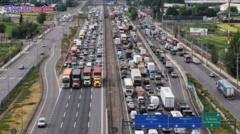
Chilean Transport Strike Grinds to a Halt as Fuel Prices Soar
Hundreds of transport workers across Chile have initiated a widespread protest, blocking major highways and roads in response to escalating fuel prices. The demonstrations, which began on Tuesday, involve convoys of buses and trucks deliberately halting traffic on key routes nationwide.
At the heart of the workers’ demands is immediate relief from the sharp increase in diesel costs, a situation exacerbated by global events, including the conflict in Iran. Despite ongoing discussions between government representatives and protest organizers, a resolution remains elusive. A further meeting is scheduled for Wednesday, but initial talks have yielded no agreement.
The strike is spearheaded by the Fuerza del Norte trade union, a significant organization representing approximately 80% of Chile’s truck drivers, alongside the No+TAG civic protest movement. Spokespeople for the protesters have expressed deep dissatisfaction with the government’s proposals, stating that current offers provide no viable path forward. The strike is therefore expected to continue.
Government officials have acknowledged the severity of the situation, with the Economy Minister urging continued dialogue while also signaling the potential for intervention to clear the blocked highways. The minister emphasized the detrimental impact of the protests on the nation’s economic activity and export capabilities, stressing the urgent need to resume normal operations. The administration has been grappling with public frustration over fuel costs for several months, as diesel prices have surged dramatically.
Key Takeaways
- Transport workers in Chile are protesting soaring fuel prices by blocking major highways.
- The strike, organized by Fuerza del Norte and No+TAG, has disrupted economic activity and exports.
- Negotiations between the government and protest leaders have so far failed to reach a resolution.
Editor’s Analysis & Impact
This widespread transport strike in Chile highlights the acute vulnerability of economies to global energy price fluctuations. The surge in diesel costs, reportedly linked to the conflict in Iran, is directly impacting the livelihoods of transport workers and threatening Chile’s economic output and export capacity. The government faces a difficult balancing act: addressing the legitimate concerns of the workers without further damaging the economy or resorting to forceful measures. The prolonged nature of these protests could have significant ripple effects on supply chains and inflation within Chile, underscoring the need for swift and effective policy interventions.
Frequently Asked Questions
Q: What is causing the protests in Chile?
A: The protests are primarily driven by a significant increase in diesel fuel prices, which transport workers find unsustainable for their operations.
Q: Who is organizing the transport strike in Chile?
A: The strike is being organized by the Fuerza del Norte trade union, which represents a large majority of Chile's truck drivers, and the No+TAG civic protest movement.
Q: What is the government's response to the protests?
A: The government has engaged in talks with protest leaders and is urging for continued dialogue. However, they have also warned of potential intervention to clear the highways due to the economic impact.
AI Disclosure: This article is based on verified data and official reports. Our Team and AI have cross-referenced every financial detail with primary sources to ensure total accuracy.
More from this Category