Port of New Orleans Seeks Over $1 Million in Lawsuit Following Mississippi River Vessel Collision
The Port of New Orleans has officially initiated legal action against the owners and operators of a cargo tanker that collided with a docked cruise ship on the Mississippi River. Court filings indicate that the port is demanding more than $1 million to cover extensive repairs, facility inspections, and environmental cleanup following the dramatic incident.
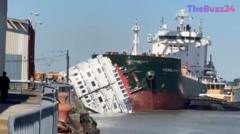
The collision occurred when the cargo vessel Atlantic Asphalt struck the paddlewheel cruise ship American Heritage while it was docked. The impact caused the riverboat to list heavily to one side and partially submerge, prompting a massive emergency response. More than 100 passengers and crew members were successfully rescued from the water and surrounding areas, with dozens transported to local hospitals for non-life-threatening injuries. Authorities later referred to the successful rescue operation as a miraculous outcome given the potential for greater tragedy.
Legal documents filed in the federal court for the Eastern District of Louisiana specifically name the tanker M/V Atlantic Asphalt, alongside its owner Nave Shipping SA and management firm Thome Ship Management Pte Ltd. The lawsuit accuses the defendants of negligence, gross negligence, and a failure to utilize all available means to prevent the disaster. Furthermore, the port is requesting that the vessel be seized and liquidated to satisfy the mounting financial claims.
While preliminary investigations by the Coast Guard suggest a potential steering failure aboard the cargo ship, official inquiries remain ongoing. Representatives for the management company stated that their crew members are safe and that the firm is cooperating fully with local authorities. Meanwhile, the port authority continues to assess the long-term structural impact on its terminal facilities as maritime traffic gradually returns to normal along the vital waterway.
Key Takeaways
- The Port of New Orleans filed a federal lawsuit seeking over $1 million in damages from the owners of the M/V Atlantic Asphalt.
- The collision caused the cruise ship American Heritage to partially submerge, resulting in dozens of injuries but no fatalities.
- Investigators are examining a potential steering failure, while the lawsuit accuses the tanker's operators of negligence.
Editor’s Analysis & Impact
This incident highlights the inherent vulnerabilities and critical economic impacts associated with major commercial shipping lanes, particularly busy arteries like the Mississippi River. Collisions involving large commercial vessels and passenger craft carry severe safety implications, often leading to immediate port closures, supply chain disruptions, and intense regulatory scrutiny. From a legal and financial perspective, maritime accidents of this scale trigger complex liabilities involving vessel owners, operating management, and local port authorities. The demand to seize the vessel underscores the aggressive measures ports will take to secure compensation for infrastructure damage. Moving forward, this case may prompt tighter navigation controls and a re-evaluation of docking safety protocols for passenger vessels sharing congested river corridors with heavy cargo transport.
Frequently Asked Questions
Q: What caused the collision between the cargo tanker and the cruise ship?
A: While the official investigation is ongoing, preliminary reports from the Coast Guard suggest that the tanker may have experienced a sudden loss of steering.
Q: How much is the Port of New Orleans suing for?
A: The port is seeking upwards of $1 million in damages to cover cleanup, facility repairs, inspections, and other related expenses.
Q: Were there any fatalities resulting from the crash?
A: Fortunately, no fatalities were reported. Although 32 people were hospitalized with non-critical injuries, all passengers and crew were accounted for following a rapid rescue operation.
AI Disclosure: This article is based on verified data and official reports. Our Team and AI have cross-referenced every financial detail with primary sources to ensure total accuracy.
More from this Category