Czech Republic Faces Public Outcry Over Proposed Public Media Funding Overhaul
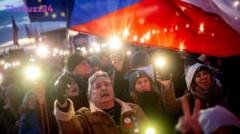
Thousands of Czech citizens have taken to the streets of Prague to voice strong opposition to the government’s proposed shift in public media funding. The coalition government, comprising the populist ANO party and two right-wing Eurosceptic parties, plans to eliminate the current licence fee system, replacing it with funding directly from the state budget. This move has ignited fears among critics that it could pave the way for political interference and undermine the independence of public broadcasters.
The government maintains that the proposed changes will not compromise editorial integrity, stating the primary goal is to streamline operations and reduce costs for Czech TV and Czech Radio. However, the legislation, which cleared its first parliamentary hurdle late last month, has spurred widespread public demonstrations. Protesters argue that direct state funding makes public media vulnerable to political pressure, potentially compromising their ability to report objectively.
Currently, Czech households contribute 205 crowns (approximately $9.44 USD or £7.06 GBP) monthly for public television and radio services. The protest on Sunday, organized by the Million Moments for Democracy association, reportedly drew around 400,000 attendees. Many participants expressed deep concern about the potential loss of a trusted news source. “If we do not have public television and radio then unfortunately we will not be able to believe anything anymore,” stated Milana Rudolfova, a 72-year-old pensioner.
Prime Minister Andrej Babis has sought to reassure the public, asserting that the government has no intention of controlling or nationalizing public media. He described the current funding model as outdated and pointed to similar transitions in other European nations like France and Norway, which have moved away from licence fees. France now funds its public media through a portion of VAT revenue, while Norway integrated its public broadcaster’s funding into the national budget. Despite these assurances, critics draw parallels to media control in Hungary under Viktor Orbán and have raised concerns about the government’s broader stance on media freedom.
Key Takeaways
- Thousands protested in Prague against the government's plan to replace public media licence fees with state budget funding.
- Critics fear the funding change could compromise media independence and allow political interference.
- The government insists the reform aims to cut costs and modernize the system, citing similar moves in France and Norway.
Editor’s Analysis & Impact
The proposed overhaul of public media funding in the Czech Republic highlights a growing tension between government efforts to modernize public services and concerns over media independence. While the government points to international precedents and emphasizes cost-saving, the significant public backlash underscores deep-seated anxieties about political influence over news dissemination. The comparison to Hungary’s media landscape serves as a stark warning for many. The outcome of this debate could set a precedent for how public service media are funded and governed across the region, potentially impacting the broader European media environment and the public’s trust in journalistic integrity.
Frequently Asked Questions
Q: What is the current funding model for Czech public media?
A: Currently, Czech households pay a monthly licence fee of 205 crowns (approximately $9.44 USD or £7.06 GBP) to fund public television and radio.
Q: Why is the Czech government proposing this change?
A: The government states the change is intended to modernize the funding system, cut costs for public broadcasters like Czech TV and Czech Radio, and align with trends seen in other European countries.
Q: What are the main concerns raised by critics?
A: Critics worry that direct state funding will make public media susceptible to political pressure, potentially compromising their editorial independence and ability to report objectively. Some draw parallels to media control in Hungary.
AI Disclosure: This article is based on verified data and official reports. Our Team and AI have cross-referenced every financial detail with primary sources to ensure total accuracy.
More from this Category