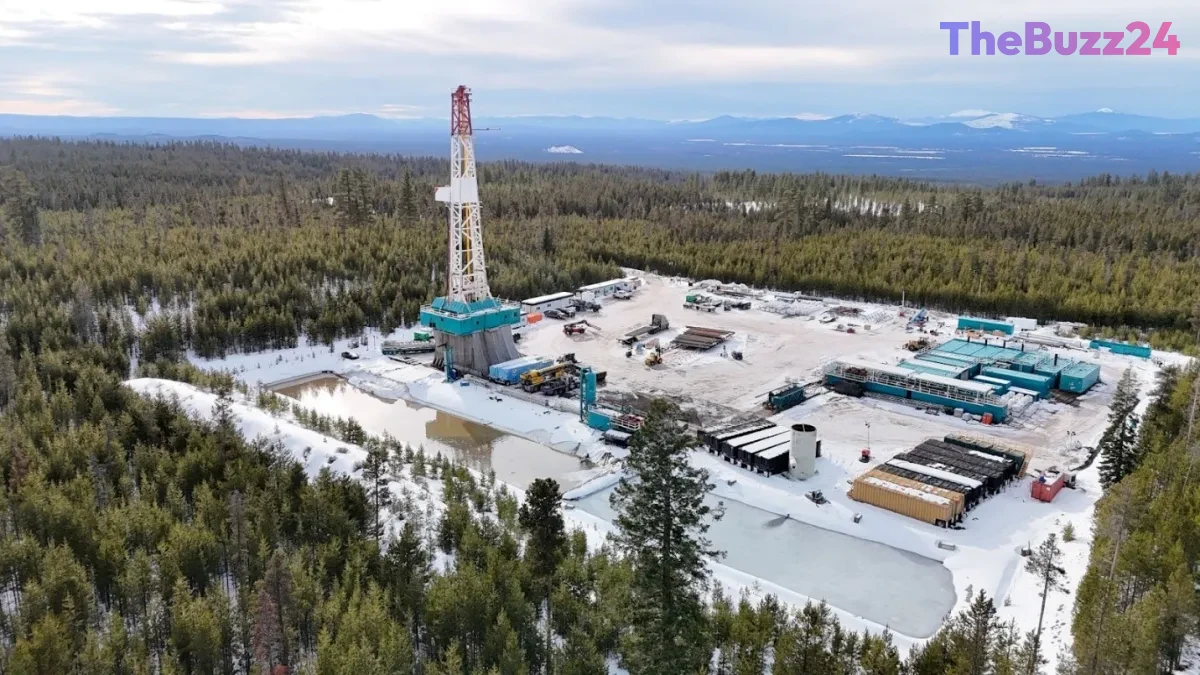
Geothermal’s Next Frontier: Mazama Energy’s Carbon Chill Unlocks Deeper, Faster Drilling
The pursuit of geothermal energy has long been defined by two critical objectives: drilling rapidly and reaching extreme depths. Achieving both goals could position geothermal as one of the most cost-effective power sources on the electrical grid. However, these seemingly straightforward aims are fraught with challenges, primarily the intense heat generated during deep drilling, which severely compromises equipment integrity.
Addressing these formidable obstacles, Mazama Energy has engineered a groundbreaking solution called Carbon Chill. This innovative technology harnesses carbon dioxide to efficiently cool the drill bit and transport rock cuttings to the surface. By mitigating heat-related damage, Carbon Chill not only facilitates significantly deeper drilling but also dramatically increases operational speed. Sriram Vasantharajan, co-founder and CEO of Mazama Energy, highlighted the immediate impact, stating that their rate of penetration surged by 20% even from already high benchmarks. Given that drilling constitutes a substantial 25% to 30% of a power plant’s total construction cost, reducing drill time promises considerable economic advantages.
The success of such advancements could profoundly reshape the energy landscape by the 2030s, with major technology firms like Google and Meta already exploring geothermal applications. The potential for geothermal energy is immense; a report from the National Laboratory of the Rockies suggests that the U.S. alone could generate between 26.5 to 57 terawatts of electricity from this source. Developing even a fraction of the conservative estimate would more than double the nation’s peak generating capacity. A key focus is “super-hot rock” geothermal, where temperatures exceed 752˚ F (400˚ C). At these extreme conditions, water enters a “supercritical” state, carrying five to ten times more energy than the hot water found in traditional geothermal wells, thereby reducing the number of wells required and lowering costs.
Traditional drilling methods struggle with these high temperatures, as conventional “mud” coolants become ineffective, leading to electronic failures in drill bits. Mazama Energy’s Carbon Chill circumvents this by injecting liquid carbon dioxide down the drill string. As the CO2 descends, it heats up and also becomes supercritical. Just before reaching the drill head, it passes through a specialized valve, expanding rapidly and cooling the electronics and bit. This method is crucial for accessing super-hot rock formations, which Vasantharajan describes as a “binary” choice for deep, horizontal wells. The company, backed by investors including Khosla, Centaurus Capital, and Doerr Capital, recently secured $135 million in funding. Mazama has already drilled wells surpassing 700˚ F and aims to complete a single well capable of generating up to 15 megawatts of electricity within the next year, transforming what was once a distant aspiration into a tangible commercial promise.
Key Takeaways
- Mazama Energy's "Carbon Chill" technology uses carbon dioxide to cool drill bits, enabling significantly faster and deeper access to geothermal resources.
- This innovation is crucial for tapping into "super-hot rock" geothermal, where extreme temperatures yield 5-10 times more energy than conventional wells.
- The technology promises to reduce geothermal power plant costs, attract major tech companies, and could play a pivotal role in transforming the global energy grid.
Editor’s Analysis & Impact
Mazama Energy’s Carbon Chill represents a significant leap forward for the geothermal industry, directly addressing the core technical and economic barriers to widespread adoption. By enabling faster, deeper, and more cost-effective drilling into super-hot rock formations, this technology could unlock vast, untapped energy potential. The ability to generate substantially more power from fewer wells dramatically improves geothermal’s competitiveness against other energy sources, potentially attracting increased investment and accelerating its integration into national grids. This innovation positions geothermal as a more viable baseload power option, crucial for decarbonization efforts and energy independence. Its success could spur a new wave of development, making geothermal a key player in the future energy mix, particularly for energy-intensive industries and data centers seeking reliable, clean power.
Frequently Asked Questions
Q: What is Mazama Energy's Carbon Chill technology?
A: Mazama Energy's Carbon Chill is an innovative drilling technology that uses liquid carbon dioxide to cool the drill bit and remove rock cuttings. This method allows for significantly faster and deeper drilling into high-temperature geothermal formations, overcoming limitations of traditional cooling systems.
Q: How does "super-hot rock" geothermal differ from traditional geothermal?
A: Super-hot rock geothermal refers to drilling into rock formations where temperatures exceed 752˚ F (400˚ C). At these extreme temperatures, water becomes "supercritical," a state that carries five to ten times more energy than the hot water found in traditional geothermal wells, making individual wells far more productive.
Q: What are the potential benefits of this technology for the energy sector?
A: The Carbon Chill technology can dramatically reduce the cost and time associated with geothermal power plant construction by enabling faster and deeper drilling. This makes geothermal energy more economically competitive, helps unlock vast super-hot rock resources, and offers a reliable, clean baseload power source that can contribute significantly to grid decarbonization and energy security.
AI Disclosure: This article is based on verified data and official reports. Our Team and AI have cross-referenced every financial detail with primary sources to ensure total accuracy.
More from this Category