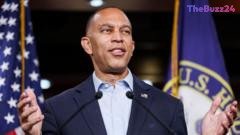
Hakeem Jeffries Nominated as House Speaker, Poised to Make History as First Black Leader of US Chamber
In a historic vote, Democratic members of the U.S. House of Representatives have officially chosen Representative Hakeem Jeffries as their nominee for Speaker of the House. The landmark move puts the New York lawmaker on track to become the first Black individual to lead the legislative body when the new congressional term convenes on January 3. With Democrats securing a decisive majority in the chamber following recent midterm elections, Jeffries is widely expected to assume the gavel, presiding over a strong majority alongside a Democratic-controlled Senate.
Jeffries, who has served as minority leader since 2023, secured the nomination in a 251-11 closed-door vote among party colleagues. Following the confirmation, Jeffries characterized the decision as a profound honor and privilege. Party leadership was further consolidated with the election of Representative Katherine Clark of Massachusetts as majority leader, Representative Pete Aguilar of California as majority whip, and Representative Joe Neguse of Colorado as assistant speaker. Democratic lawmakers currently hold at least 257 seats in the House, well above the 218 threshold needed for control.
Despite the overwhelming endorsement, Jeffries faces the task of managing a diverse caucus, including progressive newcomers calling for bold policy reform. Following the vote, Jeffries emphasized key economic priorities, committing the incoming leadership to addressing everyday consumer issues by working to reduce costs for housing, fuel, groceries, and healthcare. However, internal debates regarding foreign policy and healthcare spending could test party unity as the caucus prepares its legislative agenda.
The new Democratic leadership is also preparing for significant political friction with President Donald Trump. While the president has expressed potential willingness to cooperate on selective issues, he has also warned of using executive veto powers against contentious legislation. Beyond policy debates, House leadership will oversee extensive committee oversight and political inquiries involving the administration, positioning Jeffries at the center of Washington’s legislative power structure.
Key Takeaways
- House Democrats officially nominated Hakeem Jeffries for Speaker, paving the way for him to become the first Black lawmaker to lead the chamber.
- Jeffries won the nomination in a 251-11 internal vote, backed by a strong Democratic majority of at least 257 House seats taking effect in January.
- The incoming House leadership team faces policy standoffs with President Donald Trump while managing internal caucus priorities.
Editor’s Analysis & Impact
The nomination of Hakeem Jeffries represents a pivotal shift in American legislative leadership. Armed with a clear majority in the House and supported by a Democratic Senate, Jeffries is positioned to exercise significant control over legislative schedules and committee oversight. However, his tenure will be defined by how effectively he balances internal caucus dynamics—specifically bridging moderate members with an energized progressive wing—while navigating executive veto threats from President Donald Trump. By focusing initial priorities on tangible economic concerns like inflation and healthcare affordability, Jeffries aims to maintain party unity while establishing a robust legislative counterweight to the White House.
Frequently Asked Questions
Q: When will the official vote for Speaker of the House take place?
A: The full House of Representatives will formally elect the Speaker on January 3, when the next congressional term officially begins.
Q: What other lawmakers were elected to House Democratic leadership?
A: Along with Jeffries as Speaker nominee, House Democrats elected Katherine Clark as majority leader, Pete Aguilar as majority whip, and Joe Neguse as assistant speaker.
Q: What major legislative challenges lie ahead for the new House leadership?
A: House leadership will need to manage internal policy differences within the Democratic caucus while steering must-pass legislation through potential veto challenges from President Donald Trump.
AI Disclosure: This article is based on verified data and official reports. Our Team and AI have cross-referenced every financial detail with primary sources to ensure total accuracy.
More from this Category