Early Winter Storm Blankets Sierra Nevada, Triggering Highway Closures and Heavy Mountain Snowfall
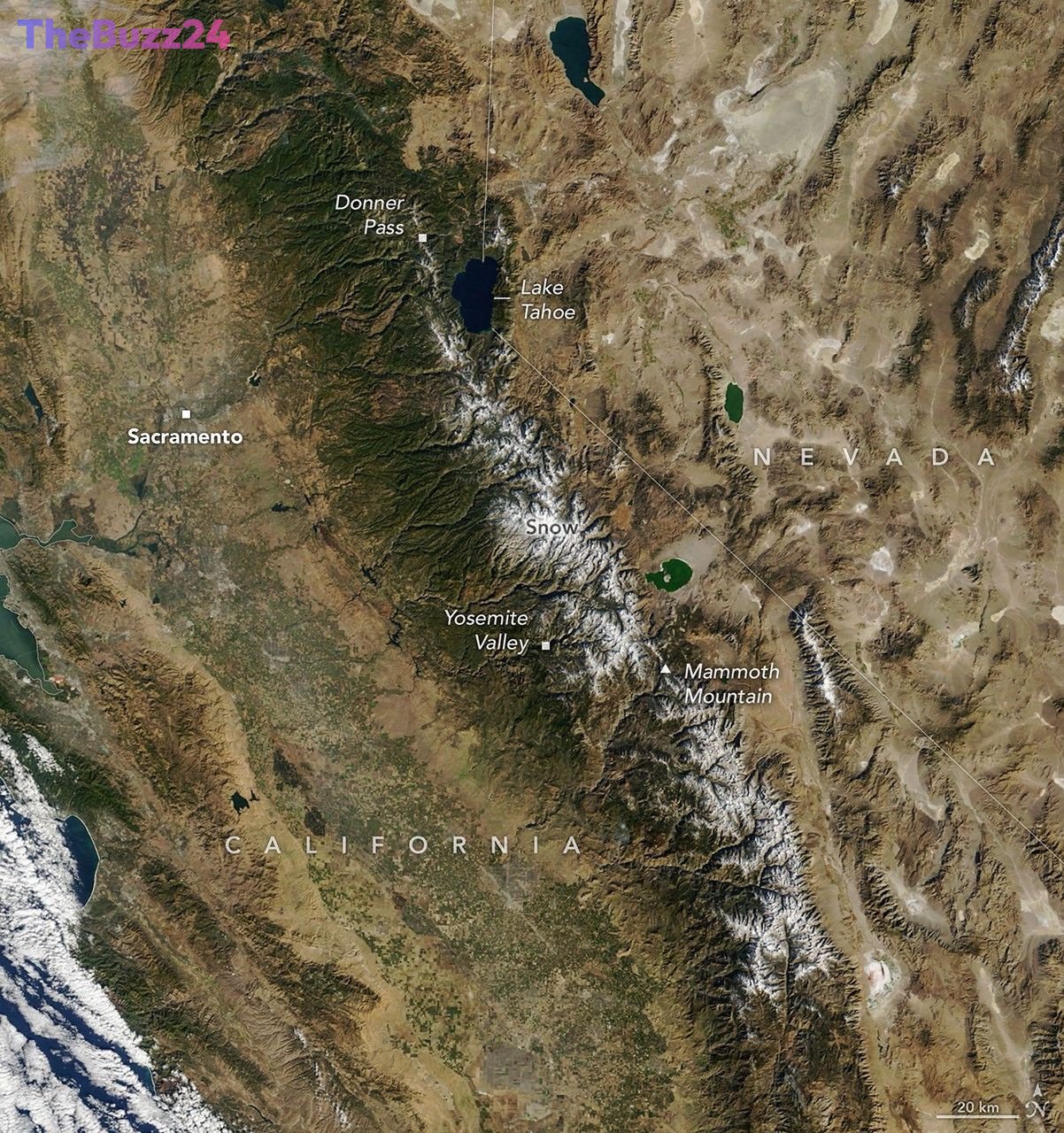
Early atmospheric activity has officially launched the winter weather season across California’s Sierra Nevada mountain range. A strong Pacific storm system swept through the region in mid-November, blanketing high elevations with up to a foot of snow while dropping significant rainfall across lower-lying areas in the Sacramento valley. Satellite observations recorded a stark visual transformation of the landscape over a short two-day window, showing previously bare mountain slopes quickly covered in a brilliant layer of fresh snow during a temporary lull between storm fronts.
The sudden onset of wintry conditions created immediate challenges across key transport corridors and alpine destinations. Northwest of Lake Tahoe, the Central Sierra Snow Laboratory recorded nearly 12 inches of snow near Donner Pass, forcing transportation authorities to temporarily shut down Interstate 80 in both directions due to dangerous travel conditions and vehicle spin-outs. Further south, Mammoth Mountain ski resort reported fresh accumulations between 9 and 13 inches, while officials at Yosemite National Park proactively closed several high-altitude roads ahead of the squall to safeguard visitors.
Meteorologists indicate that this initial atmospheric wave is merely the beginning of an extended active weather pattern targeting the Western United States. The National Weather Service issued winter storm warnings for regions above 5,000 feet, predicting even heavier snowfall totals in subsequent storm rounds. High-altitude zones above 8,000 feet are anticipated to receive up to four additional feet of snow, accompanied by high winds and hazardous travel conditions, marking a robust start to the region’s crucial winter water cycle.
Key Takeaways
- Early mid-November Pacific storms delivered up to 12 inches of snow to parts of California's Sierra Nevada, signaling the start of the winter snow season.
- Heavy snowfall forced the temporary closure of Interstate 80 near Donner Pass and prompted precautionary road closures across Yosemite National Park.
- Upcoming weather forecasts predict additional severe weather, with high-elevation regions expected to receive up to four feet of new snow.
Editor’s Analysis & Impact
The early arrival of substantial snowfall in the Sierra Nevada is a critical development for California’s water infrastructure and agricultural economy. The Sierra snowpack acts as a natural reservoir, providing a vital portion of the state’s water supply throughout the dry spring and summer months. For the travel, tourism, and outdoor recreation sectors, particularly regional ski resorts, an early snowpack boosts seasonal booking confidence and local economic activity. However, intense early-season storms present immediate logistical friction, disrupting transit arteries like Interstate 80 and requiring fast emergency responses. As climate variability alters traditional precipitation timing, these early winter storms underscore the continuing need for adaptive municipal resource management and highway infrastructure resilience.
Frequently Asked Questions
Q: How much snow fell during the initial Sierra Nevada storm?
A: High-elevation mountain areas received between 9 and 12 inches of snow during the initial storm event, with the Central Sierra Snow Laboratory recording nearly a foot near Donner Pass.
Q: Why was Interstate 80 closed?
A: Heavy snowfall and treacherous, icy driving conditions near Donner Summit caused traffic disruptions, prompting officials to shut down the highway in both directions to clear accidents and ensure public safety.
Q: What is the short-term weather forecast for the region?
A: The National Weather Service issued winter storm warnings indicating successive Pacific storms, which could drop up to four additional feet of snow on mountain peaks above 8,000 feet.
AI Disclosure: This article is based on verified data and official reports. Our Team and AI have cross-referenced every financial detail with primary sources to ensure total accuracy.
More from this Category