Golden Tribute: Empire State Building to Honor Voyager 1’s Unprecedented Space Milestone
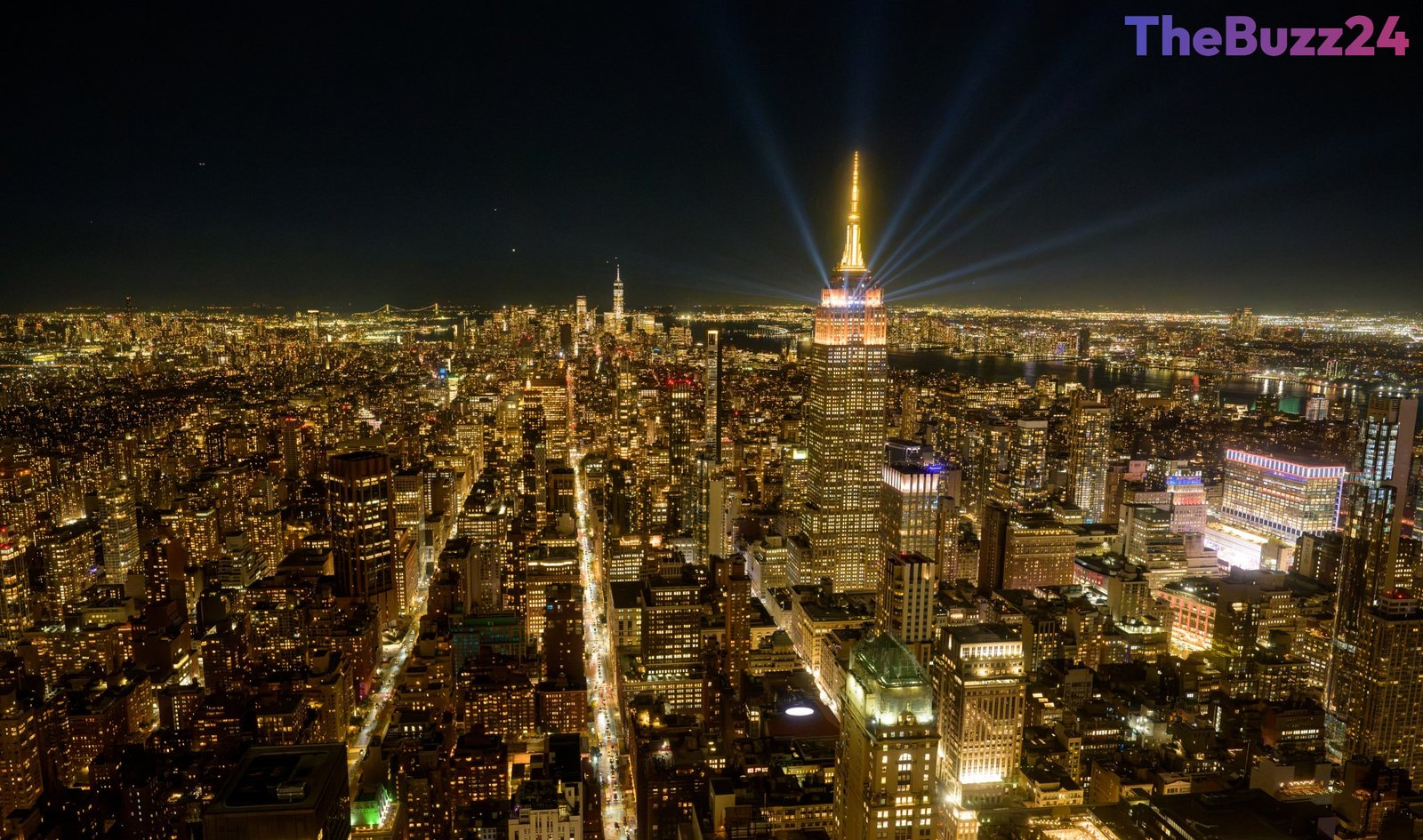
The iconic Empire State Building is set to illuminate its spire in a striking gold hue on November 17, 2026, commemorating a monumental achievement in space exploration. This dazzling display will honor NASA’s Voyager 1 spacecraft as it reaches an unparalleled distance of one light-day from Earth, marking it as the farthest human-made object ever to venture into the cosmos.
Voyager 1, launched in 1977, has been on an extraordinary journey for decades, continuously pushing the boundaries of interstellar space. Its impending milestone of being one light-day away signifies a truly unprecedented feat, highlighting humanity’s enduring quest for discovery and understanding beyond our solar system. This distance, equivalent to approximately 186,000 miles per second multiplied by 24 hours, underscores the vastness of space and the incredible longevity and resilience of the spacecraft.
The choice of gold for the Empire State Building’s illumination carries profound symbolic weight. It directly references the gold-plated copper phonograph record, famously known as the “Golden Record,” affixed to both Voyager 1 and its twin, Voyager 2. This unique artifact serves as a time capsule, containing a diverse collection of sounds and images intended to portray the richness of life and culture on Earth to any intelligent extraterrestrial beings who might one day encounter the probes. The golden glow will thus represent not just a scientific achievement, but a message of humanity sent across the stars.
Key Takeaways
- The Empire State Building will be lit gold on November 17, 2026, in tribute to NASA's Voyager 1.
- This event celebrates Voyager 1 reaching the unprecedented distance of one light-day from Earth, making it the farthest human-made object.
- The gold illumination symbolizes the "Golden Record" carried by Voyager, which contains sounds and images representing Earth's diversity.
Editor’s Analysis & Impact
The planned golden illumination of the Empire State Building for Voyager 1 underscores the profound cultural impact of scientific endeavors. This public tribute elevates space exploration from a purely scientific pursuit to a shared human narrative, fostering public engagement and inspiring future generations. From an industry perspective, it highlights the incredible engineering longevity of NASA’s missions and the enduring value of deep space probes for understanding the heliosphere and interstellar medium. The event serves as a powerful reminder of humanity’s capacity for long-term vision and the symbolic importance of sending our story into the cosmos, reinforcing the broader implications of our place in the universe.
Frequently Asked Questions
Q: What is the significance of Voyager 1 reaching "one light-day" from Earth?
A: Reaching one light-day means Voyager 1 will be so far away that it takes light a full day to travel from the spacecraft back to Earth. This marks an unprecedented distance for any human-made object, showcasing the probe's incredible journey into interstellar space.
Q: What is the "Golden Record" carried by the Voyager spacecraft?
A: The Golden Record is a gold-plated copper phonograph record containing sounds and images selected to portray the diversity of life and culture on Earth. It was included on both Voyager 1 and 2 as a message to any intelligent extraterrestrial life forms that might encounter the spacecraft in the distant future.
Q: When was NASA's Voyager 1 spacecraft launched?
A: NASA's Voyager 1 spacecraft was launched on September 5, 1977, making it one of humanity's longest-operating and most distant space missions.
AI Disclosure: This article is based on verified data and official reports. Our Team and AI have cross-referenced every financial detail with primary sources to ensure total accuracy.
More from this Category