NASA Sparks Innovation: $500,000 Challenge for Advanced Electric Rocket Thrusters
NASA has initiated a significant competition aimed at bolstering the capabilities of U.S. aerospace companies by challenging them to develop advanced mid-power Hall effect thrusters. This initiative, known as the Advanced Mid-Power Electric Rocket (AMPERE) Challenge, seeks to accelerate the development of a critical technology for future space exploration and operations.
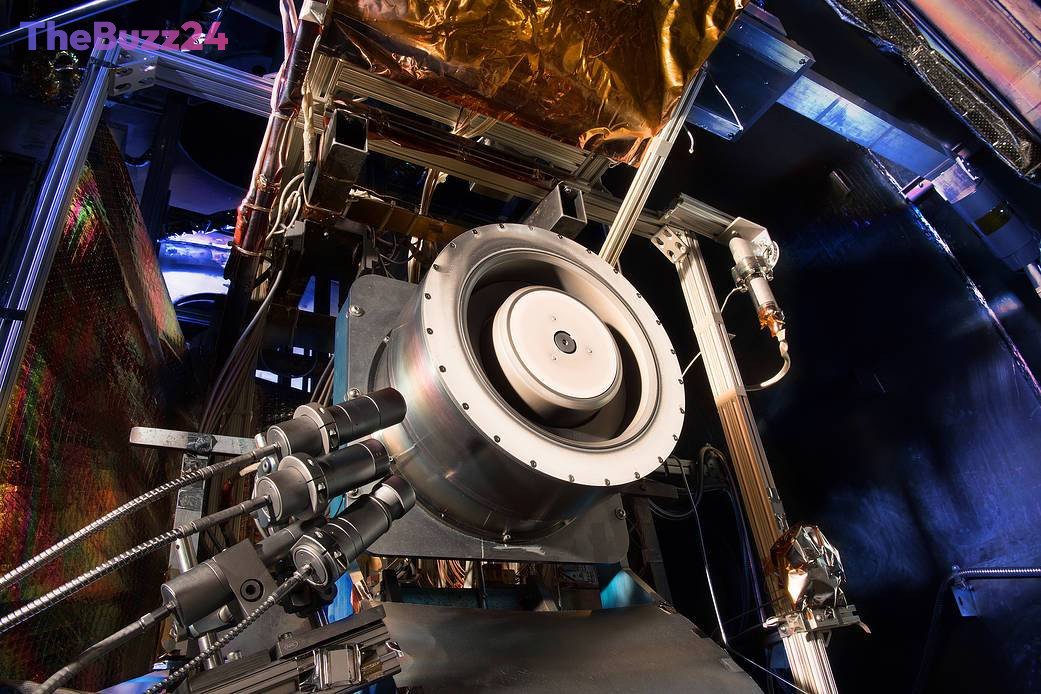
Hall effect thrusters represent a leap forward in propulsion efficiency, utilizing electric fields to ionize and accelerate a propellant gas. This method is considerably more efficient than traditional chemical rockets, requiring up to ten times less propellant for similar thrust levels, making them ideal for long-duration missions and deep-space robotic vehicles. The AMPERE Challenge specifically targets mid-power systems, which are seen as foundational for supporting upcoming NASA missions and commercial space ventures.
The competition offers a total of $500,000, to be divided between two winning U.S. companies. Beyond the financial incentive, participants will benefit from access to NASA’s extensive expertise, cutting-edge technologies, and state-of-the-art testing facilities at no cost. This collaborative approach aims to remove significant barriers to commercialization and provide companies with a platform to showcase their technological prowess to both government and commercial entities.
The AMPERE Challenge is structured in three phases, beginning with concept design, manufacturing plans, and performance projections. Selected teams will progress to prototype development, working closely with NASA and gaining access to proprietary Hall effect thruster technologies that use krypton propellant. The final phase involves rigorous testing of the prototypes at NASA’s Glenn Research Center. Registration for the challenge remains open until January 27, 2027.
Key Takeaways
- NASA has launched the AMPERE Challenge, a competition for U.S. companies to develop mid-power Hall effect thrusters.
- The challenge offers $500,000 in prizes and provides participants with access to NASA expertise and facilities.
- This initiative aims to accelerate the development of efficient electric propulsion systems crucial for future space missions.
Editor’s Analysis & Impact
The AMPERE Challenge underscores NASA’s strategic focus on advancing electric propulsion technology, a key enabler for ambitious space exploration goals and the burgeoning commercial space sector. By incentivizing private sector innovation and offering access to government resources, NASA is fostering a more robust domestic space economy. The emphasis on Hall effect thrusters, known for their propellant efficiency, suggests a long-term vision for more sustainable and cost-effective deep-space missions and satellite operations. This competition could lead to significant advancements in thruster technology, potentially lowering the cost of space access and enabling new commercial opportunities.
Frequently Asked Questions
Q: What are Hall effect thrusters?
A: Hall effect thrusters are a type of electric propulsion system that uses an electric field to accelerate a propellant gas, generating thrust. They are known for their high efficiency and low propellant consumption, making them suitable for long-duration space missions.
Q: What is the goal of NASA's AMPERE Challenge?
A: The primary goal of the AMPERE Challenge is to accelerate the development and commercialization of mid-power Hall effect thrusters by U.S. companies, providing them with financial incentives, technical expertise, and access to NASA facilities.
Q: How much funding is available through the AMPERE Challenge?
A: A total of $500,000 is available through the AMPERE Challenge, with two winning companies potentially receiving up to $250,000 each.
AI Disclosure: This article is based on verified data and official reports. Our Team and AI have cross-referenced every financial detail with primary sources to ensure total accuracy.
More from this Category