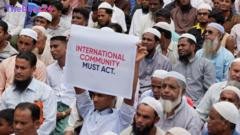
Historic ICJ Ruling: Myanmar Found Guilty of Rohingya Genocide
In a landmark decision, the International Court of Justice (ICJ) has determined that Myanmar is responsible for committing genocide against its Rohingya minority. This unprecedented ruling marks the first instance where a state has been officially found guilty of genocide by an international judicial body.
The court’s panel of judges, deliberating from various nations, reached a majority decision, concluding that “genocidal intent is the only reasonable inference that can be drawn from the evidence” presented. This finding underscores the gravity of the atrocities committed against the Rohingya population.
The verdict has significant implications for international law and human rights, setting a crucial precedent for holding nations accountable for such extreme violations. The legal proceedings and the evidence examined have culminated in a judgment that is expected to reverberate globally, potentially influencing future cases of mass atrocities and the pursuit of justice for persecuted groups.
Key Takeaways
- The International Court of Justice (ICJ) has ruled that Myanmar committed genocide against the Rohingya minority.
- This is the first time an international court has found a state guilty of genocide.
- The court's decision was based on the inference of genocidal intent from the presented evidence.
Editor’s Analysis & Impact
This ICJ ruling represents a monumental moment in international justice, establishing a critical precedent for accountability in cases of genocide. By finding Myanmar guilty, the court sends a strong message that states cannot act with impunity when committing mass atrocities. The decision is likely to embolden international bodies and human rights advocates to pursue similar actions against other regimes accused of genocide. However, the practical enforcement of such rulings remains a significant challenge, often depending on the political will of member states and international cooperation. The long-term impact will depend on how effectively this judgment is translated into tangible justice and protection for the Rohingya people and other vulnerable populations worldwide.
Frequently Asked Questions
Q: What is the significance of the ICJ ruling against Myanmar?
A: The ruling is significant because it is the first time an international court has found a state guilty of committing genocide. This sets a major precedent for international law and accountability for mass atrocities.
Q: What does 'genocidal intent' mean in this context?
A: Genocidal intent refers to the specific intention to destroy, in whole or in part, a national, ethnical, racial or religious group, as such. The ICJ concluded that the evidence presented allowed for no other reasonable inference than that such intent existed on the part of Myanmar.
Q: What happens next after the ICJ ruling?
A: While the ICJ ruling is legally binding, its enforcement can be complex. The court can order reparations or other measures, but compliance often relies on the cooperation of states and international pressure. The ruling is expected to increase diplomatic and legal pressure on Myanmar.
AI Disclosure: This article is based on verified data and official reports. Our Team and AI have cross-referenced every financial detail with primary sources to ensure total accuracy.
More from this Category