Global Powers Forge ‘Peace Declaration’ Amidst Geopolitical Tensions at Historic Summit
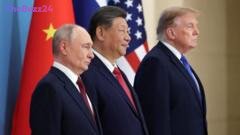
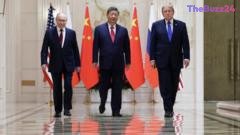
In a landmark diplomatic event, the leaders of the United States, Russia, and China—President Donald Trump, President Vladimir Putin, and President Xi Jinping—convened for their first-ever trilateral talks, culminating in the issuance of a “joint declaration of peace.” The 90-minute meeting took place in Shenzhen, China, on the periphery of the Asia-Pacific Economic Cooperation (APEC) summit.
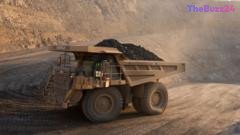
The declaration outlined several key principles, asserting that “nuclear war cannot be won and must never be fought.” It also committed the nations to increasing the production and supply of petroleum and pledged to reform the United Nations to enhance its effectiveness in addressing global challenges. Furthermore, the leaders agreed that institutions like the International Criminal Court should not overstep their jurisdictional boundaries. President Trump lauded the discussions as “a great and highly consequential trip,” later announcing a White House news conference to elaborate on the outcomes. Prior to the trilateral session, Trump held separate bilateral meetings with both Putin, whom he greeted as his “friend,” and Xi, describing their relationship as “very special.”
Despite the outward expressions of cordiality, the summit underscored complex geopolitical realities and divergent national interests. President Xi emphasized the “mandatory requirement” for positive interaction among major powers, while President Putin highlighted a shared interest in resolving the conflict in Ukraine and addressing global food and energy security. President Trump stressed the “special responsibility” of the three nations to maintain dialogue, reduce nuclear arsenals, and combat proliferation, specifically mentioning Iran. However, Putin’s post-meeting press conference, where he stated Ukraine and Europe were not yet ready for compromises, coincided with Russian drone attacks on Kyiv. He also vowed “far more painful” retaliation for Ukrainian assaults on the Crimea bridge and insisted that “realities on the ground will have to be accepted” regarding current conflicts.
China’s state broadcaster reported President Xi’s assessment of the meeting as “positive, constructive, and highly productive,” recalling shared history from World War II and emphasizing the importance of “cherishing the hard-won peace.” The trilateral meeting, reportedly initiated by Putin, was viewed by some as a diplomatic victory for Russia amidst efforts by Western nations to isolate Moscow. However, the warmth displayed by President Trump towards his counterparts drew criticism from some U.S. lawmakers. Senator John Curtis, while acknowledging the commitment against nuclear war, cautioned that Putin and Xi are not allies and do not share American values, while Senator Jeanne Shaheen referred to Putin as a “murderous war criminal,” highlighting the deep divisions and skepticism surrounding the summit’s broader implications.
Key Takeaways
- The leaders of the United States, Russia, and China issued a "joint declaration of peace" after their first trilateral meeting, held on the sidelines of the APEC summit.
- The declaration emphasized preventing nuclear war, increasing petroleum supply, and reforming the UN, while also addressing concerns about the International Criminal Court's jurisdiction.
- Despite expressions of warmth and calls for dialogue, underlying geopolitical tensions and differing objectives, particularly regarding the conflict in Ukraine, remained evident, drawing mixed reactions from international observers and U.S. lawmakers.
Editor’s Analysis & Impact
The historic trilateral summit between the US, Russia, and China, culminating in a ‘peace declaration,’ signals a complex shift in global power dynamics. While the call for increased petroleum supply could influence energy markets, the broader impact lies in the diplomatic landscape. The meeting underscores a potential move towards a multipolar world order, where major powers seek direct engagement despite significant ideological and geopolitical differences. The future outlook remains uncertain, as the declared intentions for peace and cooperation must contend with ongoing conflicts, such as in Ukraine, and deep-seated mistrust. The skepticism from US lawmakers highlights the domestic political challenges and the difficulty in forging genuine consensus on critical international issues, suggesting that while dialogue is open, fundamental disagreements persist.
Frequently Asked Questions
Q: What was the primary outcome of the trilateral meeting?
A: The leaders of the United States, Russia, and China issued a "joint declaration of peace," emphasizing the prevention of nuclear war, increased petroleum supply, and UN reform, among other points.
Q: Where did the historic meeting take place?
A: The meeting occurred in Shenzhen, China, on the sidelines of the Asia-Pacific Economic Cooperation (APEC) summit.
Q: What was the reaction from some U.S. lawmakers to the summit?
A: Some U.S. lawmakers expressed concern over the warmth displayed towards Russia and China, cautioning against treating their leaders as allies who share American values and interests, with one senator calling President Putin a "murderous war criminal."
AI Disclosure: This article is based on verified data and official reports. Our Team and AI have cross-referenced every financial detail with primary sources to ensure total accuracy.
More from this Category