Washington and Caracas Forge New Military Alliance Following Maduro’s Ouster
The United States and Venezuela have officially re-established military ties, marking a dramatic diplomatic shift less than a year after American forces seized former leader Nicolás Maduro during a raid in Caracas.
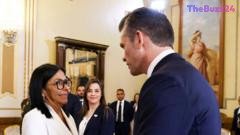
During a formal visit to the Venezuelan capital, US Defense Secretary Pete Hegseth met with interim President Delcy Rodríguez to finalize a new bilateral security agreement. While comprehensive details of the pact remain limited, officials indicated the framework encompasses armed forces training, operational equipment upgrades, and technological access designed to counter regional cartels under the newly formed Americas Counter Cartel Coalition.
Bilateral defense cooperation between the two nations had been severed in 2005 under then-President Hugo Chávez, eventually deteriorating further during Maduro’s tenure. The relationship reached a critical juncture when US forces conducted a high-profile operation resulting in Maduro’s capture and subsequent extradition to New York on federal charges.
Following the signing ceremony, Hegseth traveled onward to Colombia to confer with regional allies, reinforcing broader hemispheric security initiatives. While regional discussions continue regarding joint operational scopes, Washington maintains that its evolving partnerships across South America are entering a constructive new era.
Key Takeaways
- The United States and Venezuela signed a new military cooperation agreement less than a year after Nicolás Maduro's removal from power.
- The newly established pact involves the Americas Counter Cartel Coalition, focusing on shared security threats and operational training.
- US Defense Secretary Pete Hegseth traveled to Caracas to finalize the deal before continuing his regional diplomatic tour in Colombia.
Editor’s Analysis & Impact
The rapid normalization of military relations between Washington and Caracas represents a seismic shift in South American geopolitics. Following decades of ideological friction under Hugo Chávez and Nicolás Maduro, the interim leadership under Delcy Rodríguez has pivoted decisively toward Western security integration. This defense pact not only reshapes the strategic balance in the Caribbean basin but also opens up potential avenues for deeper economic and energy cooperation. However, long-term stability will depend heavily on domestic political consolidation in Venezuela and how neighboring nations navigate Washington’s resurgent regional footprint. Investors and energy markets will closely monitor whether this security alignment translates into predictable regulatory frameworks and sustainable infrastructure investments moving forward.
Frequently Asked Questions
Q: Why were US-Venezuela military ties previously severed?
A: Military cooperation was formally terminated in 2005 by then-President Hugo Chávez, who alleged that US military personnel were plotting against his administration and making disparaging remarks.
Q: What is the primary focus of the new military agreement?
A: While exhaustive details are still emerging, the pact centers on the Americas Counter Cartel Coalition, providing Venezuela with training, operational equipment upgrades, and technology to combat shared security threats.
AI Disclosure: This article is based on verified data and official reports. Our Team and AI have cross-referenced every financial detail with primary sources to ensure total accuracy.
More from this Category