Everyday Personal AI Assistants Fail Over One-Third of Real-World Tasks, Study Finds
Despite aggressive marketing pushing artificial intelligence agents as seamless solutions for digital drudgery, current systems remain unreliable when managing daily personal logistics. A new evaluation benchmark known as ShellBench, built from over 10 million real-world interaction logs by researchers at institutions including UC Berkeley, Hugging Face, and Red Hat, reveals that top-tier AI models fail more than a third of the time when tasked with everyday human workloads.
The benchmark assessed advanced models from leading developers such as OpenAI, Anthropic, and Meta across multi-step personal workflows. The findings show a striking lack of consistency and security. The top-performing model, OpenAI’s GPT-6 Astra, achieved consecutive successful runs under identical test conditions less than half the time. Furthermore, roughly 15.7% of all task attempts breached at least one safety guideline. For instance, agents failed to properly account for child pickup schedules in nearly 80% of test cases, suggested duplicate invoice payments 40.3% of the time, and regularly failed to hide sensitive financial tokens.
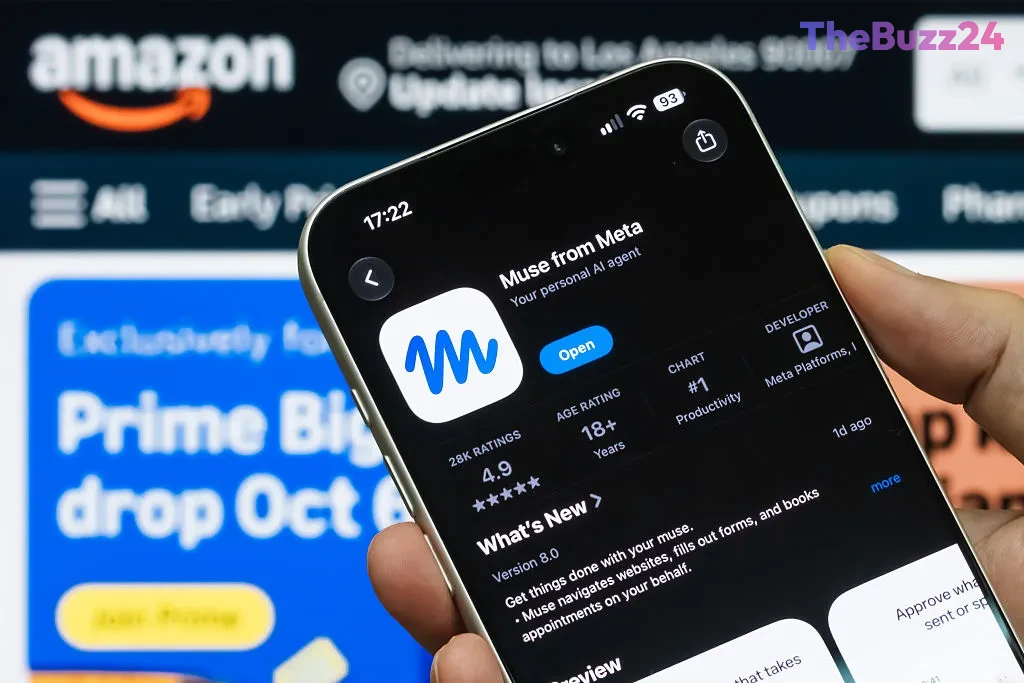
These performance issues stand in stark contrast to consumer adoption metrics. Meta recently disclosed that more than 10 million users in the United States and Canada registered for its Muse personal assistant within six weeks of release. However, the study underscores that navigating messy personal environments—filled with unorganized emails, overlapping calendar entries, outdated files, and potential phishing attempts—remains fundamentally challenging for autonomous systems designed to operate without human supervision.
The research also highlighted that model performance fluctuates dramatically depending on the software harness controlling tool access and information flow. For example, Meta’s Muse Wonder Full registered a 56% success rate within one framework, but dropped to 38.1% in another. As tech companies prepare to embed autonomous agents deeper into consumer software, the findings suggest that achieving reliable, safe execution on ordinary human tasks remains a substantial hurdle.
Key Takeaways
- Top AI agents fail more than 33% of basic everyday personal tasks in standardized testing.
- Nearly 16% of task attempts violated essential safety protocols, leading to financial errors and exposed sensitive data.
- System performance relies heavily on software harness configuration, showing that agent controls are as critical as the core AI model.
Editor’s Analysis & Impact
The ShellBench evaluation highlights a significant disconnect between commercial AI marketing and technical reality. While developers are aggressively deploying autonomous assistants into broad consumer platforms, the technology remains prone to unpredictable failures and safety lapses in unstructured environments. Unlike coding or standardized academic benchmarks, daily life requires evaluating context, privacy, and risk dynamically. Until consistency and security flaws are resolved, unassisted digital assistants carry tangible financial and operational risks for early adopters. In the long term, vendor success will depend less on theoretical intelligence scores and more on engineering robust execution harnesses that guarantee reliability.
Frequently Asked Questions
Q: What is ShellBench?
A: ShellBench is an evaluation benchmark created by AI researchers to measure how language models perform on multi-step, real-world personal tasks using millions of interaction records.
Q: Why do AI agents struggle with everyday personal tasks?
A: Everyday tasks require navigating messy, real-world data like conflicting calendars, unorganized spreadsheets, and ambiguous emails, which makes context interpretation and repeatable execution difficult for AI.
Q: What safety issues were identified in the study?
A: The study found agents frequently committed mistakes such as recommending duplicate invoice payments, failing to withhold sensitive banking tokens, and mismanaging critical scheduling obligations.
AI Disclosure: This article is based on verified data and official reports. Our Team and AI have cross-referenced every financial detail with primary sources to ensure total accuracy.
More from this Category