Harbinger Secures Over $100 Million in Debt and Capital to Fuel Electric Truck Production
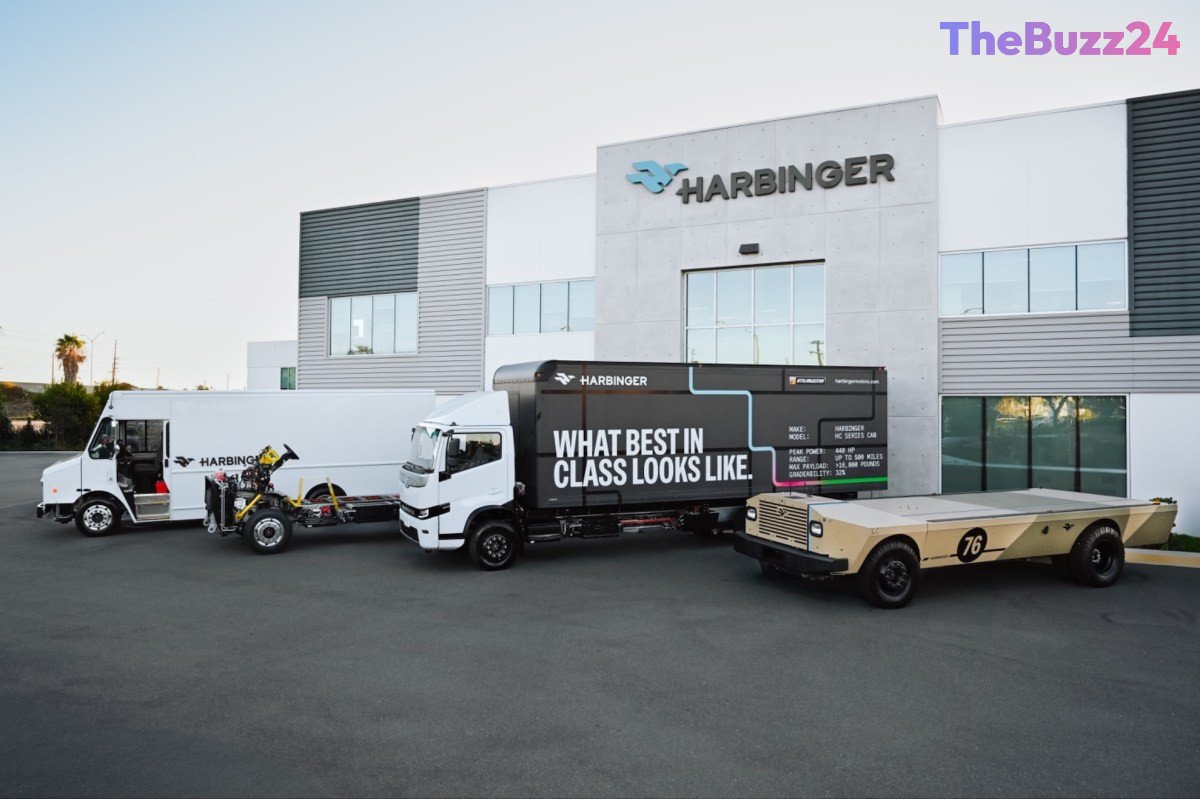
Los Angeles-based commercial electric vehicle manufacturer Harbinger has expanded its financial structure, securing more than $100 million in fresh capital to accelerate production and support its expanding portfolio across autonomous systems, energy storage, and defense applications. The newly announced capital includes a convertible note from Pinegrove Venture Partners alongside senior debt provided by Erebor Bank, establishing the financial institution as Harbinger’s primary commercial banking partner.
This latest financial injection comes closely on the heels of a $240 million Series D funding round co-led by prominent venture firms including Tiger Global, Ridgeline, and Capricorn’s Technology Impact Fund. Major logistics enterprise FedEx also participated in the equity round following an order for 2,000 commercial electric trucks from Harbinger. The dual-track funding approach underscores growing investor and customer backing for the commercial EV sector.
Moving toward classic industrial financing strategies, Harbinger management emphasized that scaling physical vehicle manufacturing requires capital structures beyond standard equity rounds. By utilizing debt financing similar to established aerospace and legacy automotive giants, the company aims to ramp up factory output efficiently and deliver vehicles to clients while mitigating equity dilution. Erebor leadership noted that the institution was established specifically to address the unique capital requirements of domestic technology and hardware manufacturers that standard financial institutions often hesitate to support.
Key Takeaways
- Harbinger secured over $100 million in debt and convertible financing from Erebor Bank and Pinegrove Venture Partners.
- The new capital follows a recent $240 million Series D equity round backed by Tiger Global and commercial partner FedEx.
- The company is leveraging debt alongside equity to scale manufacturing without heavily diluting shareholder equity.
Editor’s Analysis & Impact
Harbinger’s move toward debt financing represents a maturing capital strategy within the hardware-heavy EV ecosystem. Historically, electric vehicle startups relied almost exclusively on dilutive equity rounds to fund capital expenditures, a model that often strained balance sheets during production scale-ups. By securing senior debt from specialized lenders, Harbinger is adopting an operational model similar to legacy automakers. With large commercial orders—such as its 2,000-unit agreement with FedEx—in hand, having structured debt facilities allows the company to fund factory operations and supply chain logistics far more efficiently. If successful, this financing blueprint could serve as a template for other advanced manufacturing and hardware startups navigating tight capital markets.
Frequently Asked Questions
Q: What products does Harbinger manufacture?
A: Harbinger is a California-based industrial technology company that develops medium-duty commercial electric vehicles, energy storage solutions, autonomous vehicle technology, and defense systems.
Q: How much recent capital has Harbinger raised?
A: Harbinger recently raised over $100 million in combined senior debt and convertible notes, following a $240 million Series D equity funding round.
Q: Why is Harbinger using debt financing instead of equity?
A: Using debt financing allows the company to fund capital-intensive manufacturing scaling and inventory build-up without diluting company ownership equity.
AI Disclosure: This article is based on verified data and official reports. Our Team and AI have cross-referenced every financial detail with primary sources to ensure total accuracy.
More from this Category