NASA Bolsters Aerospace Supply Chain Through Strategic Boeing and GRACE Aerospace Partnership
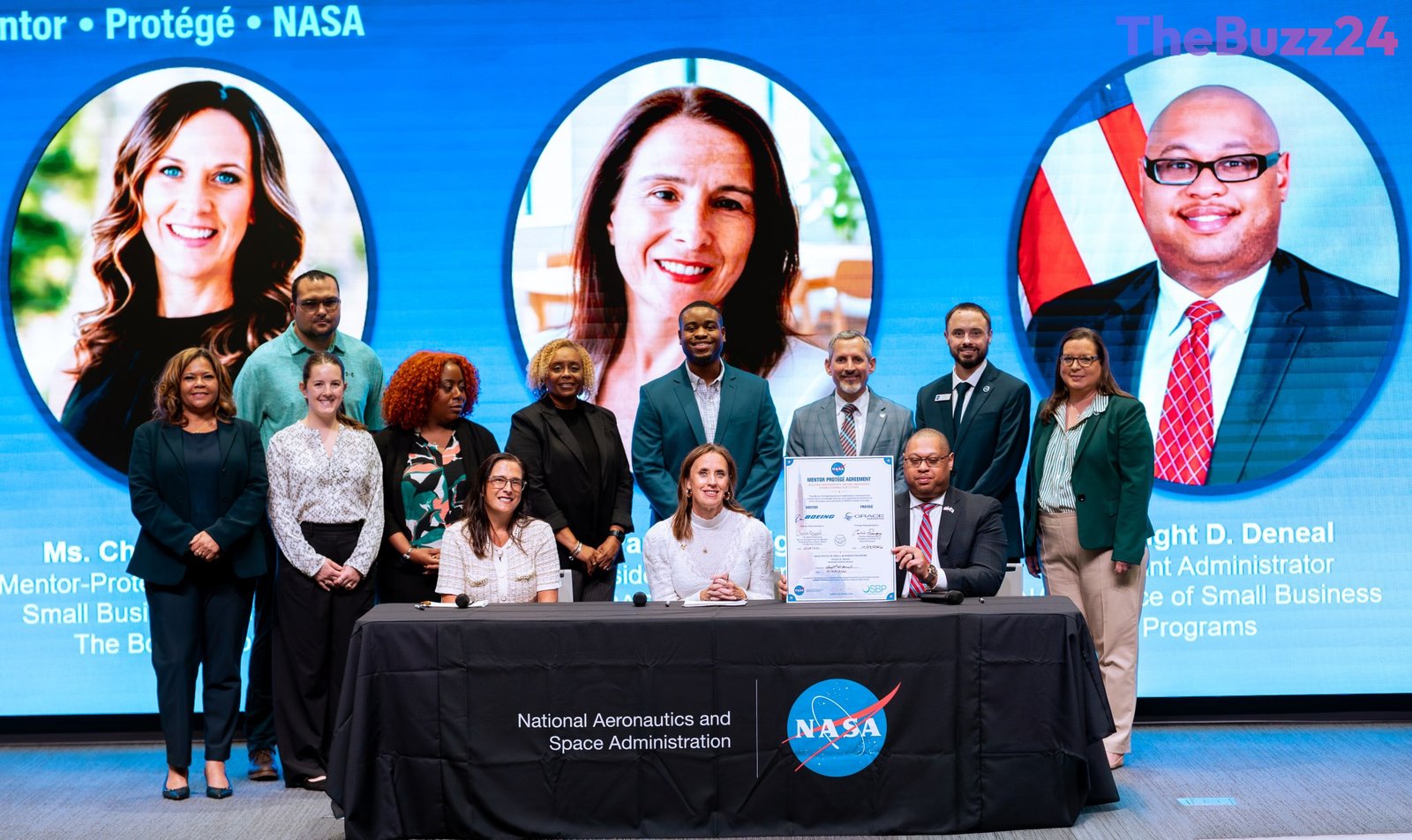
NASA has officially launched a revitalized approach to its industrial partnerships, marking a significant milestone with a new Mentor-Protégé Agreement between aerospace giant Boeing and small business supplier GRACE Aerospace. The agreement, formalized at the U.S. Space and Rocket Center in Huntsville, Alabama, represents a core component of the agency’s newly rebranded Small Business Supplier Development Program. This initiative is designed to fortify the domestic aerospace industrial base, ensuring that smaller firms have the technical support and resources necessary to contribute to high-stakes space exploration missions.
The agency has implemented sweeping changes to its supplier engagement model, focusing on reducing administrative burdens and accelerating approval timelines. By streamlining the application process and offering enhanced incentives for prime contractors, NASA aims to create a more agile and responsive supply chain. These structural improvements are intended to align supplier development more closely with the agency’s specific mission requirements, fostering a more resilient ecosystem capable of meeting the demands of future spaceflight.
Under the terms of the new partnership, Boeing will provide nearly $500,000 in funding and structured technical assistance to GRACE Aerospace. This collaboration is intended to scale the capabilities of the smaller firm, allowing it to produce mission-critical hardware with greater efficiency. For GRACE Aerospace, which brings two decades of experience in defense and aerospace sectors, the mentorship serves as a strategic bridge to participating in increasingly complex space programs, ultimately supporting the broader goal of maintaining technological superiority in space.
Key Takeaways
- NASA has rebranded its supplier initiative to the Small Business Supplier Development Program, focusing on streamlining administrative processes and increasing efficiency.
- Boeing and GRACE Aerospace have entered a $500,000 Mentor-Protégé Agreement to enhance the latter's capacity to produce mission-critical aerospace hardware.
- The program is designed to strengthen the domestic aerospace industrial base by providing small businesses with the expertise and resources needed for complex space missions.
Editor’s Analysis & Impact
The restructuring of NASA’s supplier program reflects a broader trend in government contracting: the shift toward ‘mission-focused’ industrial base management. By incentivizing prime contractors like Boeing to actively mentor smaller, specialized firms, NASA is effectively de-risking its supply chain. This approach not only ensures that critical components are manufactured to rigorous standards but also promotes innovation by integrating niche expertise into the agency’s massive procurement pipeline. As space exploration becomes increasingly competitive and reliant on private-sector collaboration, the ability to rapidly scale the capabilities of small-to-medium enterprises will be a decisive factor in maintaining mission success. This model likely signals a long-term strategy to reduce dependency on single-source suppliers and build a more robust, redundant, and technologically advanced domestic manufacturing network.
Frequently Asked Questions
Q: What is the primary goal of NASA’s Small Business Supplier Development Program?
A: The program aims to strengthen the domestic aerospace industrial base by streamlining administrative processes and providing small businesses with the mentorship and resources needed to support NASA’s complex exploration missions.
Q: What does the Mentor-Protégé Agreement between Boeing and GRACE Aerospace entail?
A: Boeing will provide nearly $500,000 in funding and structured technical expertise to help GRACE Aerospace expand its capabilities in manufacturing mission-critical aerospace hardware.
AI Disclosure: This article is based on verified data and official reports. Our Team and AI have cross-referenced every financial detail with primary sources to ensure total accuracy.
More from this Category