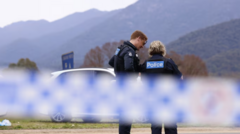
Fatal Standoff Ends Seven-Month Manhunt for Australian Fugitive Dezi Freeman
A massive seven-month manhunt in Australia has ended after fugitive Dezi Freeman was killed during a tense three-hour standoff with law enforcement. The confrontation took place at a property located approximately two hours north of Porepunkah, Victoria. Freeman had been the subject of an intense search since August of last year, following the tragic shooting deaths of police officers Neal Thompson and Vadim de Waart. The initial incident deeply shook the small, tight-knit community of Porepunkah, drawing global attention to the quiet region.
The conclusion of the manhunt has brought a complex wave of emotions to Porepunkah’s residents. While many express profound relief that the long-standing threat has ended, the community remains shadowed by grief and anger over the disruption of their peaceful lives. Marcus Warner, a local search-and-rescue volunteer and chamber of commerce president, noted that the tragedy has left deep emotional scars, particularly because both the victims and the suspect’s family were familiar faces in the Alpine region.
The human cost of the tragedy extends to the families involved. Koah Freeman, the fugitive’s eldest son, shared a poignant message on social media, asking for public empathy as his family mourns, despite not condoning his father’s actions. Meanwhile, neighbors expressed relief at finally being able to sleep without anxiety, though some lamented that the situation could not have been resolved peacefully. Friends of the fallen officers described the outcome as a bittersweet closure to a devastating chapter.
As the media spotlight begins to fade, local leaders are focusing on community healing and economic recovery. Alpine Shire Mayor Sarah Nicholas has urged residents to utilize available mental health and support services. In nearby Bright, business owners hope the end of the crisis will help revive the region’s vital tourism sector, which suffered during the prolonged search. Community solidarity is expected to play a vital role in the long rebuilding process ahead.
Key Takeaways
- Fugitive Dezi Freeman was killed in a three-hour standoff with police, ending a seven-month manhunt.
- The search began after the fatal shooting of officers Neal Thompson and Vadim de Waart in Porepunkah, Victoria.
- Local leaders and business owners are now focusing on community healing and restoring the region's vital tourism industry.
Editor’s Analysis & Impact
The resolution of the Dezi Freeman manhunt highlights the profound, long-term impact that violent crimes can have on small, rural economies. Porepunkah and the surrounding Alpine Shire rely heavily on tourism, an industry that inevitably suffers when a region becomes the focus of a high-profile, active police search. Moving forward, local authorities must balance the immediate need for psychological support services with strategic marketing campaigns to reassure visitors that the area is safe. Furthermore, this tragedy underscores the ongoing risks faced by law enforcement officers in rural jurisdictions, where backup can be hours away. The community’s resilience will be tested as they navigate the delicate process of healing while rebuilding their local economy.
Frequently Asked Questions
Q: Who was Dezi Freeman and why was he being sought by police?
A: Dezi Freeman was an Australian fugitive wanted in connection with the fatal shooting of two police officers, Neal Thompson and Vadim de Waart, in August of last year.
Q: How did the manhunt for Dezi Freeman end?
A: The seven-month search concluded when Freeman was killed by law enforcement officers following a three-hour standoff at a property north of Porepunkah, Victoria.
Q: What support is being offered to the affected community?
A: Local officials, including Alpine Shire Mayor Sarah Nicholas, have urged residents to access dedicated mental health and community support services to help process the trauma of the events.
AI Disclosure: This article is based on verified data and official reports. Our Team and AI have cross-referenced every financial detail with primary sources to ensure total accuracy.
More from this Category