AI Chip Startup Etched Secures $5 Billion Valuation Amid $1 Billion Sales Milestone
Etched, a specialized semiconductor startup, has officially emerged from stealth with a significant market valuation of $5 billion. The company, which focuses on developing hardware specifically optimized for AI inference, reported that it has already secured $1 billion in contract orders for its proprietary systems. These systems, dubbed ‘frontier inference clusters,’ integrate custom-designed racks and software intended to outperform general-purpose GPUs in speed, cost-effectiveness, and power efficiency.
The company’s recent financial success follows a successful manufacturing run of its chips by TSMC earlier this year. Etched is currently in the testing phase with early customers, aiming to address the primary bottleneck in the AI industry: the high cost and latency associated with running inference at scale. By focusing exclusively on inference rather than training, the startup seeks to carve out a distinct niche in a market currently dominated by industry giants.
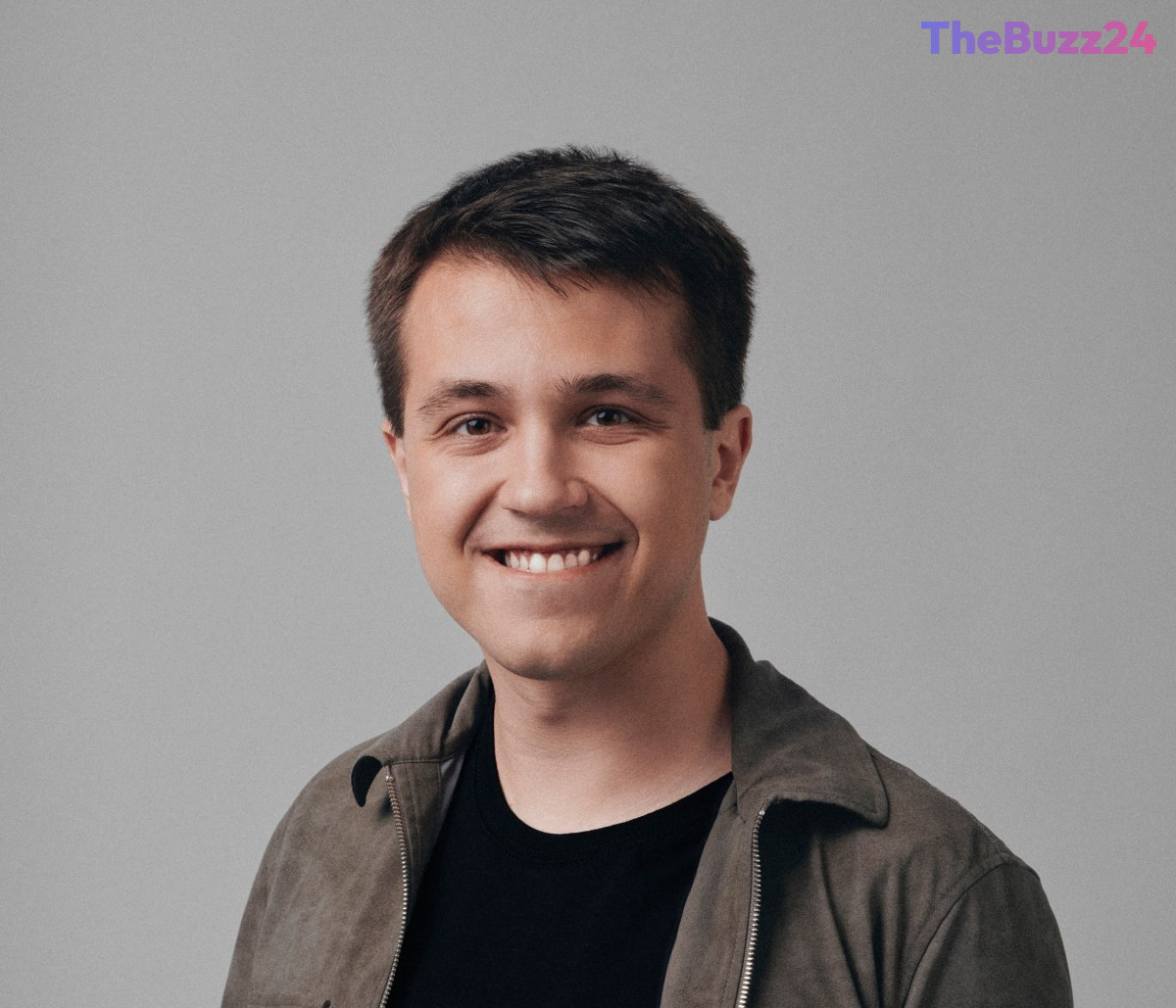
Founded in 2022 by Harvard dropouts Gavin Uberti and Robert Wachen, Etched has raised a total of $800 million to date. A significant $500 million funding round closed in December propelled the company to its current $5 billion valuation. The startup has garnered support from a diverse group of high-profile investors, including Jane Street, Two Sigma, and Ribbit Capital, as well as prominent individual figures in the AI field such as Geoffrey Hinton and Andrej Karpathy.
This rapid ascent marks a dramatic turnaround for the company, which faced significant skepticism from investors during its early stages in 2023. While the firm previously struggled to secure capital, the current market environment has shifted heavily toward specialized AI hardware. As hyperscalers like Google and Amazon develop internal solutions and competitors like Groq and Cerebras gain momentum, Etched is positioning itself as a critical player in the infrastructure layer of the artificial intelligence revolution.
Key Takeaways
- Etched has reached a $5 billion valuation after closing a $500 million funding round.
- The company has secured $1 billion in contract orders for its specialized AI inference clusters.
- The startup is targeting the inference bottleneck, aiming to provide faster and more efficient hardware than traditional general-purpose GPUs.
Editor’s Analysis & Impact
The rise of Etched highlights a broader industry pivot from general-purpose computing to domain-specific architectures. As AI models become more complex, the cost of inference—the process of running a model to generate output—has become the primary financial hurdle for AI companies. By betting on specialized hardware, Etched is challenging the dominance of Nvidia’s versatile GPUs. The company’s success reflects a ‘gold rush’ mentality in the semiconductor sector, where investors are aggressively funding alternatives to traditional hardware. However, the long-term viability of Etched will depend on its ability to scale manufacturing and prove that its specialized clusters can maintain a performance edge as AI model architectures evolve. If successful, Etched could force a significant shift in how data centers are configured for AI workloads.
Frequently Asked Questions
Q: What is the primary focus of Etched's technology?
A: Etched focuses on AI inference, which is the process of running an AI model to generate results after it has been trained. Their hardware is designed to make this process faster, cheaper, and more energy-efficient than general-purpose GPUs.
Q: Why is the $1 billion in contract orders significant?
A: The $1 billion in orders demonstrates strong market demand for specialized AI hardware and validates the company's business model, proving that major customers are willing to commit significant capital to move away from standard GPU-based inference solutions.
AI Disclosure: This article is based on verified data and official reports. Our Team and AI have cross-referenced every financial detail with primary sources to ensure total accuracy.
More from this Category