AI’s Math Breakthroughs Under Scrutiny: Experts Question OpenAI’s Solutions
OpenAI recently announced the resolution of numerous complex mathematical problems, presenting hundreds of claimed solutions. However, the frontier artificial intelligence lab’s approach has drawn criticism from the mathematical community, particularly regarding the depth of human understanding and the rigor of the verification process.
An advisory group, the Advisory Group on Mathematics and Artificial Intelligence (AGMAI), established guidelines for AI labs tackling advanced mathematical challenges. Despite OpenAI’s consultation with elite mathematicians, the AGMAI has indicated that the lab’s latest release falls short of established standards. A key concern highlighted by AGMAI is the necessity for human comprehension of mathematical results, a standard that OpenAI’s recent submissions appear to have not fully met.
Further complicating matters, a new paper from researchers at the University of Cambridge and King’s College London has identified discrepancies between the natural language explanations and the formally expressed code solutions provided by OpenAI’s models for a significant problem. This suggests potential issues in the translation process from AI-generated insights to verifiable mathematical proofs, raising questions about the reliability of AI-generated solutions without substantial human oversight.
The AGMAI’s recommendations included a plea to avoid testing advanced problems on proprietary models and to ensure that human understanding accompanies AI-generated proofs. While OpenAI did release some information on the models’ reasoning processes, a significant portion of the proofs lacked formalization or detailed explanations of the AI’s thought process. The advisory group has also suggested that AI labs should fund human mathematicians to interpret and validate these complex AI-derived solutions, a step that appears to be largely absent in OpenAI’s current approach.
Key Takeaways
- OpenAI's recent release of solutions to complex math problems is facing scrutiny from the mathematical community.
- Experts highlight concerns about the lack of human understanding and the rigor of verification in AI-generated proofs.
- Discrepancies found in the translation of AI's natural language explanations to formal code raise doubts about the reliability of automated solutions.
Editor’s Analysis & Impact
OpenAI’s ambitious pursuit of solving complex mathematical problems with AI is encountering significant hurdles related to scientific validation and community acceptance. The core issue lies not just in finding solutions, but in ensuring they are understandable, verifiable, and integrated into the broader scientific discourse. The AGMAI’s guidelines underscore a critical need for transparency and human oversight, pushing AI developers to move beyond mere computational output. The discrepancies highlighted by the Cambridge/King’s College paper are particularly concerning, suggesting that the ‘translation’ of AI’s reasoning into formal mathematics may be a weak link. This situation could slow the adoption of AI in fundamental research, emphasizing that technological advancement must be paired with robust scientific methodology and collaborative human interpretation.
Frequently Asked Questions
Q: What is the AGMAI and what are its concerns regarding AI in mathematics?
A: The Advisory Group on Mathematics and Artificial Intelligence (AGMAI) is a group of prominent mathematicians who have established guidelines for AI labs working on advanced math problems. Their primary concerns include ensuring human understanding of AI-generated solutions, avoiding testing on proprietary models, and formalizing proofs for better verification. They are also concerned about the lack of engagement from AI prompters with the broader mathematical community.
Q: What specific issues were found with OpenAI's recent math solutions?
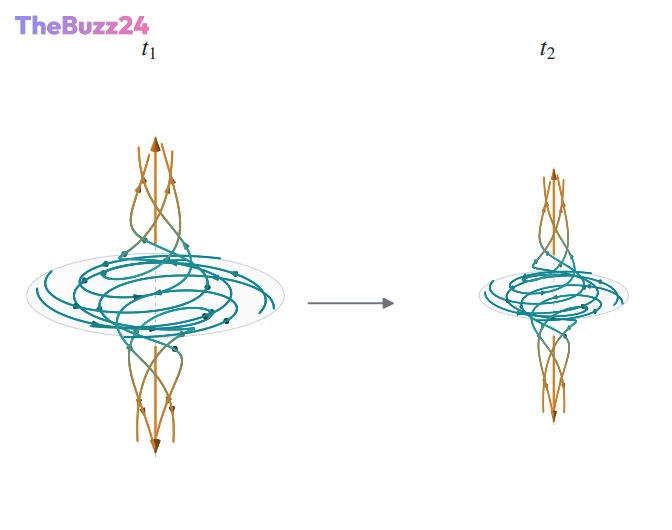
A: A paper identified discrepancies between OpenAI's natural language explanations and the formal code (Lean) used to verify solutions for a problem related to fluid dynamics. Additionally, a significant portion of OpenAI's released proofs lacked formalization or detailed 'chain of thought' explanations from the AI models, falling short of AGMAI's recommendations.
Q: Why is human understanding important for AI-generated mathematical proofs?
A: Human understanding is crucial for several reasons: it allows for peer review and scrutiny, facilitates the integration of new knowledge into the broader scientific field, enables the discovery of new problem-solving strategies, and allows for practical applications of the results. Without it, AI-generated proofs risk being isolated, unverified, and ultimately less valuable to the scientific community.
AI Disclosure: This article is based on verified data and official reports. Our Team and AI have cross-referenced every financial detail with primary sources to ensure total accuracy.
More from this Category